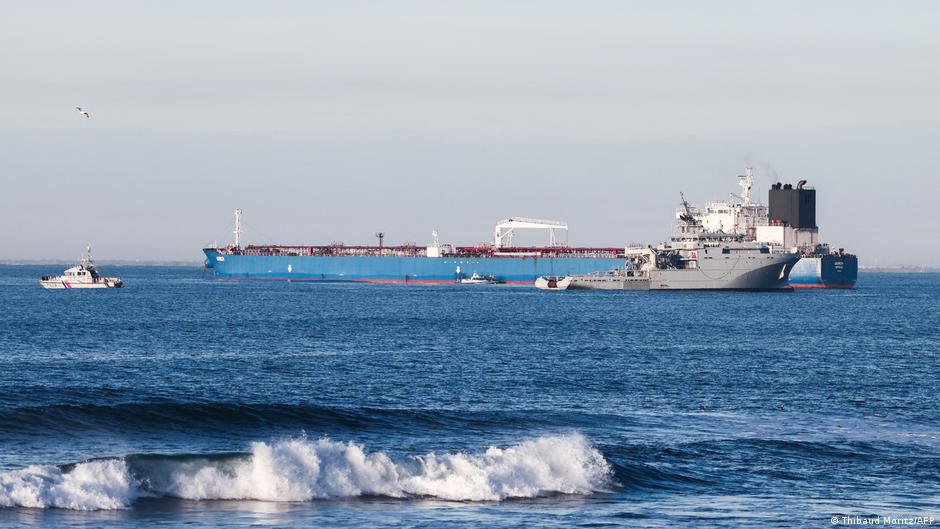
U.S. Says Five Iranian Oil Tankers Destroyed After Missile Attacks
CENTCOM said the strikes followed two ballistic missile attacks by Iran’s Revolutionary Guards on a U.S. Navy ship.
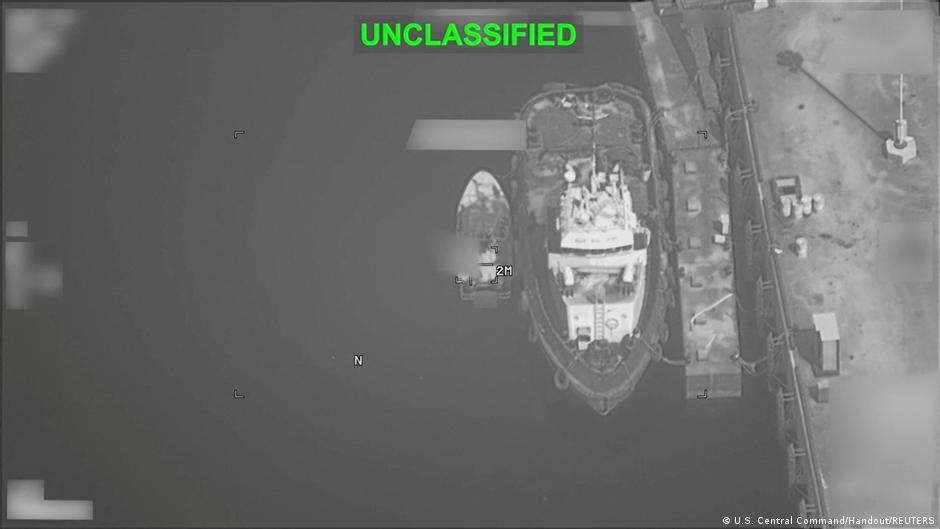
U.S. Central Command said American forces destroyed five Iranian oil tankers on Tuesday, September 8, after the Islamic Revolutionary Guard Corps twice attacked a U.S. Navy vessel with ballistic missiles over the previous two days, marking another sharp escalation around one of the world’s most important oil transit corridors.
According to CENTCOM, the U.S. Navy ship successfully evaded the attempted Iranian attacks and continued patrolling regional waters. The command said no U.S. personnel were injured.
The tankers identified by CENTCOM were the M/T Kaviz, M/T Charminar, M/T Horizon 1 and M/T Riesco in the Gulf of Oman, along with the M/T Derya near Kharg Island in the Persian Gulf. U.S. forces instructed crews to abandon the vessels before they were struck and disabled, CENTCOM said.
The statement places oil infrastructure and shipping assets back at the center of a conflict that traders have been monitoring closely because of its direct link to supply risk, insurance costs and tanker flows through the Gulf region. While the source report did not provide market price moves or trading volumes, the operational details point to a widening maritime confrontation involving vessels that U.S. officials say were tied to Iranian financing networks.
“The ship successfully evaded Iranian attack attempts and continued patrolling in regional waters,” CENTCOM said, according to the report.
Shadow Fleet Becomes a Market Risk Flashpoint
CENTCOM said Iran used the tankers as part of a multibillion-dollar “shadow” network that finances the IRGC and its regional proxies. The U.S. military also said Tehran does not have the means to protect those vessels.
For energy markets, the focus is not only the number of ships hit but the location of the incidents. The Gulf of Oman, the Persian Gulf and the area around Kharg Island are all strategically significant for oil movement. Kharg Island has long been associated with Iranian export infrastructure, while the Gulf of Oman sits outside the Strait of Hormuz, linking Gulf shipping lanes to the Arabian Sea.
The reported destruction of five tankers follows a previous U.S. action on September 5, when CENTCOM forces destroyed three Iranian oil tankers after the IRGC attempted to attack a U.S. aircraft carrier and a missile destroyer. Taken together, the two incidents signal a renewed U.S. willingness to target maritime assets that Washington says are connected to Iran’s military and financial networks.
The latest action comes after a period in which the United States had not carried out strikes on Iran since late July. According to the source report, U.S. President Donald Trump explained that pause as an effort to continue negotiations with Tehran over the future of the Strait of Hormuz, sanctions and Iran’s nuclear program.
That pause ended on August 30, when the United States struck two Iranian missile launchers on Larak Island in the Strait of Hormuz. Tehran then announced retaliatory attacks on U.S. targets in the United Arab Emirates, saying dozens of drones had attacked “American helicopters and personnel at Al Minhad base” in the UAE.
Hormuz Control Remains Central to Oil Supply Concerns
The Strait of Hormuz remains the central market-sensitive arena in the conflict described by the source report as the war by the United States and Israel against Iran. Before hostilities began in late February, the waterway was open to shipping. Today, both Iranian and U.S. armed forces claim control over it.
That contested control matters because Hormuz plays a major role in global oil supplies. Any disruption, even without an immediate confirmed volume loss in the source report, can affect market expectations around seaborne crude flows, freight availability and regional risk premiums. The destruction of tankers also adds uncertainty for operators and insurers working in or near the Persian Gulf, the Gulf of Oman and adjacent shipping routes.
The U.S. account indicates that crews were ordered off the vessels before the tankers were struck and disabled. CENTCOM did not report casualties among U.S. personnel, and the source article did not state whether any tanker crew members were injured.
The sequence of events now gives markets a series of dates to track: a U.S. pause in strikes from late July, renewed strikes on August 30 against Iranian missile launchers on Larak Island, the destruction of three Iranian oil tankers on September 5, and the destruction of five more on September 8 after two ballistic missile attacks on a U.S. Navy ship.
For traders, the immediate intelligence signal is a shift from isolated military exchanges to repeated action involving oil tankers and assets near Hormuz-linked waterways. The source report does not provide benchmark crude prices, equity market reactions or sector flows, but the facts it presents point to rising event risk for energy, shipping, defense and regional exposure as the confrontation moves deeper into maritime and oil-linked infrastructure.