Finland Completes 200-Kilometer Border Fence With Russia Amid Security Shift
The project underscores Europe’s continuing security buildout as Finland reinforces the external Schengen frontier after joining NATO.
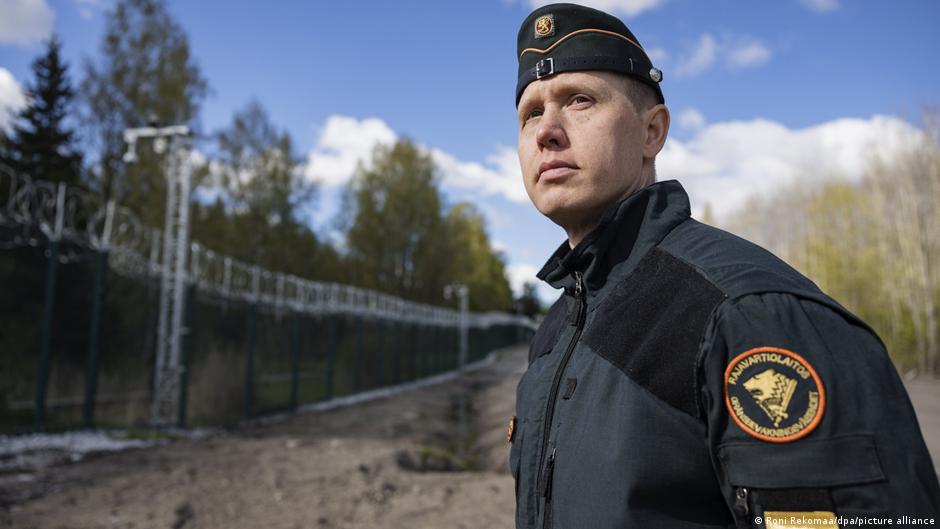
Finland has completed construction of a 200-kilometer barrier along its border with Russia, marking a major security infrastructure milestone at a time when geopolitical risk remains a central variable for European markets, defense contractors and cross-border logistics operators.
The Finnish Border Guard, part of the security apparatus of a NATO member state, said on Monday, September 7, that the barrier on the eastern frontier had been finished. The project was launched against the backdrop of Russia’s war against Ukraine and Helsinki’s concern that Moscow could use migrant flows as a form of pressure against Finland.
For market participants, the completion of the fence is not a single-company earnings event, but it is part of a wider European security trend that continues to influence public-sector procurement, infrastructure spending, defense-sector sentiment and investor assessment of regional political risk. Finland’s eastern border is also an external frontier of the Schengen area, giving the project significance beyond national security policy.
“The main task of the state is to ensure the safety of its citizens. The barrier wall on the eastern border is an integral part of an effective border security system in these unpredictable times,” Finnish Interior Minister Mari Rantanen said.
Rantanen also said Finland, as a member state of the Schengen area, carries its share of responsibility for security at the bloc’s external borders. That framing places the Finnish project within a broader European discussion about border management, migration pressure and the fiscal burden of security-related infrastructure.
Security Infrastructure Becomes a Market Signal
The completed structure is more than a simple fence. According to the Finnish Border Guard, the border barrier consists of a 4.5-meter-high fence, a technical surveillance system, a road network and a 25-meter-wide cleared strip. The combination of physical construction, monitoring equipment and support roads makes it one of Finland’s largest infrastructure projects, the border authority said.
The project mobilized substantial industrial capacity. Hundreds of companies were involved in carrying it out, while as many as 600 workers and 150 pieces of equipment were active at construction sites each day. Those details point to the scale of domestic contracting and operational coordination required for the buildout, even though the source material does not provide a total budget or name specific contractors.
In market terms, the project reflects how security policy has translated into real infrastructure demand across parts of Europe. Since Russia’s invasion of Ukraine, governments in the region have increased attention to border resilience, surveillance, mobility corridors and defense-adjacent public works. Investors have treated such developments as indicators of continued state spending in security-sensitive categories, even when individual procurement beneficiaries are not disclosed.
Finland began construction work in March 2023 as Russia’s war against Ukraine reshaped the country’s security posture. Helsinki had feared that Russia could use migrants to exert pressure on Finland. That concern followed a period of heightened tension on the border and came after Finland moved deeper into Western security structures, including NATO membership.
The completion of the 200-kilometer barrier also lands within a broader repricing of risk along Europe’s northeastern flank. Border infrastructure, surveillance systems and transport-access roads are areas where public investment can intersect with private-sector activity, particularly for construction groups, equipment suppliers, technology vendors and maintenance providers. The Russian border issue has therefore become part of the operating environment watched by companies with exposure to the Nordic region, the Baltic area and European public infrastructure spending.
Local Impact and Regional Risk
The fence project was not presented domestically as a cause for celebration. In the city of Imatra, near where construction took place, residents were not enthusiastic about the initiative but had accepted it, Mayor Matias Hilden said in an interview with DW. “It is a little sad that we need this,” he said.
That local reaction highlights the social and political cost of turning a long-established border area into a heavily monitored security zone. For companies operating near such frontier regions, the practical consequences can include shifts in mobility, staffing, transport planning and public works activity. The source article does not report specific disruptions to trade or logistics, but the strategic setting is clear: Finland is reinforcing its border at a time when relations with Russia remain under pressure.
The fence also follows an earlier migration-related episode. In September 2022, a large number of Russians fled to Finland after Russian President Vladimir Putin announced a partial mobilization in Russia. That moment helped shape Finnish concerns about sudden population movements across the border and the possibility that migration flows could become a tool in broader political pressure.
The infrastructure now in place gives Finland a more developed physical and technical system for controlling parts of its eastern frontier. The project’s key components, including the high fence, surveillance technology, roads and cleared strip, are designed to support border monitoring and response capacity in what officials describe as unpredictable times.
For markets, the takeaway is that Europe’s security environment continues to produce tangible capital projects, not only policy statements. Finland’s completed border fence is a visible example of how geopolitical risk can move into infrastructure pipelines, labor deployment and procurement demand. The immediate trading impact may be limited without disclosed contract values or listed-company exposure, but the event reinforces a durable theme: security spending remains embedded in the region’s public-investment agenda as the war in Ukraine continues to shape strategic decisions.