AfD Surge in Saxony-Anhalt Puts German Political Risk Back on Markets’ Radar
Poland and France warned over the far-right party’s projected victory as investors assess potential policy friction in Europe’s largest economy.
A decisive projected win for the far-right Alternative for Germany in Saxony-Anhalt has injected a fresh political risk signal into European market monitoring, drawing immediate reactions from neighboring governments and raising questions over policy stability in Germany’s eastern states.
Preliminary results from the eastern German federal state showed Alternative for Germany, known as AfD, clearly ahead with 44% of the vote in the election for the Saxony-Anhalt state parliament. The result, if confirmed, would mark a major regional breakthrough for the party and could become a focal point for investors tracking European political fragmentation, cross-border tensions and the operating environment for companies exposed to German federal and state-level policy.
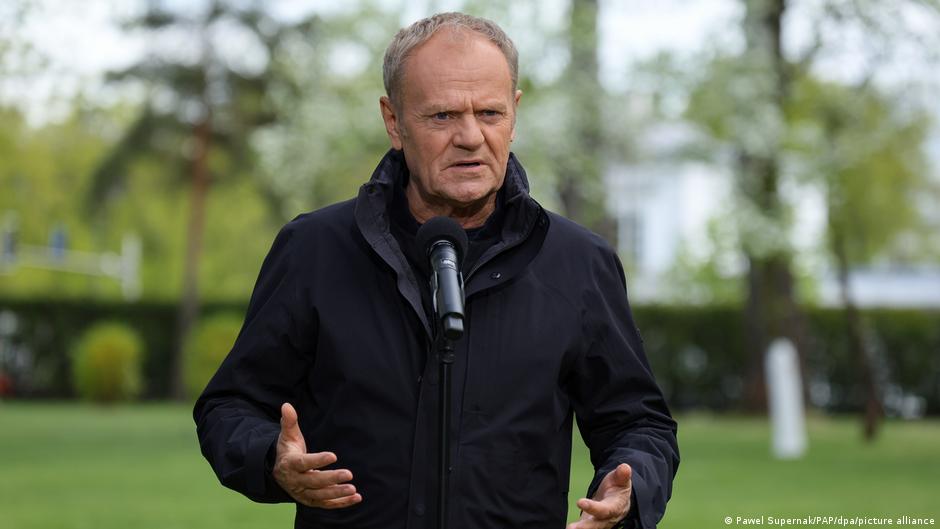
The political response was swift. Polish Prime Minister Donald Tusk said he was stunned by the AfD’s success and sharply criticized those in Poland who welcomed the result. Writing on X on Sunday evening, September 6, Tusk said that in Poland only “idiots or traitors” could celebrate the triumph of the AfD in Germany. He added that such figures had accumulated in the opposition Confederation and Law and Justice, or PiS, parties.
“In Poland only idiots or traitors can rejoice at the triumph of the AfD party in Germany,” Tusk wrote on X.
For markets, the significance is not limited to a regional vote count. Germany remains Europe’s largest economy, and political developments that complicate coalition formation, deepen tensions with neighboring states or shift the balance of debate on migration, European integration and fiscal priorities can quickly enter the risk calculations of investors in equities, sovereign debt, currencies and credit.
Regional Vote Becomes a Cross-Border Signal
According to the preliminary results cited in the source article, AfD’s candidate for state premier is Ulrich Siegmund. The Christian Democratic Union, whose member Sven Schulze is the current state premier, was projected at 17.4%. The Social Democratic Party of Germany stood at 9.2%, the Greens at 8.9%, the Left Party at 8.6%, and the Sahra Wagenknecht Alliance at 5.1%. The Free Democratic Party and other parties failed to clear the 5% threshold, according to the preliminary figures.
On that basis, the 83 seats in the Saxony-Anhalt Landtag could be distributed with AfD taking 39 mandates, the CDU 15, the Left Party, Greens and SPD eight seats each, and the Sahra Wagenknecht Alliance five. Preliminary final results were expected overnight into September 7.
That arithmetic matters for investors because fragmented parliaments can slow policy formation and complicate budget, infrastructure and industrial decisions. Even when state elections do not immediately alter national policy, they can affect expectations around federal coalition behavior and the willingness of mainstream parties to take harder positions in response to voter pressure.
The reaction in neighboring Czechia pointed in a different direction from Warsaw. Tomio Okamura, speaker of the lower house of the Czech parliament and founder of the right-wing Freedom and Direct Democracy party, congratulated the German far-right party during an appearance on public broadcaster CT. Okamura said he hoped above all that AfD would enter the new governing coalition in Saxony-Anhalt.
The Czech context is relevant for regional risk watchers. Since late 2025, Czechia has been governed by a coalition consisting of billionaire Andrej Babis’s right-populist ANO party, Okamura’s SPD and the Motorists’ Party. That makes reactions to the German state result part of a broader pattern of right-populist alignment across parts of Central Europe.
Europe-Wide Risk Repricing Remains Political, Not Numerical
France also framed the result as a European warning. Benjamin Haddad, France’s minister for European affairs, wrote on X that it was a “difficult moment for Europe.” He said governments must listen to anger, anxieties and fears and respond to them, but added that nationalism and xenophobia would never be the solution. Haddad also urged Europeans not to forget their history, saying this was the meaning of decisions taken by France and Germany.
Those comments underline why the election result is likely to be followed beyond Germany’s domestic political desks. The Franco-German relationship remains a core reference point for European Union policy coordination. Any rise in pressure on that axis, even at the state level, can influence market perceptions of the EU’s capacity to respond to budget disputes, defense spending requirements, migration strains and industrial competitiveness challenges.
The immediate market implications are more about sentiment and risk premia than a single tradeable data point. No asset-price moves, trading volumes or sector rotations were provided in the source article. Still, political desks and macro investors are likely to treat the Saxony-Anhalt result as part of a widening European election-risk calendar, especially because the projected AfD vote share of 44% is large enough to dominate the state-level headline.
German equities with domestic regulatory exposure, infrastructure-sensitive names and lenders tied to regional economic conditions may face closer scrutiny if coalition talks become prolonged or contentious. Bond investors may also watch whether the result affects national polling and fiscal debate, though any direct read-through to German sovereign pricing would depend on broader political developments rather than the state result alone.
The central event for real-time market intelligence is therefore the political shock itself: a projected AfD victory large enough to prompt warnings from Poland and France, congratulations from a Czech right-wing leader, and renewed focus on whether Germany’s regional politics are entering a phase that could complicate national and European policy coordination.