EU Scraps High-Level Defense Panel After German and Italian Pushback
The last-minute cancellation removes a near-term policy catalyst for Europe’s defense sector as markets track spending plans and procurement gaps.
The European Union has dropped a planned launch of a high-level expert group on defense policy after resistance from several member governments, including Germany and Italy, according to dpa. The decision removes, at least for now, a potential policy signal that investors and defense-industry participants had expected to monitor for clues on future European procurement priorities, capability gaps and cooperation with Ukraine.
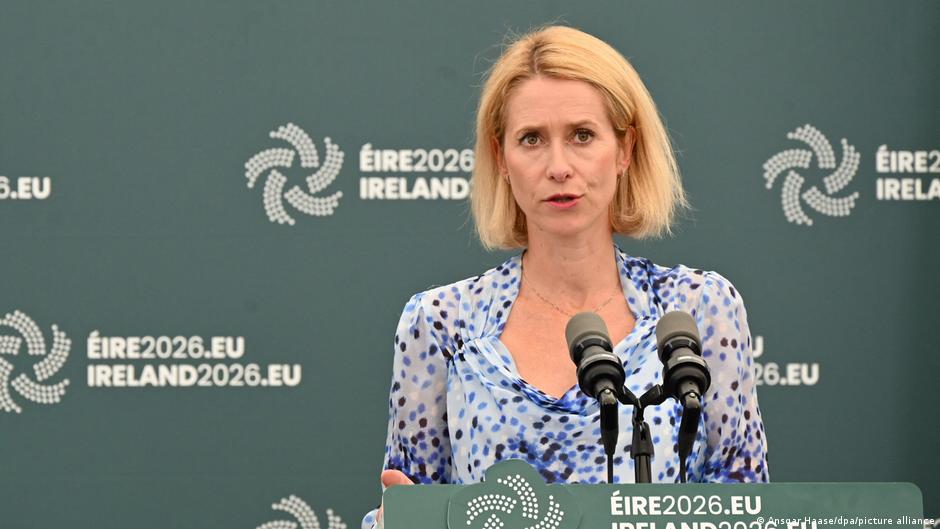
EU foreign policy chief Kaja Kallas cancelled the planned presentation of the group “at the last minute,” dpa reported. The initiative had been scheduled for Monday, September 7, and was intended to bring together senior political and military figures from several EU countries, as well as the United Kingdom and Ukraine. The group was expected to work under Kallas’s leadership on proposals for closing gaps in Europe’s military capabilities more quickly and more effectively, and to deliver a report containing specific recommendations.
For markets, the cancellation matters less as an immediate spending decision than as a sign of political friction around Europe’s defense buildout. Defense contractors, aerospace suppliers, cybersecurity firms and companies tied to military logistics have traded in recent years against a backdrop of rising security concerns and expectations of higher European defense outlays. Any body tasked with identifying capability shortfalls and accelerating policy coordination could have become a reference point for future procurement flows.
Policy Catalyst Delayed
A European Union official in Brussels told dpa late on September 6 that “some member states considered that this is not the right step at the moment.” After talks with defense ministers from EU countries, officials decided not to proceed with this specific initiative, the official said.
“The diagnosis remains the same: Europe must move faster in defense,” the EU source told dpa.
The planned group was not described as a funding mechanism and no new spending figures were announced in connection with it. Still, the effort would have provided a formal structure for identifying military capability gaps and setting out recommendations. That type of process can influence sector rotation by shaping expectations for which defense categories may receive priority, including ammunition, air defense, drones, electronic warfare, battlefield communications and industrial capacity.
According to dpa, Germany and Italy were among the governments that had objected to the creation of the expert group. The report cited a possible reason for Germany’s opposition as Berlin’s critical view of Kallas personally as head of the EU’s foreign policy service. In defense policy, German authorities are inclined to rely on NATO planning processes, dpa reported. Germany is also currently advocating the merger of a significant part of the European External Action Service, which Kallas oversees, with the European Commission.
The institutional dispute is relevant for market participants because procurement visibility in Europe depends not only on headline defense commitments but also on which institutions drive implementation. NATO planning, EU-level defense initiatives and national procurement processes can produce different timelines, eligibility rules and industrial beneficiaries. A delay or cancellation at the EU level may therefore affect expectations about the pace and shape of cross-border defense coordination, even when the underlying security assessment remains unchanged.
Ukraine Role Was Set to Be Central
Kallas had announced on September 1, after an informal meeting of EU defense ministers in Wicklow, Ireland, that Ukraine would be involved in the search for solutions to strengthen Europe’s defense capabilities. Kyiv was expected to join “a new high-level group” alongside senior politicians and military officials from EU countries and the United Kingdom.
At that meeting, a DW correspondent asked Kallas who would represent Ukraine in the new group, noting that former Ukrainian defense minister Mykhailo Fedorov had been brought in by Italy as a defense adviser. Kallas did not name Ukraine’s representative or representatives. Instead, she said the full composition of the group would be presented on September 7.
Kallas also noted that most EU countries are simultaneously members of NATO, while gaps remain in the alliance’s defense capabilities that European countries need to fill. She said Europe had so far moved too slowly despite the rising level of threats. Explaining Ukraine’s planned role, Kallas said Kyiv had extensive experience and described Ukraine as a “world leader in battlefield innovation.”
That Ukraine element was especially important for investors watching the European defense supply chain. Ukraine’s battlefield experience has become a reference point for demand in unmanned systems, rapid software iteration, counter-drone tools and battlefield data integration. A formal EU-backed advisory group including Ukraine could have helped transmit lessons from the war into European capability planning, with implications for both established defense primes and smaller technology suppliers.
The cancellation does not mean the EU is abandoning defense cooperation. The European foreign policy apparatus still intends to examine new possibilities for cooperation with EU countries on defense policy, according to the dpa source. The official stressed that Europe should not spend years focusing on where it needs to be in 2035 while missing the chance to do what is necessary in 2027.
That framing keeps the medium-term investment thesis around European rearmament intact but introduces uncertainty over governance and execution. For traders, the near-term signal is a pause in one channel of EU coordination rather than a reversal of defense priorities. The market focus now shifts to whether alternative EU processes, NATO planning, national procurement decisions or Commission-led mechanisms produce clearer timelines for closing capability gaps.
In practical terms, the cancelled launch may reduce the likelihood of an immediate September policy headline capable of moving defense-linked equities or suppliers on fresh recommendations. But it also highlights the political sensitivity around who sets Europe’s defense agenda. Germany’s preference for NATO-centered planning and its reported push to merge parts of Kallas’s service with the European Commission point to institutional choices that could matter for future contract flows and industrial policy.
For now, the underlying message from Brussels remains that Europe must accelerate defense work. The market question is whether that acceleration will come through a high-profile expert panel, national capitals, NATO frameworks or a reconfigured EU institutional process. The September 7 launch was supposed to clarify the next step. Instead, its cancellation has made the policy path more fragmented just as investors continue to price the long-term consequences of Europe’s security shift.