Macron Pushes EU Social Media Ban for Under-15s After French Legal Setback
France’s president is seeking an EU-wide rule after the country’s Constitutional Council blocked a national measure on free-expression grounds.
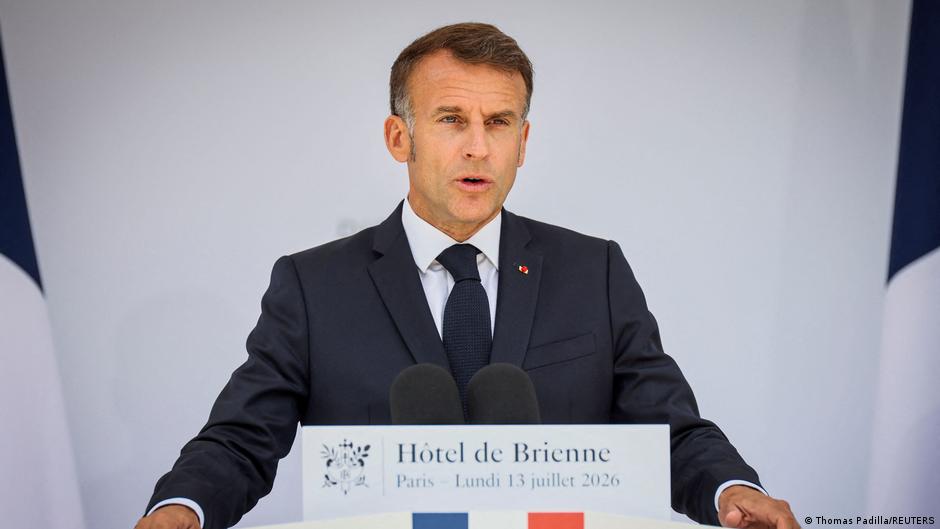
French President Emmanuel Macron has asked European Commission President Ursula von der Leyen to prepare a European legislative act that would ban children under 15 from using social media, according to AFP, which reviewed a letter dated August 29 on Monday, September 7.
The request turns a domestic French policy setback into a potential European Union regulatory file, with implications for major social media platforms including TikTok, Instagram and Snapchat. For markets, the development adds another layer of policy risk around online platforms at a time when regulators across jurisdictions are intensifying scrutiny of youth access, digital safety and platform accountability.
Macron’s intervention follows an August 14 decision by France’s Constitutional Council blocking a comparable national law. The country’s highest constitutional authority said the provision violated freedom of expression, creating a legal obstacle for the French government’s attempt to impose a national age-based restriction on social media use.
Macron, who is due to leave office after elections in April 2027, has said he hopes to find a path forward in the coming months through a revised national legislative act that would comply with EU law and the French Constitution. In his letter to von der Leyen, he argued that the next step should be European harmonization.
“It is now crucial to go further and harmonize this provision through a new European document,” Macron said in the letter, according to the source article.
Regulatory Pressure Moves From Paris to Brussels
The shift from a national bill to a potential EU-wide initiative matters because Brussels regulation can reshape operating conditions across the region’s large consumer technology market. A harmonized European framework would be more consequential than a single-country measure, particularly for global platforms whose advertising, engagement and compliance systems depend on scale.
Macron’s request does not itself create a new law. It asks the European Commission to prepare a legislative act. Any such measure would have to move through the EU policy process and would likely draw close attention from member states, digital platforms, civil-liberties advocates and child-safety campaigners.
The French president’s appeal also highlights the legal challenge facing governments that want tougher restrictions on minors’ access to social media. France’s Constitutional Council blocked the national provision on freedom-of-expression grounds, signaling that any replacement law must be more carefully drafted. Reuters described the Constitutional Council’s decision as a blow to Macron. The president has instructed Prime Minister Sébastien Lecornu to prepare a new, legally flawless draft law.
For investors and market participants, the issue is less about immediate revenue effects and more about the direction of regulatory travel. Rules that restrict access for younger users could affect user growth, engagement patterns and compliance costs if they are adopted widely. Platforms may also face additional obligations around age verification, parental controls or account restrictions, depending on how any future measure is written.
The source article does not provide market prices, trading volumes or company-specific financial estimates linked to Macron’s request. It does, however, place the issue squarely in the category of breaking policy risk for the social media sector. In market terms, the key signal is that France is seeking to move the debate from a national constitutional dispute to a coordinated European framework.
Health Concerns Behind the Policy Push
The French bill emerged after the country’s health oversight authority warned in a December 2025 report about harmful effects on children from platforms such as TikTok, Instagram and Snapchat. The report cited potential risks including lower self-esteem and possible increases in self-harm, suicides and drug use.
The article also cites statistics showing the scale of youth smartphone and social media use in France. Every second teenager spends between two and five hours a day on a smartphone, and 58% use phones to access social networks. Those figures have helped frame the policy debate as a public-health and child-protection issue rather than only a technology regulation dispute.
The ban initiative gained momentum after Macron made it a key domestic agenda item in his final year in office. That political context is important: with the French president set to leave office after the April 2027 elections, the social media measure has become part of a narrowing policy window for his administration.
At the same time, the Constitutional Council’s ruling shows that the government cannot simply impose the measure through domestic law without addressing constitutional concerns. Macron’s turn toward the European Commission suggests that Paris sees EU-level legislation as a way to standardize the rule and potentially reduce fragmentation across member states.
The European angle also follows developments outside the bloc. In December 2025, Australia blocked people under 16 from accessing most social media platforms. That move provides an international comparison point for regulators considering age-based restrictions, though the source article does not detail the Australian framework or its market impact.
For the technology sector, the latest development is a reminder that youth access remains a live regulatory theme. The immediate event is Macron’s letter to von der Leyen. The next market-relevant question is whether the European Commission responds by drafting a formal legislative proposal, and how broadly such a proposal would define social media access, platform responsibility and enforcement.
Until then, the issue remains a policy catalyst rather than a completed regulatory change. But the move is notable because it connects France’s domestic legal setback with the possibility of EU-wide rules affecting the largest social platforms operating in Europe.