Germany Presses Ukraine to Include Its Defense Firms in Procurement
Foreign Minister Johann Wadephul said German industry should benefit from Berlin’s financial and military support for Kyiv.
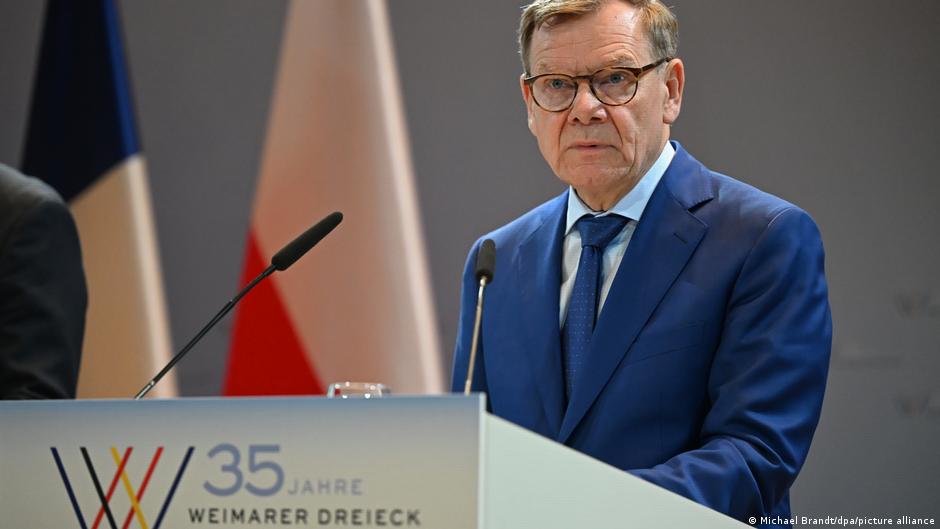
Germany’s foreign minister has publicly urged Ukraine to give greater weight to German economic and industrial interests as Berlin continues to provide large-scale financial and military support to Kyiv, placing defense procurement and taxpayer scrutiny at the center of a politically sensitive market story.
Johann Wadephul, Germany’s foreign minister, criticized Ukrainian President Volodymyr Zelensky and called on Kyiv to pay more attention to Germany’s interests, according to an interview with Bild published on Tuesday, September 8. His comments put a sharper commercial frame around Germany’s continuing support for Ukraine, particularly for the German defense sector, which has become increasingly important as European governments expand military budgets and accelerate procurement cycles.
Wadephul said Germany is currently Ukraine’s strongest backer in terms of financial and military assistance. He then linked that support directly to industrial participation, saying that German defense companies should benefit from the aid relationship.
“At the moment, we are Ukraine’s strongest supporter in terms of financial and military support,” Wadephul said, adding that “naturally, the German defense industry must benefit from this.”
For markets, the remarks highlight the growing overlap between foreign policy, public spending and defense-sector order flows. European defense companies have drawn sustained investor attention since Russia’s full-scale invasion of Ukraine, with traders monitoring new aid packages, procurement frameworks and NATO-linked funding mechanisms for signals on revenue pipelines. Wadephul’s comments indicate that Berlin wants German suppliers to be represented in procurement decisions connected to support for Kyiv.
Procurement Becomes a Market Signal
Wadephul said he raised the issue directly with Zelensky during a recent visit to Kyiv. Recounting his message to the Ukrainian president, he said Germany stands with Ukraine and supports it, but that the German government must also explain its policy to German taxpayers. At minimum, he said, German defense industry should participate in all procurement processes.
That statement is likely to be read by investors as a political signal rather than a specific contract announcement. The source article did not name any companies, contract values or procurement timelines. Still, the minister’s language points to a broader expectation that German firms should have access to tenders or purchasing programs associated with aid and military assistance.
In a market context, such remarks can matter because defense procurement is often shaped by government-to-government decisions, coalition politics, security priorities and national industrial policy. A public demand from Germany’s foreign minister may therefore influence expectations around future order allocation, even without an immediate deal attached.
Wadephul visited Kyiv on August 22. At a joint press conference with Ukrainian Foreign Minister Andrii Sybiha, he announced additional assistance for Ukraine amounting to 60 million euros. That pledge adds to the flow of European support that investors track as part of the broader defense and reconstruction-linked spending environment.
Germany will also transfer another 10 million euros to a NATO fund whose resources are used, among other things, for supplies of energy carriers, medical equipment and systems designed to protect against drones. The reference to drone protection is notable because counter-drone systems have become a high-priority procurement category across Europe, alongside air defense, ammunition, electronic warfare and battlefield support technologies.
Air Defense Talks Remain in Focus
Wadephul also announced further talks with partners from various countries on supplying Ukraine with additional air defense systems. Air defense remains one of the most closely watched areas of military support for Kyiv, both because of Ukraine’s battlefield needs and because of the limited availability of advanced systems among allied countries.
The minister’s comments arrive as European governments continue to balance strategic commitments to Ukraine with domestic political and budgetary pressures. His emphasis on German taxpayer accountability is central to that balance. By arguing that German industry should take part in procurement linked to German support, Wadephul framed Ukraine aid not only as security policy but also as an issue of industrial return.
That framing may resonate with investors watching sector rotation into defense and security-related equities. While the article provides no market data, trading volume figures or company-level moves, the policy message is clear: Berlin wants its defense industrial base to be part of the economic chain created by support for Ukraine. In real-time market terms, the remarks may sharpen attention on German defense suppliers whenever future aid packages, NATO funding decisions or Ukraine procurement programs are announced.
The political dimension is also important. Wadephul’s criticism of Zelensky suggests that even among Ukraine’s strongest supporters, there is growing pressure to align military aid with national economic interests. For Kyiv, that may mean navigating donor expectations while trying to secure urgently needed equipment. For Germany, it means keeping public support for aid intact by showing that domestic industry has a role in the process.
No new procurement contracts were identified in the source article, and no specific German defense companies were mentioned. The immediate market relevance lies in the minister’s explicit linkage of aid, taxpayer justification and defense-industry participation. That linkage is likely to remain a recurring theme as Germany and its partners discuss further air defense deliveries and related support for Ukraine.