Sanctioned Russian-Linked Tanker MYRA Issues Atlantic Distress Signal
The vessel remained underway off Ireland after departing Ust-Luga, raising fresh scrutiny of sanctioned oil-shipping networks.
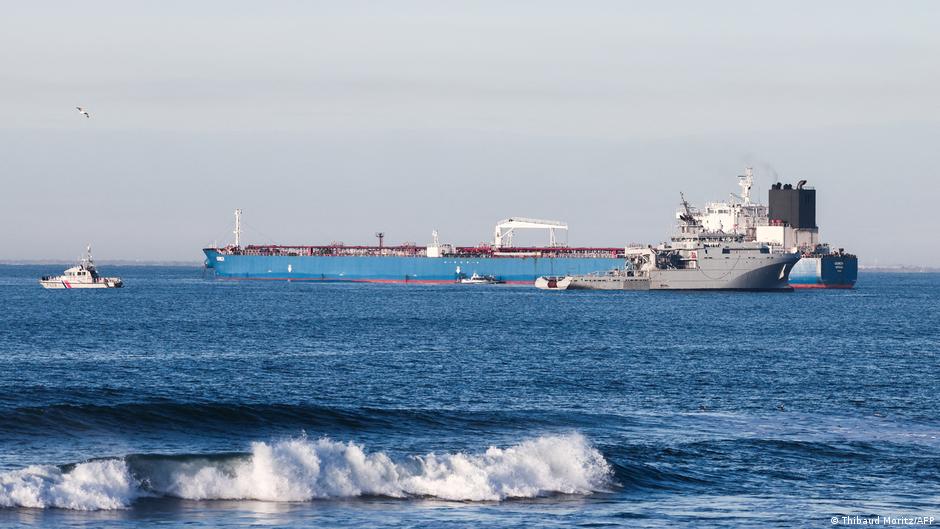
A sanctioned oil tanker linked by Ukrainian intelligence to Russia’s so-called shadow fleet issued a distress signal in the North Atlantic off Ireland’s northwestern coast, creating a fresh operational risk for oil traders monitoring Russian export routes and sanctions enforcement.
The tanker MYRA transmitted the alert through the Inmarsat-C satellite communications system, maritime monitoring project SeaNews reported on Saturday, October 24. The UK Coastguard is coordinating the response.
Despite the distress signal and extreme weather, the 75,000-ton vessel continued moving at approximately 9 knots, or about 17 kilometers per hour, according to SeaNews. The tanker had departed from the Russian Baltic port of Ust-Luga, a major outlet for Russian crude oil and refined products.
Sea conditions were severe when the alert was sent. Waves in the tanker’s vicinity reached 8.8 meters, while wind gusts were approximately 130 kilometers per hour, SeaNews said. The vessel was estimated to be around 348 kilometers from the coast.
Immediate focus on cargo flows and vessel movements
The report did not specify the nature of the emergency, the tanker’s cargo, its destination or whether its speed and course had subsequently changed. No interruption to oil loadings at Ust-Luga, market-price movement or related change in trading volumes was reported in the source information.
For energy markets, the immediate issue is therefore vessel-specific rather than evidence of a broader supply disruption. Traders and shipping desks will be watching whether MYRA can continue its voyage, is redirected to a port, requires assistance or becomes unable to deliver any cargo it may be carrying.
MYRA’s continued movement at about 9 knots suggests the vessel had not stopped when SeaNews reported the distress alert, although the cause and severity of the incident remained unclear.
The event also highlights the operational uncertainty surrounding sanctioned tankers moving between Russian ports and overseas destinations. Any prolonged interruption involving such a vessel can affect voyage schedules, freight availability and the timing of individual cargo deliveries, even when the volumes involved are not large enough to shift benchmark oil prices.
MYRA sanctioned by US, EU and UK
MYRA is subject to sanctions imposed by the United States, European Union and United Kingdom. According to War & Sanctions, a database maintained by the Main Intelligence Directorate of Ukraine’s Defense Ministry, the tanker has been used to export Russian crude and petroleum products to third countries while circumventing sanctions.
The database says the United States placed MYRA on its sanctions list on July 30, 2025. The European Union followed on October 24, 2025, while Switzerland and Ukraine designated the vessel on December 13, 2025. Britain imposed sanctions on February 24, 2026, and Canada added the tanker to its list on March 25, 2026.
Ukrainian intelligence links MYRA to Fractal Marine DMCC, a company registered in the United Arab Emirates. The agency describes the company as one of the leading operators of Russia’s shadow fleet, a collection of ships and corporate structures used to sustain oil trading under Western restrictions.
According to the Ukrainian database, MYRA has repeatedly called at the Russian ports of Ust-Luga and Primorsk. It has also visited ports in Senegal, Turkey, Brazil, Estonia and Denmark, indicating a trading pattern spanning the Baltic, Atlantic and other international markets.
Iran-linked shipping network under scrutiny
Ukraine’s intelligence service also alleges that MYRA belongs to a shipping network controlled by Mohammad Hossein Shamkhani. He is the son of Ali Shamkhani, Iran’s former secretary of the Supreme National Security Council and a former adviser to the country’s supreme leader.
Ali Shamkhani was killed in a joint US-Israeli operation in February 2026, according to the source article. Ukrainian intelligence says the younger Shamkhani controls a network of tankers, operators and shell companies involved in money laundering and the transport of Russian and Iranian oil, including shipments bound for China.
The distress call places renewed attention on the physical and commercial vulnerabilities of shipping networks operating under multiple sanctions regimes. While the available information does not establish a wider impact on Russian export volumes or global crude balances, the incident is a developing maritime event on a closely watched trade route.
Market participants are likely to focus next on official updates from the UK Coastguard, changes in MYRA’s location and speed, and any evidence that the vessel’s voyage or cargo schedule has been disrupted. Those details will determine whether the incident remains an isolated weather-related emergency or begins to affect freight positioning and near-term delivery expectations.