Greens Hold Hanover as AfD Loses Lower Saxony Municipal Runoffs
Lower Saxony’s local election runoffs delivered a setback for the far-right AfD while Greens, CDU, SPD and independents retained key city posts.
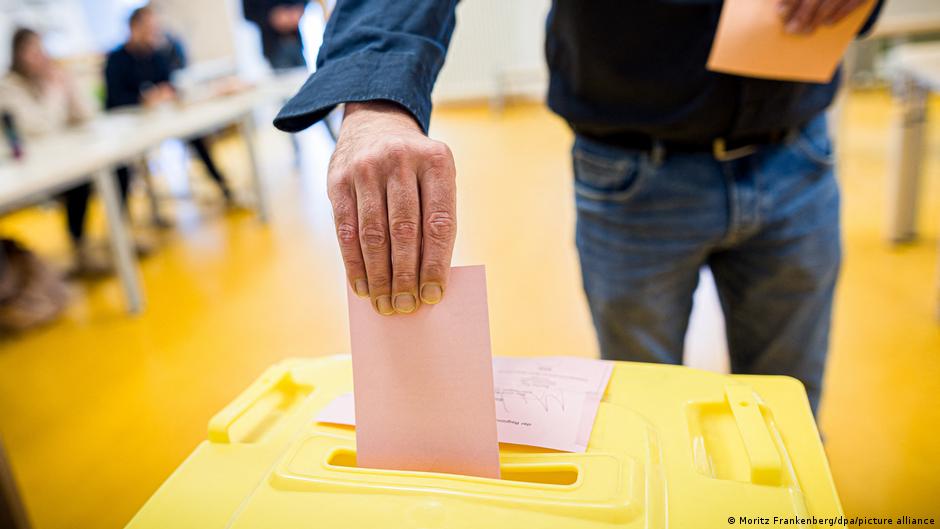
Lower Saxony’s municipal runoffs produced a clear political signal for investors tracking German regional risk: the far-right Alternative for Germany, or AfD, failed to convert any of its three bids for local executive office, while incumbents and established parties held several of the state’s largest city halls.
The second round of voting took place on Sunday, September 27, across 123 municipalities, where residents chose mayors and heads of other territorial authorities. For markets, the results add another data point to Germany’s fragmented but closely watched political landscape, particularly as investors assess local governance stability, coalition dynamics and voter appetite for anti-establishment parties.
AfD candidates were competing for three leadership posts: in Salzgitter, a city of roughly 100,000 residents, and in the smaller towns of Munster and Bockenem, with populations of about 15,000 and 9,000 respectively. The party lost all three contests by wide margins.
AfD candidates contested three leadership posts in the runoff and failed to win any of them.
In Salzgitter, Christian Democratic Union candidate Frank Klingebiel, who has served as lord mayor since 2006, secured a decisive victory with 74.72% of the vote. AfD candidate Patricia Mair received 25.3%.
In Munster, independent candidate Anna Adamczak won with 80.5%, compared with 19.5% for AfD’s Christoph Weynand. In Bockenem, independent candidate Jens Luer took 69.6%, while AfD candidate Felix Mull received 30.4%.
City Hall Control Remains Broadly Stable
The most closely watched result in the state capital was Hanover, the administrative center and largest city in Lower Saxony. Belit Onay of Alliance 90/The Greens retained the mayoralty, a post he has held since 2019, defeating Axel von der Ohe of the Social Democratic Party in the runoff.
The Hanover result is notable for market observers because the city is a major administrative and economic center in northern Germany. Continuity in the mayor’s office suggests no immediate political shock to local policy direction, planning processes or municipal priorities.
In Braunschweig, the state’s second-largest city, Social Democrat Thorsten Kornblum also retained the post of lord mayor. Kornblum has led the city since November 2021 and defeated Maximilian Pohler of the CDU in the second round.
Osnabrueck, the fourth-largest city in Lower Saxony, likewise delivered continuity. CDU politician Katharina Poetter, who has headed the city since November 2021, held the office after defeating Volker Bajus of the Greens.
The picture was not only one of incumbency, however. In Oldenburg, the state’s third-largest city, voters elected a new mayor. Greens candidate Jascha Rohr defeated Ulf Prange of the SPD. Prange had run for the Social Democrats in place of Juergen Krogmann, who had served as lord mayor since November 2014.
In Goettingen, the fifth-largest city in Lower Saxony, the Greens also won. Onyeka Oshionwu defeated Ehsan Kangarani of the CDU in the second round, adding another significant municipal result for the party in the state’s urban centers.
First-Round Vote Shares Frame the Runoff
The main phase of Lower Saxony’s municipal elections was held on September 13. Based on figures available on September 14, the CDU took the largest share of votes, with 27.2%. The party is led nationally by German Chancellor Friedrich Merz.
The SPD ranked second with 24.6%, followed by the AfD with 15.9%. The Greens received 14.1%, while the Left Party took 6%.
Turnout, according to the election commission’s September 14 data, stood at 64.6%. That was 7.6 percentage points higher than in the 2021 state elections. Higher participation can matter for political risk pricing because it may alter the reliability of polling-based expectations and expose shifts in voter mobilization at the local level.
The AfD’s third-place showing in the broader first-round vote gave the party visibility, but the runoff results show its limitations in head-to-head contests for executive office in the municipalities where it advanced. In each of its three leadership contests, the AfD candidate lost by a substantial margin to a CDU or independent opponent.
The election also unfolded under added scrutiny of the party. Four AfD candidates were denied admission to the elections because of doubts about their commitment to Germany’s constitutional order. The AfD’s state organization is under observation by the Office for the Protection of the Constitution as a right-wing extremist grouping. The party is challenging that decision in court.
For investors and analysts following German politics, the immediate market implication is less about a single municipal post and more about signal quality. Lower Saxony’s runoffs showed resilience for mainstream parties and independents in executive contests, urban strength for the Greens in Hanover, Oldenburg and Goettingen, and continued relevance for the CDU and SPD across the state’s municipal map.
There were no direct market data, trading volumes or asset-price moves reported in the election results. Still, the outcomes feed into the broader assessment of Germany’s political environment at a time when regional and local voting patterns are being watched for signs of voter realignment, policy continuity and the governing capacity of established parties.