Swiss Voters Reject Neutrality Curbs That Would Have Limited Sanctions Policy
The referendum result preserves Switzerland’s ability to align with EU sanctions, including measures linked to Russia’s war in Ukraine.
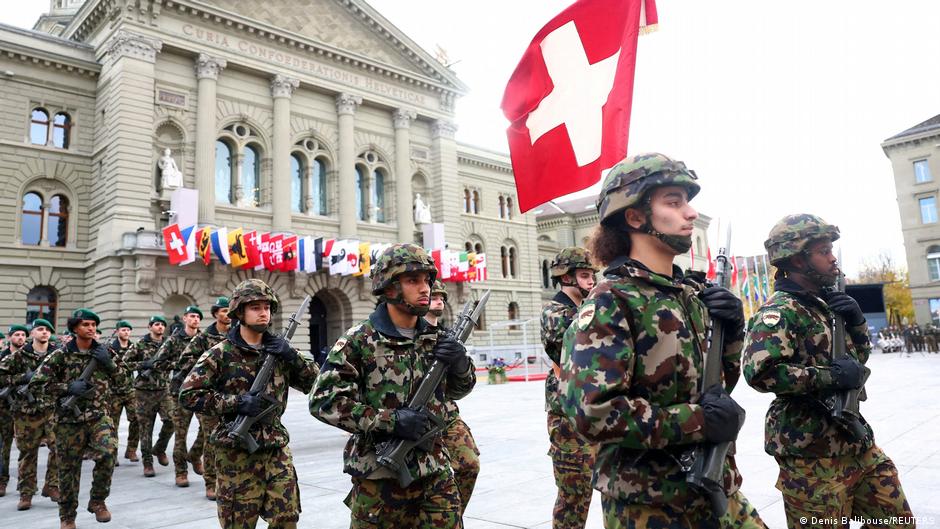
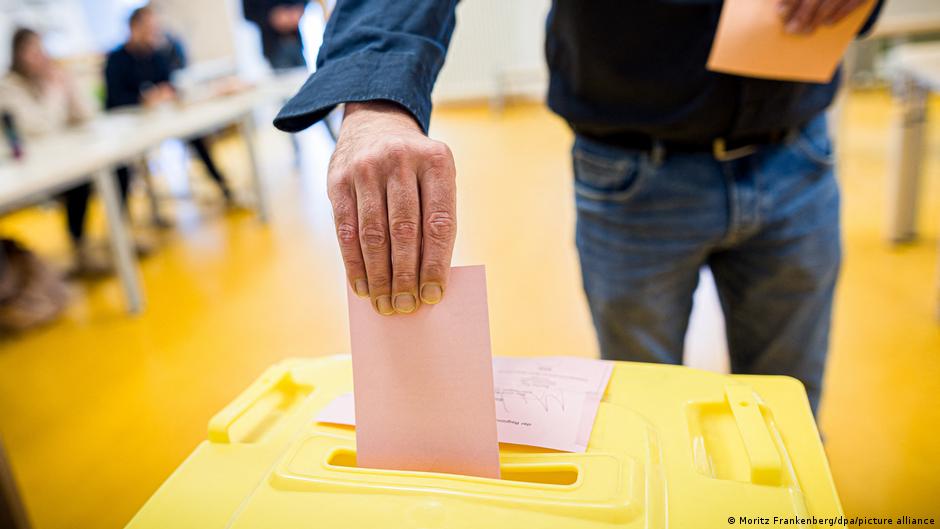
Swiss voters have rejected a proposal that would have sharply narrowed the country’s room for maneuver on sanctions and security cooperation, preserving the government’s current ability to apply neutrality with political flexibility. Official results published by the Swiss government on Sunday, September 27, showed that 70.15 percent of voters opposed the initiative.
For markets, the outcome removes a potential policy constraint that could have complicated Switzerland’s alignment with major Western sanctions regimes, including measures connected to Russia’s war in Ukraine. While the vote was framed domestically as a question of constitutional neutrality, it also carried implications for financial institutions, commodity traders, exporters and compliance teams operating from Switzerland, where sanctions policy is closely watched by global investors.
The initiative, titled “Preserving Swiss Neutrality,” was advanced by the group Pro Schweiz, which is close to the right-conservative Swiss People’s Party. Its supporters argued that Switzerland’s constitutional neutrality had been weakened by the government’s decision to join European Union sanctions against Russia following the war in Ukraine.
The rejected proposal sought to write a stricter concept of “permanent and armed” neutrality into the constitution. It also aimed to prevent Switzerland from joining or cooperating with military alliances, including NATO, except in cases where Switzerland itself was attacked. Most consequentially for cross-border business, the initiative would have imposed a sweeping restriction on sanctions: the government would have been permitted to introduce economic sanctions only after approval by the United Nations Security Council.
Sanctions Flexibility Remains Intact
The scale of the rejection signals broad public support for maintaining the existing model, under which Switzerland can remain militarily neutral while still responding to breaches of international law through sanctions and other policy tools. The result matters because Swiss sanctions decisions can affect financial flows, commodity trade, asset freezes and legal exposure for companies with links to sanctioned jurisdictions.
All major political forces in Switzerland opposed the initiative except the Swiss People’s Party. Foreign Minister Ignazio Cassis argued during televised debates that Swiss neutrality had always been applied with a measure of flexibility. He said neutrality should not be equated with indifference and maintained that Switzerland should not close its eyes to violations of international law in order to protect its own interests or preserve peace.
Neutrality, according to the argument made by opponents of the initiative, does not require Switzerland to remain passive when international law is violated.
The rejection means Switzerland does not face a constitutional requirement to wait for UN Security Council approval before imposing economic sanctions. That point is significant because Security Council action can be blocked by veto powers, potentially limiting the ability of smaller states to act alongside broader coalitions. By voting down the initiative, Swiss voters left intact the government’s capacity to coordinate with European sanctions policy when it decides that doing so is compatible with national interests and neutrality.
For investors tracking geopolitical risk, the decision reduces uncertainty around Switzerland’s role in future sanctions episodes. A different outcome could have forced a recalibration of compliance assumptions across banking, trade finance and corporate risk management, particularly in cases where EU sanctions are implemented without matching UN Security Council approval.
Political Signal Beyond Switzerland
The referendum result also sends a broader political signal at a time when European governments continue to balance security policy, economic exposure and domestic pressure over the war in Ukraine. Switzerland is not a member of the European Union or NATO, and its tradition of neutrality is central to its political identity. But the vote suggests that a large majority of Swiss voters did not support turning neutrality into a stricter constitutional barrier against sanctions.
Pro Schweiz and allied right-conservative forces had argued that participation in EU sanctions amounted to an erosion of non-intervention. Opponents countered that neutrality had never meant political disengagement from international law or from questions of war and peace. The official result, with more than 70 percent voting against the initiative, leaves that more flexible interpretation in place.
The vote came alongside another referendum in which more than 70 percent of Swiss voters also rejected an initiative on food security. Supporters of that proposal had called for increasing the share of domestically produced food to at least 70 percent of consumption. They also sought higher production of plant-based foods, lower use of plant protection products and fertilizers, and stronger protection for drinking water, soil fertility and biodiversity.
That second rejection indicates that voters were also unwilling to endorse a major constitutional shift in agricultural and environmental policy. For sectors exposed to Swiss food supply rules, farm production standards and environmental regulation, the result avoids a mandated move toward the proposed domestic production threshold and associated changes in agricultural inputs.
Taken together, the referendum outcomes point to voter resistance against large constitutional rewrites in two policy areas with economic consequences. In the neutrality vote, the market-relevant takeaway is clear: Switzerland retains policy flexibility on sanctions, including the ability to move in line with EU measures where the government chooses to do so. The result preserves the existing framework rather than introducing a more restrictive, UN-dependent sanctions model.