EU Adds €710 Million in Aid Funding as Crisis Spending Priorities Shift
The European Union’s new humanitarian package channels major funding toward sub-Saharan Africa, Ukraine, Palestinian territories and Lebanon.
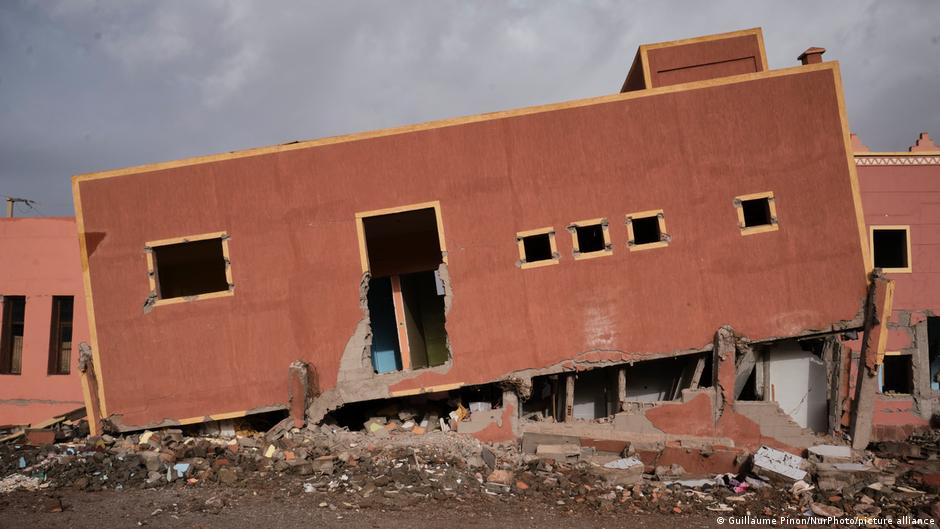
The European Union will allocate an additional €710 million in humanitarian assistance for people affected by conflicts, natural disasters and other crises worldwide, European Commission President Ursula von der Leyen said Saturday, September 26.
The announcement gives markets and policy watchers a fresh signal on the bloc’s near-term external spending priorities, with the largest emphasis placed on Africa, forced displacement, and emergency relief linked to active conflict zones. Von der Leyen made the statement in a video address to participants of the Global Citizen Festival in New York, an event that was later canceled because of bad weather.
While humanitarian allocations are not market-moving in the same way as interest-rate decisions or energy sanctions, the package points to how the EU is directing budget resources across crisis regions at a time when migration, war-related infrastructure damage, food needs, health emergencies and winter preparation remain active policy pressures.
Von der Leyen said special attention in the distribution of humanitarian assistance would be given to Africa, as well as to forcibly displaced people and the communities hosting them.
Sub-Saharan Africa Draws the Largest Migration-Linked Allocation
About €380 million of the new package will be directed toward migration-related measures in African countries south of the Sahara. The funds are intended to support the most vulnerable groups of migrants, as well as their return home and reintegration.
That allocation is the largest clearly identified portion of the additional package and underlines the EU’s continued focus on migration management as part of its wider humanitarian and external-policy spending. For investors tracking European political risk, the figures matter because migration policy remains linked to budget negotiations, border policy, domestic electoral pressure and relations with African partner countries.
The new funding also comes against the background of the EU’s 2026 humanitarian aid budget. According to European Commission data cited in the source material, the bloc budgeted about €1.9 billion for humanitarian assistance worldwide in 2026. The largest spending lines are €557 million for countries in sub-Saharan Africa and €463 million for the Middle East and North Africa.
The latest package therefore reinforces, rather than reverses, the regional distribution already visible in the EU’s 2026 budget planning. Sub-Saharan Africa remains the largest humanitarian line item, while the Middle East and North Africa continue to account for a major share of planned spending.
Emergency Aid Targets Conflicts, Epidemics and Disasters
A further €252 million will be used for emergency assistance connected to active armed conflicts, forced population displacement, epidemics and natural disasters. Within that amount, €97 million will go to countries in sub-Saharan Africa, €103 million to the Palestinian territories and Lebanon, and €52 million to Ukraine, including support for winter preparation.
The split highlights the EU’s effort to balance simultaneous crises across several regions. The Palestinian territories and Lebanon receive the largest portion within this emergency-aid category, followed by sub-Saharan Africa and Ukraine. The Ukraine tranche is explicitly tied in part to winter preparation, a recurring need as damaged housing, energy systems and local infrastructure continue to shape humanitarian requirements.
Smaller amounts are also planned for the African Great Lakes region and for efforts to combat an Ebola outbreak in the eastern Democratic Republic of Congo. No specific figures for those smaller allocations were provided in the source material.
For market participants, the practical read-through is less about immediate trading volume and more about sector and policy exposure. Humanitarian spending flows into food procurement, medical aid, housing reconstruction, cash assistance and winterization. Those categories touch logistics, agriculture supply chains, medical supplies, construction materials and public-sector procurement channels, though the source material does not name any companies or contracts.
Ukraine Funding Has Already Been Increased
The EU had initially earmarked €145 million for humanitarian aid to Ukraine in 2026. In recent months, however, the volume of humanitarian assistance for Ukraine and Moldova was increased to €248 million.
The funds are being directed toward food purchases, medical assistance, housing reconstruction, cash payments and preparation for winter. Since the start of the full-scale war launched by the Russian authorities, the European Commission has allocated more than €1.4 billion to humanitarian aid programs for Ukraine.
The Ukraine figures remain important for broader European market intelligence because they sit alongside larger debates over defense spending, reconstruction finance, energy resilience and fiscal capacity across the bloc. This specific announcement concerns humanitarian aid, not military funding, but it still reflects the continuing budgetary consequences of the war for EU institutions.
The package also shows how humanitarian priorities are being layered across different crisis types. Some funds address migration and reintegration, others respond to immediate emergency needs caused by fighting, displacement, epidemics or disasters. The result is a geographically broad funding map with sub-Saharan Africa, the Palestinian territories, Lebanon and Ukraine among the central recipients.
In real-time policy terms, the key headline is the additional €710 million commitment. The market-relevant detail is the allocation pattern: €380 million tied to migration-related measures in sub-Saharan Africa, €252 million for emergency relief across conflict and disaster zones, and a continued increase in the EU’s Ukraine and Moldova humanitarian envelope for 2026.