Ukraine Sanctions 44 Over Russian Duma Vote in Occupied Territories
Kyiv’s move adds a fresh geopolitical risk signal as the EU prepares potential sanctions tied to Russia’s disputed parliamentary vote.
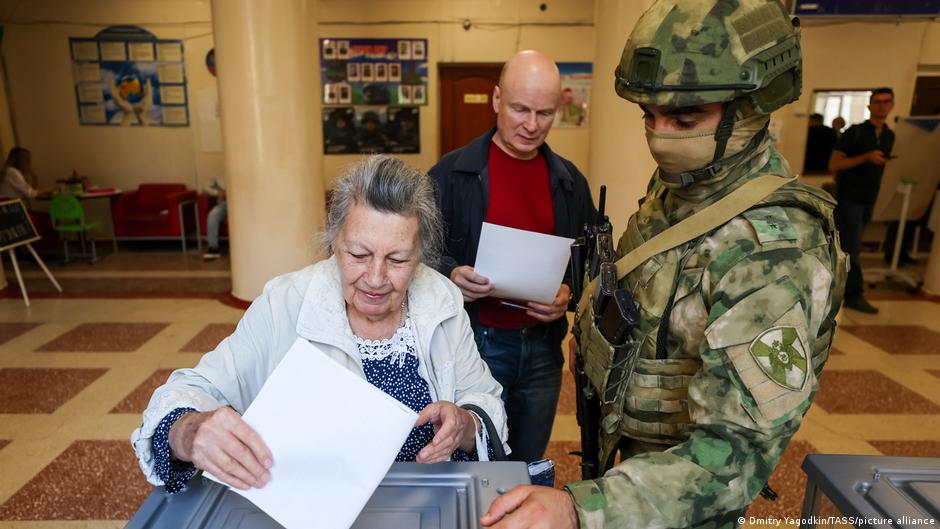
Ukraine has imposed sanctions on people involved in organizing elections to Russia’s State Duma in Ukrainian territories occupied by Russian forces, adding another sanctions-related development for markets tracking geopolitical risk around the war and its impact on European policy.
President Volodymyr Zelensky introduced the measures on Saturday, September 27, targeting 44 individuals accused of taking part in the organization of the Russian parliamentary vote in occupied areas. According to the Ukrainian president’s office, 38 of those sanctioned hold both Ukrainian and Russian citizenship.
The decision follows earlier signals from the European Union that it is prepared to add people involved in the voting process to its own sanctions lists. For investors, the development reinforces the sanctions channel as an active policy tool in the conflict, with potential implications for country risk, compliance exposure and the broader political backdrop facing European markets.
Ukraine and Western allies have recognized the voting process and its results as illegal.
Sanctions Signal Continued Political Risk
The Ukrainian sanctions target people linked to the conduct of elections to the Russian State Duma in occupied Ukrainian territories. The president’s office said some of the sanctioned individuals had already been “elected” as so-called deputies of illegally created local councils on Ukraine’s temporarily occupied territory.
The Russian State Duma elections took place from September 18 to September 20. Russian authorities, for the first time in parliamentary elections, organized voting in occupied parts of Ukraine’s Kherson, Zaporizhzhia, Donetsk and Luhansk regions.
Kyiv and its Western allies rejected the process and its results as unlawful. The European Union has also said it is ready to impose sanctions on people who helped conduct the elections in occupied Ukrainian territories. That prospect keeps the policy response in focus for markets accustomed to monitoring sanctions announcements for potential effects on counterparties, cross-border activity and political risk premiums.
While the Ukrainian measures themselves are directed at individuals, the broader context is a widening confrontation over the political integration of occupied territories into Russia’s state institutions. Such moves can influence market sentiment by sustaining uncertainty around diplomatic outcomes, the durability of sanctions regimes and the likelihood of further restrictions from Western governments.
Occupied Regions Added to Russia’s Electoral Map
For the 2026 State Duma elections, Russian authorities for the first time created separate single-mandate districts for Ukrainian regions occupied after 2022. Following the vote, Russia declared several candidates elected from those districts.
In the self-proclaimed “DNR,” Russia announced the election of Irina Kuksenkova, a war correspondent for Channel One, and Alexander Borodai, a former “head” of the self-proclaimed republic. In the self-proclaimed “LNR,” Russia declared local parliament “deputies” Denis Kolesnikov and Ivan Sanaev elected.
In occupied areas of the Zaporizhzhia region, Russia announced Alexei Tikhomirov as elected. In occupied areas of the Kherson region, it announced Elena Dmitruk, described as a deputy chair of the local parliament. All of these candidates ran for United Russia.
In addition to the single-mandate winners, eight more representatives of the “authorities” in occupied Ukrainian territories entered Russia’s State Duma through federal party lists. Among them is Sergei Arbuzov, a former first deputy prime minister of Ukraine under President Viktor Yanukovych and former head of the National Bank of Ukraine. Arbuzov was nominated by the party A Just Russia.
The dispute over these seats is central to the latest sanctions action. Ukraine views the vote as an illegal process conducted on temporarily occupied territory, while Russia has moved to treat the regions as part of its formal political system. The EU’s readiness to respond with sanctions underscores that the issue is not limited to local political administration but remains embedded in the international sanctions architecture around Russia.
Market Lens: Sanctions and Sector Rotation
For markets, the immediate importance lies less in the number of individuals sanctioned than in the signal it sends about the direction of policy. Sanctions activity tied to the war has repeatedly affected investor assessments of geopolitical risk, particularly across European assets, defense-linked sectors, energy-sensitive industries and companies with compliance exposure to Russia-related restrictions.
The latest Ukrainian action comes as traders continue to watch for developments that could alter the sanctions outlook. EU measures, if adopted, would add another layer to the existing restrictions connected with Russia’s war against Ukraine and its administration of occupied territories. Even when sanctions target individuals rather than broad sectors, they can serve as markers for future policy escalation.
The creation of single-mandate districts in occupied Ukrainian regions for Russia’s 2026 parliamentary elections also gives investors another political reference point in assessing the conflict’s trajectory. The formalization of electoral structures in territories occupied after 2022 may complicate diplomatic calculations and prolong uncertainty around any future settlement.
That uncertainty matters for real-time market intelligence because geopolitical headlines can drive rapid shifts in risk appetite, sector positioning and regional allocation. Defense stocks, energy markets, currencies and European equity sentiment can all be sensitive to perceived escalation or signs of additional sanctions coordination between Kyiv and its allies.
The key near-term question for markets is whether the European Union follows through on its stated readiness to sanction individuals who facilitated the vote. Kyiv has now acted against 44 people. If Brussels adds its own measures, investors will have another indication that the sanctions track remains active and responsive to political developments in occupied Ukrainian territories.