Yabloko Clears Novgorod Threshold in Vote With Federal Ballot Stakes
The party’s 6.2% result after most protocols were counted could preserve a route into future State Duma elections without signature collection.
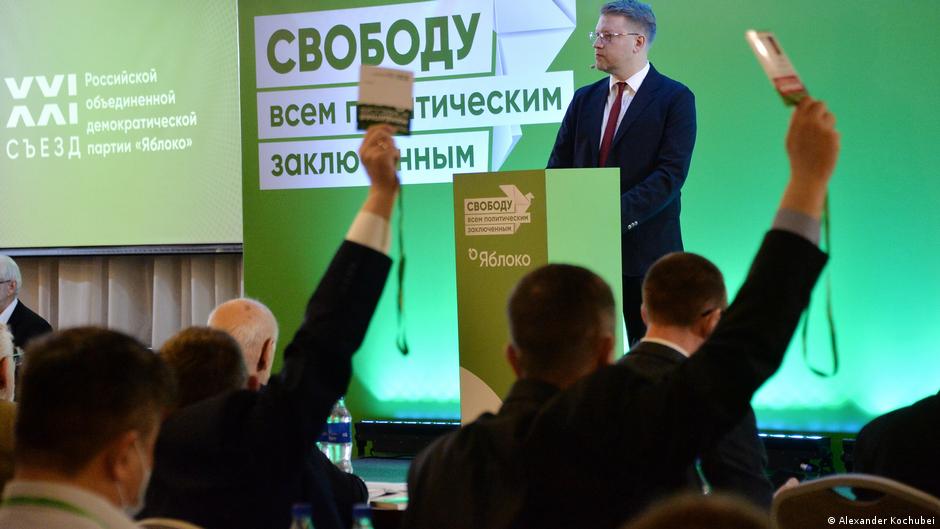
Russia’s liberal opposition party Yabloko is set to enter the Novgorod regional legislature after clearing the 5% threshold in elections to the eighth convocation of the Novgorod Regional Duma, according to data reported by Russia’s Central Election Commission.
With 96.86% of protocols counted, Yabloko had 6.2% of the vote in the single regional district. The result puts the party above the barrier required for representation in the regional parliament. In the previous election at the same level in 2021, Yabloko received 3.83% of the vote.
For market and policy watchers, the result is less about an immediate shift in regional governance than about ballot access and the remaining infrastructure of legal opposition politics in Russia. A seat in a regional legislature can allow Yabloko to continue taking part in State Duma elections without collecting signatures, a practical advantage at a time when the party’s federal prospects have been sharply constrained.
Vote Count Points to Fragmented Regional Field
According to the same figures, United Russia led the Novgorod Regional Duma election with 38.37% of the vote. The Communist Party was at 14.54%, the Liberal Democratic Party of Russia at 12.01%, New People at 9.87%, A Just Russia at 7.7%, and the Party of Pensioners at 5.55%.
Yabloko’s 6.2% showing places it behind the larger pro-system parties but above the formal threshold, giving the result outsized operational importance for the party. The difference between the 2021 result and the current count also marks a notable improvement in Novgorod, despite a campaign environment described by a party source as highly difficult.
The vote count was reported overnight into Monday, September 21, by the Central Election Commission. The results cited were based on the processing of 96.86% of precinct protocols, meaning they were not presented as final complete results in the source account.
“For Novgorod, of course, we are very pleased with the preliminary result,” a Yabloko source said, adding that the presence of a deputy in a regional parliament would allow the party to keep running in State Duma elections without collecting signatures.
The source said Yabloko had previously held three factions, in Pskov, St. Petersburg and Karelia, but that the party’s lists there had been removed. Against that backdrop, the Novgorod result has a practical significance beyond one regional chamber.
Campaign Took Place Under Pressure
The Yabloko source said the campaign in Novgorod was conducted under extremely difficult conditions. The party list on the ballot was marked with a label referring to “foreign agent” status because the head of the list, party deputy chair Anna Cherepanova, had been recognized as affiliated with a “foreign agent.”
Cherepanova herself was removed from the election because of an administrative case under Article 20.3 of Russia’s Code of Administrative Offenses, the source said. Even so, the source argued that neither the labeling nor the removal of the list leader prevented the party from producing a strong result in the region.
The Novgorod vote comes after a major legal blow to Yabloko at the federal level. On August 10, Russia’s Supreme Court removed Yabloko’s federal list from the State Duma elections in response to a lawsuit filed by Rodina. Rodina accused the party, among other things, of copyright violations and illegal payments for election campaigning.
Despite the removal of the federal list, Yabloko candidates in single-mandate districts are still taking part in the vote. That distinction matters for how the party remains present in the electoral process even as its party-list route has been blocked.
Yabloko is described in the source material as the only Russian party that opposed the war in Ukraine. The exclusion of the party from the federal list contest drew criticism from Jurgen Hardt, the foreign policy spokesman for the CDU/CSU parliamentary group in Germany’s Bundestag, who said that by removing the party, Russian President Vladimir Putin had excluded the last significant opposition voice from the electoral process.
For investors and analysts tracking Russia-related political risk, the development is a signal about the structure of managed electoral competition rather than a near-term market catalyst. The distribution of votes in Novgorod shows United Russia retaining a commanding lead, while several other parties remain above the threshold. Yabloko’s entry is significant because it may preserve a narrow institutional channel for future participation in national elections without the additional burden of signature collection.
The immediate market read-through is limited, but the political mechanics are relevant to broader assessments of governance risk, institutional openness and the durability of non-systemic political actors within Russia’s formal electoral framework. In that context, a regional result of 6.2% carries weight beyond its headline vote share.