Khodorkovsky Urges Europe to Offer Russian Elites an Exit
The opposition figure said incentives for Kremlin insiders could encourage an elite split and support a less violent political transition.
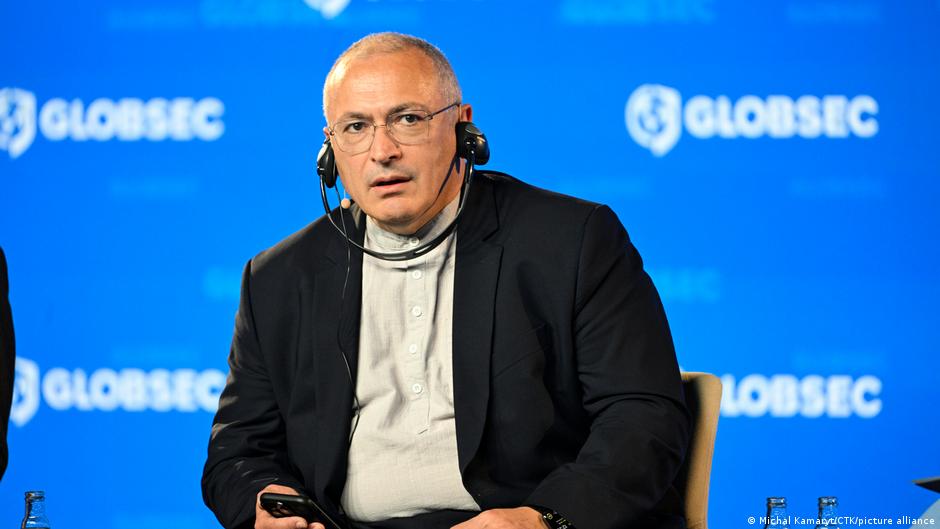
BRUSSELS — European governments should offer influential members of Russia’s elite a viable alternative to supporting President Vladimir Putin, opposition figure Mikhail Khodorkovsky said, framing divisions within the Kremlin’s political and economic establishment as a potential route toward change.
Speaking on Tuesday, Nov. 3, at a conference of the Russian Anti-War Committee in Brussels, Khodorkovsky argued that powerful Russians continue to support Putin partly because they are unconvinced that their positions would improve if the president were removed. For markets, the remarks focus attention on the durability of Russia’s governing coalition, a central variable in assessments of sanctions policy, geopolitical risk and the future course of the war against Ukraine.
Asked whether domestic actors could remove Putin, Khodorkovsky pointed to the personal security system the Russian president has constructed. That structure, he said, limits the ability of insiders to act even if dissatisfaction develops around the leadership.
“If we are talking about a split among the elites, then we need to demonstrate opportunities for a personal exit,” Khodorkovsky said.
Such an exit could still involve certain losses for those involved, he added. He did not specify the terms that Europe should offer at the conference, but described the continued absence of credible options in the fifth year of the war as a serious European mistake.
Sanctions and incentives enter the transition debate
Khodorkovsky has previously argued that a declaration of disagreement would not be sufficient for people who had cooperated with the Russian system. He has cited donations to Ukraine and testimony to investigators about crimes committed by the regime as examples of actions that could demonstrate meaningful cooperation.
His proposal places individual incentives alongside sanctions pressure in the debate over how Europe should influence decision-making among Russian insiders. The Brussels conference agenda includes a separate discussion of sanctions, as well as sessions on nuclear risks and the possibility of putting Putin on trial.
Khodorkovsky also warned that the design of any future political transition could itself generate substantial instability. Attempts to prosecute people connected to the war or restrict their rights through broad lustration measures could provoke armed resistance inside Russia, he said.
Millions of Russians are linked to the war, according to Khodorkovsky, either because they or their relatives fought, worked at military enterprises, or supported the order established by the authorities. Some have experience handling weapons and could resist measures aimed at excluding or punishing them.
“And we must understand that when we talk about lustration, reparations and trials of war criminals, we are talking about a new war,” he said.
The warning underscores a potential conflict between demands for accountability and the objective of an orderly transition. Khodorkovsky contrasted efforts to impose desired reforms by force with national reconciliation and gradual democratization.
Internal conflict seen delaying democratic change
An armed confrontation within Russia would produce another authoritarian system and postpone the prospect of democratic change for an additional political generation, Khodorkovsky said. He issued a similar warning about the possible breakup of the Russian Federation, arguing that such an outcome would be paid for in blood.
He urged policymakers and opposition groups to discuss not only their preferred end state but also the methods used to reach it. The distinction is relevant to geopolitical risk calculations because a disorderly transition, internal war or territorial fragmentation would carry different consequences from a negotiated redistribution of power.
As an alternative, Khodorkovsky proposed concentrating on what he called “institutional de-escalation,” meaning a reduction in the threat of war through changes to the structure of political authority in Russia.
Even an initial shift from one-person rule to collective leadership could reduce the probability of war, he said. Moving further toward a parliamentary model and greater federalization would lower that probability again, in his assessment.
The two-day Russian Anti-War Committee conference is being held in Brussels on Nov. 3-4 and is devoted to scenarios for ending Russia’s war against Ukraine. Khodorkovsky’s intervention linked the immediate question of elite incentives to the longer-term architecture of a post-Putin state, while cautioning that punitive or separatist approaches could trigger renewed violence rather than a peaceful democratic transition.