Spain Transport Minister Resigns After Toledo Rail Disaster Kills 69
Oscar Puente quit and withdrew from Spain’s early election after a deadly crash intensified scrutiny of the country’s rail network.
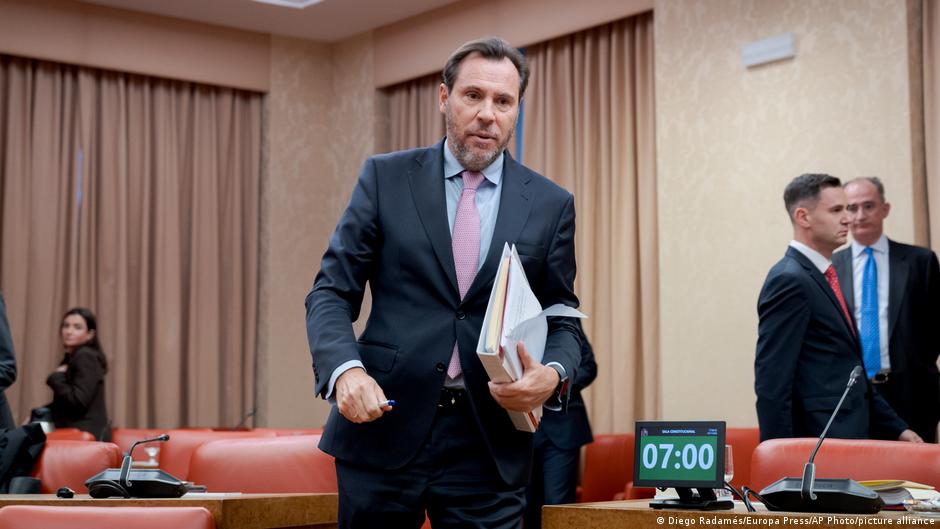
Spain’s transport minister, Oscar Puente, resigned on Tuesday and said he would not stand in the country’s early parliamentary election, adding a new political risk factor after a high-speed rail disaster near Toledo killed 69 people.
Puente announced his decision on the evening of Nov. 3 while appearing before a parliamentary commission in Madrid, almost a week after the collision. His departure had been demanded by every opposition party but remained unexpected because both Puente and Prime Minister Pedro Sanchez had repeatedly ruled out his resignation.
“A minister cannot remain in office after two disasters of this magnitude in less than one year. It is a matter of political dignity, responsibility and political sensitivity,” Puente said.
The resignation puts the government’s handling of transport infrastructure and rail safety at the center of the early election campaign. For markets, the immediate focus is on the implementation of newly approved safety measures, the potential operational effect on Spain’s high-speed network and whether the investigation leads to additional spending or regulatory requirements for railway operators and infrastructure managers.
Government approves safety measures and €30 million aid package
Several hours before Puente’s announcement, the Spanish government approved measures intended to improve railway safety. At its weekly cabinet meeting, it also authorized a €30 million assistance package for people injured in the Toledo crash and for the families of those killed.
The timing links the ministerial change directly with the government’s emergency response. While the €30 million package establishes the initial fiscal commitment disclosed after the disaster, the broader financial implications will depend on the findings of the investigation and any further upgrades ordered across the rail system.
The collision occurred at 8:53 a.m. on Oct. 28 near the settlement of Urda in Toledo province, on the Madrid-Seville high-speed line. Passenger service AVE 2080 struck the final carriage of Iryo 6076, which was stationary on the tracks. Sixty-nine people were killed and more than 50 were injured.
The Madrid-Seville route forms part of Spain’s extensive high-speed passenger network, making the circumstances of the crash particularly significant for transport policy and operating oversight. Investigators are concentrating on a failure of the automatic train-protection system and possible errors in instructions issued by the dispatch center.
Seven passenger rail disasters reported in 2026
The Urda collision came during a year of repeated railway accidents in Spain. Since the beginning of 2026, seven rail disasters involving passenger injuries have occurred in the country.
Another major accident took place on Jan. 18 on the Madrid-Malaga high-speed line near the settlement of Adamuz and involved two trains. That disaster killed 46 people and left another 150 with injuries of varying severity.
The two investigations are examining different possible causes. Damage to the railway tracks is considered one potential explanation for the Adamuz crash. In the Urda case, investigators are instead focusing on automatic protection equipment and the possibility that the dispatch center issued incorrect instructions.
Those distinctions will matter for the eventual allocation of responsibility and for the scope of any remedial investment. A track defect could point toward infrastructure inspection and maintenance procedures, while a protection-system failure or dispatching error would place greater emphasis on signaling technology, control-center protocols and operational safeguards.
Puente’s statement explicitly connected his resignation to the scale of the two disasters within less than a year. His withdrawal from the early parliamentary election also removes him from the immediate electoral contest, increasing the political consequences beyond a cabinet reshuffle.
Rail policy becomes a market and election watch point
The government now faces pressure to demonstrate that the measures approved on Tuesday can address safety concerns while maintaining reliable service on key high-speed corridors. The response may affect expectations for public transport expenditure, infrastructure procurement and regulatory oversight, although no additional funding beyond the €30 million assistance package was announced in the source account.
Attention will also remain on whether the new transport leadership changes the pace or scope of railway safety policy. The cabinet must manage the aftermath of the Urda collision, oversee the continuing investigations and answer opposition criticism during an early election period.
The next major event for transport-sector observers will be the release of evidence establishing why Iryo 6076 was stopped on the tracks and why AVE 2080 was not prevented from striking it. Findings on the automatic protection system and dispatch instructions will determine whether the crash is treated primarily as a technical failure, an operational failure or a combination of both.
Until those findings emerge, Puente’s resignation represents the most consequential political development arising from the disaster. It also raises the stakes for Spain’s government as it seeks to restore confidence in a rail network that has recorded seven passenger-related disasters since the start of the year.