Russia Opens Three-Day State Duma Vote as Political Risk Stays Elevated
Polling began across Russia and occupied Ukrainian territories, with investors watching governance risk, sanctions exposure and information controls.
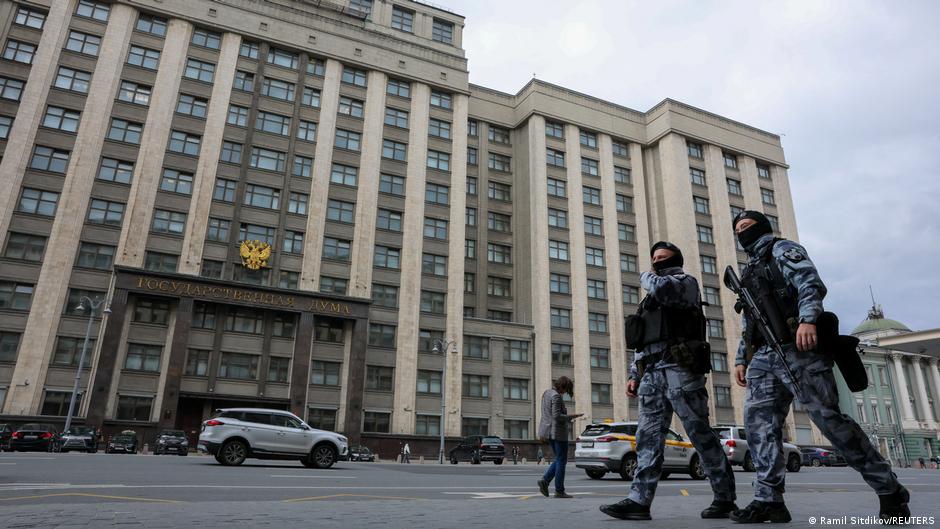
Russia officially opened three days of voting for the State Duma on Friday, September 18, at 08:00 local time, starting in the far eastern regions of Kamchatka and Chukotka. Polling stations across the country are scheduled to remain open until 20:00 local time through September 20, extending a political event that market participants will monitor for signals on domestic policy continuity, sanctions risk and the operating environment for Russian assets.
The vote is being conducted over three days and was preceded by early voting, including in Ukrainian territories occupied by Russia. Russian official structures reported that participants in Moscow’s full-scale invasion of Ukraine, as well as residents of Russian-occupied regions, voted early from late August through September 17.
For markets, the election is not expected to deliver a competitive shock to the existing policy framework. None of the 10 parties listed for the State Duma election in 2026 has condemned the continuing war in Ukraine. The liberal Yabloko party, which had consistently criticized the war, was initially admitted to the election but was later removed from the party-list race on formal grounds. Some Yabloko members remain on ballots as single-mandate candidates in a number of Russian regions.
Election Mechanics and Policy Continuity
The new State Duma will have 450 deputies. Half of the seats, 225 mandates, are to be filled through single-mandate districts, allowing voters to choose individual candidates. The remaining 225 seats will be distributed through party lists. Ten parties are registered on those lists after Yabloko was excluded from participation in that segment of the vote.
The previous State Duma election was held in 2021. This year’s vote has been expanded to occupied Ukrainian territories, a move that raises significant questions over legitimacy and verification. Observers say that even apart from the legal status of voting in those regions, the Central Election Commission organized the process in a way that makes results there almost impossible to verify.
Authorities did not publish the names of members of regional election commissions or the addresses of polling stations in those areas. Open video monitoring was not organized at the sites, and the use of mobile ballot boxes was permitted. The Central Election Commission also allowed local election commissions, when necessary, to print ballots on site and not immediately transfer them to higher-level authorities after counting.
Observers say the structure of voting in occupied regions makes the results practically impossible to verify.
That verification gap matters for investors because political legitimacy, international recognition and sanctions policy remain intertwined with Russia’s broader risk premium. While domestic Russian markets are heavily shaped by capital controls, state policy and limited foreign participation, political events can still affect expectations around fiscal priorities, defense spending, corporate regulation and future external restrictions.
Information Risk Around the Vote
In the run-up to the election, pro-government Russian media outlets circulated videos warning that footage of alleged ballot stuffing or falsification from polling stations could be generated by artificial intelligence. Ella Pamfilova, chair of Russia’s Central Election Commission, also claimed that such technologies could allegedly replace live images from polling stations in real time.
The messaging points to a wider information-risk environment surrounding the vote. For real-time market intelligence, that creates a familiar challenge: separating verified developments from claims, counterclaims and official narratives. Any reports of irregularities, protests, candidate removals or administrative interventions could draw attention from sanctions analysts and political-risk desks, particularly if they feed into broader Western policy debates.
Yabloko’s removal from party lists has also narrowed the formal anti-war political offer available through the party vote. Individual party members running in single-mandate districts have faced additional pressure and removals from the election on various grounds. In many cases, the grounds cited have involved old photographs or social media posts, including references to Alexei Navalny.
Shortly before the vote, opposition figures Yulia Navalnaya and Maxim Katz urged Russians to vote for the strongest single-mandate candidates who are not members of United Russia. Yabloko criticized that strategy and advised voters instead to spoil their ballots.
The market read-through is less about a sudden change in parliamentary composition than about the durability of Russia’s current political and economic direction. With the war in Ukraine continuing, and with no registered party-list force in the race condemning it, the election reinforces expectations that defense-linked spending, state intervention and geopolitical confrontation will remain central factors for investors assessing Russia-related exposure.
Trading desks following Russian risk will also watch the cadence of official turnout data, regional reporting, any claims of technology-related disinformation and post-election reactions from foreign governments. Because polling runs until September 20 across multiple time zones, the event creates an extended window for headlines rather than a single election-day catalyst.
For sectors tied to state contracts, infrastructure, security and import substitution, policy continuity may be viewed as supportive in a narrow domestic sense. For externally exposed issuers, financial institutions and companies vulnerable to further sanctions, the same continuity preserves a high-risk backdrop. The election therefore functions less as a conventional democratic contest for market pricing and more as a live gauge of governance risk, information controls and the state’s ability to manage political outcomes during wartime.