Merz Signals Strained U.S.-German Ties as Defense and Trade Risks Rise
Germany’s chancellor says unconditional transatlantic friendship may be over, framing the shift as a catalyst for security spending and reform.
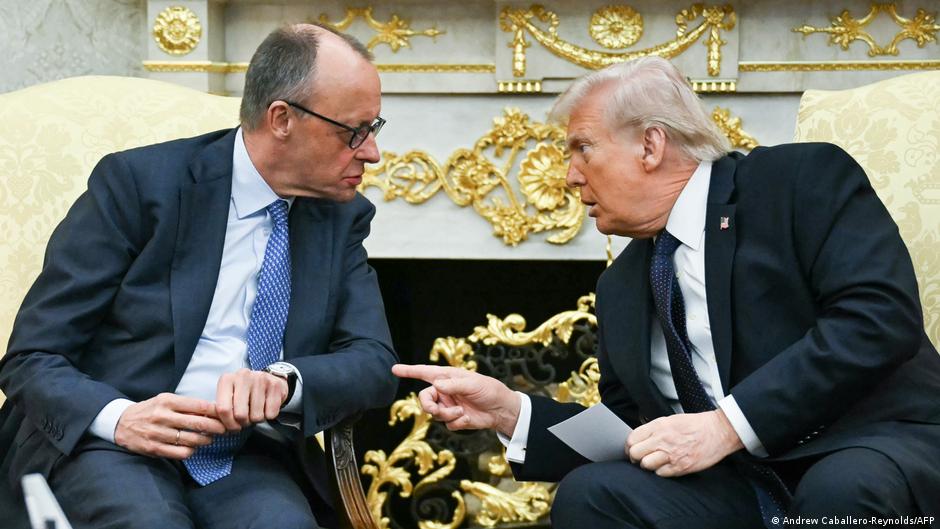
German Chancellor Friedrich Merz has warned that the era of “unconditional transatlantic friendship” may be over for a long time, a statement that adds a fresh political risk marker for investors tracking European defense spending, trade policy and the region’s recovery prospects.
Speaking at a Christian Democratic Union campaign event in Berlin on Thursday, September 17, Merz said Germany was witnessing a shift in political thinking and in the assessment of the transatlantic alliance on the other side of the Atlantic that Berlin may once have found difficult to imagine. The remarks, cited by dpa, came against a backdrop of deteriorating relations between Berlin and Washington under U.S. President Donald Trump.
For markets, the comments place renewed focus on a widening geopolitical discount around Europe’s largest economy. Germany is already navigating higher defense commitments, trade tensions, fragile industrial demand and concerns over shipping routes linked to instability in the Middle East. Merz’s comments suggest Berlin is preparing for a longer period in which the United States is a less predictable partner on security and economic policy.
“We are observing on the other side of the Atlantic a change in political approaches and in the assessment of the transatlantic alliance that we perhaps could not have imagined,” Merz said, according to dpa.
Defense Spending Moves Higher on Strategic Reset
The chancellor did not present the tension with Washington solely as a negative development. He said the strain between Europe, including Germany, and the United States gives Germany new opportunities that should not be missed. Germany must use the moment and take on more responsibility for its own security and development, Merz said, pointing in particular to the federal government’s significant increase in defense spending.
That message is likely to reinforce market attention on Europe’s defense sector and companies exposed to military procurement, infrastructure, logistics and security technology. A sustained move toward greater German responsibility for security could influence capital allocation across industrial supply chains, while also adding pressure on public finances and fiscal planning.
The deterioration in ties followed disagreements over the U.S. and Israeli war against Iran and the trade wars launched by the White House, according to the source article. At the start of Trump’s second presidential term, he had treated Merz favorably. Relations worsened after Merz refused to support the United States in the war with Iran. Trump then began criticizing German authorities, including by attributing false statements to Merz.
The friction has also touched domestic German politics. Earlier in September, Trump congratulated the far-right Alternative for Germany party on its victory in state elections in Saxony-Anhalt. That was another gesture of support from Washington toward German right-wing populists, which had already drawn criticism in Berlin.
Metin Hakverdi, the German government’s coordinator for transatlantic cooperation, responded sharply to Trump’s remarks. “Germans are capable of deciding for themselves the issue of migration, as well as whom we elect,” he said. “We do not need advice from the White House on this.”
Growth Forecast Offers a Counterweight
Merz also sought to highlight signs of economic improvement after several years of stagnation in Germany. He said forecasts point to economic growth of about 1.3 percent in 2026. The chancellor said Germany had emerged from the valley of a shrinking or stagnant economy, while adding that the country still needs reforms.
That growth estimate gives investors a benchmark for judging whether Germany’s policy shift can translate into renewed momentum. A 1.3 percent expansion would not signal a boom, but it would mark a meaningful change in tone after a prolonged weak patch. The question for markets is whether higher defense outlays, reform efforts and a more assertive security posture can offset drag from trade conflict, geopolitical uncertainty and potential supply-chain disruptions.
Later the same day, German government spokesman Stefan Kornelius said Merz and Trump had held a phone call that Berlin had previously postponed. According to Kornelius, Merz raised the next steps toward ending Russia’s war against Ukraine and welcomed the U.S. Congress’s adoption of a sanctions package against Russia initiated by Senator Lindsey Graham.
The two leaders also discussed shipping problems in the Strait of Hormuz and the Red Sea caused by the war in Iran. Those waterways remain central to energy, commodity and goods flows, making the discussion relevant for traders watching freight rates, oil-market risk premiums and broader inflation pressures.
Merz also recalled the September 11, 2001 terrorist attacks, the anniversary of which had been the original reason for the planned phone call between the two leaders. Berlin had postponed the call indefinitely one day before it was scheduled, without giving reasons.
The postponement followed Trump’s praise for Alternative for Germany after its strong victory in elections to the state parliament of Saxony-Anhalt. Officials in Berlin reacted with irritation, underscoring that political tension between the two capitals is now feeding directly into the diplomatic calendar.
For real-time market participants, the key takeaway is that Germany’s policy path is becoming more explicitly shaped by geopolitical divergence with Washington. That could support defense-linked equities and security-focused investment themes, while increasing uncertainty for sectors exposed to tariffs, transatlantic regulatory conflict and global shipping disruptions.