Trump Threatens EU Trade Halt as Canada Partnership Plan Jolts Markets
The U.S. president warned of steep tariffs or a trade cutoff if Brussels’ proposed Canada partnership is judged hostile.
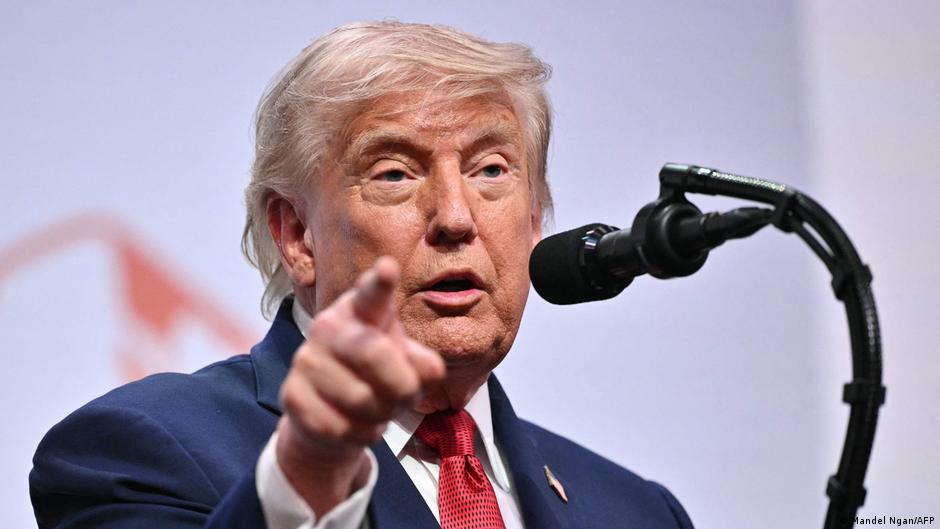
U.S. President Donald Trump escalated a fast-moving trade confrontation on Wednesday, September 16, saying he was prepared to halt trade with the European Union if Brussels continues to deepen its partnership with Canada. The warning added a new geopolitical risk point for investors already tracking tariff pressure across North American and transatlantic supply chains.
Trump was responding to a reporter’s question about European Commission President Ursula von der Leyen’s proposal to make Canada the “first associate member of the EU.” Speaking at a campaign event in North Carolina, Trump called the idea “ridiculous” and tied any U.S. response to whether Washington views the initiative as hostile.
“If they do this and I consider it even in the slightest an unfriendly act, I will impose very high tariffs or stop trade with Europe,” Trump said.
He added that the outcome would depend on the intentions behind the EU-Canada effort. “If the intentions are good, everything is fine. If the intentions are bad, we will impose very high tariffs on Europe, that is one of the possibilities,” he said.
For markets, the comments sharpen focus on trade-sensitive sectors including autos, industrial metals, paper, furniture, lighting, food products and defense technology. While Trump did not announce specific measures against the EU, the threat of higher tariffs or a disruption in transatlantic trade introduces fresh uncertainty for companies exposed to cross-border procurement, government purchasing rules and tariff-sensitive inventories.
EU-Canada Plan Becomes a New Trade Flashpoint
Von der Leyen outlined the EU’s ambition on September 16 in the European Parliament, where Canadian Prime Minister Mark Carney was present. She said the bloc wanted to lift its relationship with Canada to “the highest possible level” and work with Carney so that “Canada becomes the first associate member of the EU.”
The European Commission chief did not provide detailed terms for such a partnership. She did, however, point to cooperation in technology and the defense industry, two areas that are increasingly central to strategic industrial policy and market positioning. Von der Leyen also stressed that joint EU-Canada work “will not be directed against others” and would aim to make both sides stronger.
The absence of detail leaves investors with a familiar problem: the political signal is clear, but the commercial mechanics are not. A closer EU-Canada framework could affect industrial partnerships, technology investment, procurement alignment and defense-sector collaboration. At the same time, Trump’s response raises the risk that any perceived shift in alliance structure could become a trigger for tariffs or broader trade retaliation.
AFP noted that Canada, like the EU, has been affected by the unpredictable trade and foreign policy of Trump’s administration. “That is why both Canada and the European Union are looking at new alliances,” the agency observed.
Tariff Chain Extends Across North America
The EU warning landed as Washington and Ottawa were already locked in a sequence of trade actions. The White House said Trump signed a memorandum on September 16 barring Canadian goods from participation in U.S. federal government procurement. According to the release, Washington is taking the measure in response to Canada’s actions, which it said “unjustifiably introduced new barriers for American companies seeking access to the government procurement market.”
The procurement move follows new tariff measures that began on September 15. The U.S. administration imposed additional 50% tariffs on cheese, steel, aluminum, paper, furniture, lighting fixtures and other goods from Canada. Trump administration officials said the step was a direct response to Ottawa’s introduction of new tariffs.
Canada’s tariffs on U.S. exports worth about $20 billion also came into force on September 15. Those measures were a response to U.S. tariffs of 50% on Canadian goods worth $20 billion that took effect on August 22. One day earlier, on August 21, Canada withdrew from trade talks with the United States.
The timeline matters for traders because the dispute has moved from negotiation to implementation in less than a month, with tariff actions and procurement restrictions now overlapping. Each new step increases the risk that companies face higher input costs, revised supplier contracts and uncertainty over government sales channels.
Trump’s latest comments also broaden the market event from a U.S.-Canada tariff dispute into a potential U.S.-EU confrontation. If the U.S. decides that an EU-Canada associate arrangement is unfriendly, the president has explicitly placed steep tariffs and a trade halt with Europe among the possible responses. No trading volume figures or immediate market price moves were provided in the source material, but the policy signal itself is likely to be watched closely by desks exposed to industrials, materials, defense technology and consumer goods with transatlantic supply chains.
For now, the EU has described its Canada outreach as cooperative and not aimed at third countries, while Washington has framed Canada’s procurement policy and tariffs as unjustified barriers. The next market-sensitive question is whether Brussels provides concrete details of the proposed associate membership model, and whether the White House treats those details as a strategic challenge or a negotiable diplomatic initiative.