Drone Attack Near Moscow Disrupts Airports and Hits Refinery, Warehouse
Officials reported two deaths and at least six injuries after a large drone attack around Moscow, with airports halted and fires reported at key sites.
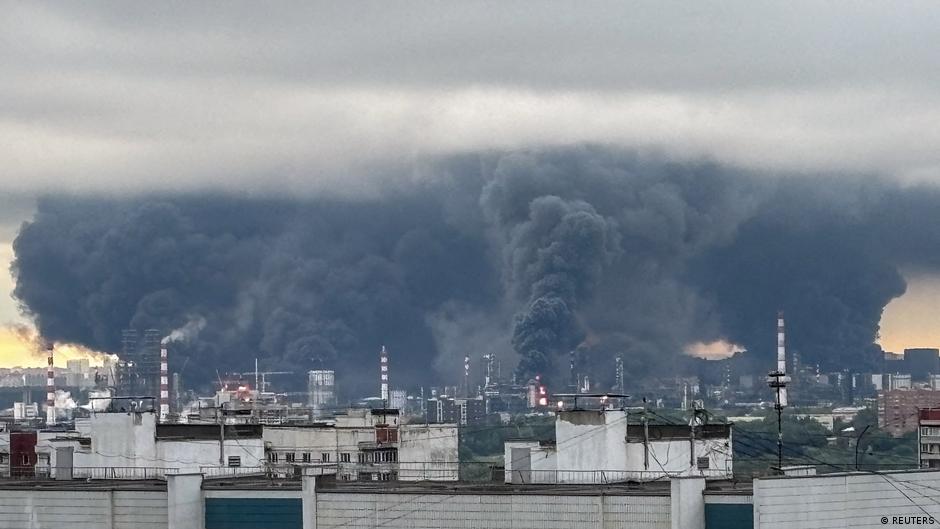
A large-scale drone attack around Moscow and the surrounding region on Sunday, September 20, left two people dead and at least six injured, according to the regional governor, while also disrupting transport infrastructure and raising fresh market-watch concerns over Russian energy and logistics assets.
Andrei Vorobyov, the governor of the Moscow region, wrote on Telegram on Sunday morning that 249 Ukrainian drones had been downed over the region. Moscow Mayor Sergei Sobyanin separately reported that 186 drones had been shot down on approach to the capital.
The reported scale of the attack, combined with damage claims involving an oil refinery, a warehouse complex, power infrastructure and residential buildings, put the incident squarely on the radar for traders tracking geopolitical risk, energy supply chains, insurance exposure and Russian transport bottlenecks.
“A facility on the territory of the Moscow oil refinery was damaged. There were no casualties,” Sobyanin said, according to the source text.
Energy and Logistics Assets in Focus
According to Vorobyov, a warehouse complex caught fire in Sofyino after the attack. The anonymous Telegram channel VChK-OGPU claimed that a logistics complex of about 850,000 square meters was fully engulfed in flames. That claim could not be independently verified from the supplied source, but the reported size of the site would make it material for any assessment of regional logistics disruption.
Vorobyov also said drones struck and caused fires in three apartment buildings and one private house. The casualty count given by the governor stood at two dead and at least six injured.
In Moscow, Sobyanin said an object on the grounds of the Moscow oil refinery had been damaged, adding that there were no casualties there. VChK-OGPU reported that the refinery in Moscow’s Kapotnya district was burning. The source article noted that the same refinery had already been attacked in June.
For energy markets, the immediate significance lies less in confirmed output losses, which were not provided in the source, than in the pattern of repeated attacks on refining assets. Traders generally monitor such events for signs of cumulative pressure on fuel production, export flows, refinery run rates and domestic supply logistics. No official figures on refinery throughput, downtime or production impact were included in the source material.
Airports Halt Operations
The attack also affected Moscow’s aviation infrastructure. The capital’s Vnukovo, Domodedovo and Zhukovsky airports suspended operations, according to the source. The article did not provide data on the number of delayed or canceled flights, the duration of the suspension, or passenger volumes affected.
Even temporary closures at major airports can matter for market participants because they point to operational risk around Russia’s capital region. Aviation stoppages may affect cargo schedules, business travel and broader risk sentiment, particularly when paired with reports of fires at energy and logistics sites.
Additional claims from VChK-OGPU said drones attacked a thermal power plant in Lyubertsy and that an unmanned aerial vehicle struck a residential building in Kotelniki. The Telegram channel Ostorozhno, Novosti, citing local residents, reported a fire in a residential complex in Kotelniki.
In Istra, debris from a drone damaged an apartment in a residential building, according to Tatyana Vitusheva, head of the municipal district.
The Russian source attributed the attack to Ukrainian armed forces drones. It did not include a Ukrainian statement or response. It also did not provide details on the type of drones used, the timeline of individual strikes, or the precise operational status of the damaged sites after the fires were reported.
For real-time market desks, the key open questions are whether the reported refinery damage leads to measurable operational disruption, whether logistics flows around Sofyino are interrupted, and how long aviation restrictions around Moscow remain in effect. The source provided no trading data, price reaction, insurance estimates or official damage assessment beyond the casualty figures, drone interception counts and site-specific reports.
The incident comes against a backdrop in which infrastructure attacks have increasingly become part of the risk matrix for energy, transport and regional security analysis. With the Moscow oil refinery already described as having been attacked in June, Sunday’s reported damage may sharpen attention on repeated exposure at strategic facilities near the Russian capital.
Authorities’ reported interception figures were substantial: 249 drones over the Moscow region, according to Vorobyov, and 186 drones on approach to Moscow, according to Sobyanin. The source did not clarify whether those figures overlap or represent separate counts.
Until official follow-up provides clearer detail on physical damage, repair timelines and any disruption to fuel or logistics operations, the market impact remains a risk-monitoring story rather than a quantified supply shock. Still, the combination of fatalities, airport suspensions and reported fires at industrial and logistics sites makes the attack a significant breaking event for investors tracking Russian infrastructure vulnerability.