Communists Secure Leading Position in Graz Municipal Elections with Focus on Housing Policy
Austria's second-largest city re-elects Communist Party, highlighting stable urban support amid shifting national political dynamics.
In a significant political development within Austria's local governance landscape, the Communist Party of Austria (KPÖ) has secured a commanding lead in the recent municipal elections held in Graz, the country's second-largest city. The party garnered 35.63% of the vote, translating to 18 out of 48 seats in the city council, confirming its position as the dominant political force in the city for the second consecutive election cycle.
Stable Urban Support Fueled by Housing Focus and Moderate Rhetoric
The KPÖ's electoral success in Graz reflects sustained and growing local voter support, having increased its share from 28.84% in 2021. Analysts attribute this resilience and growth to the party’s pragmatic approach, particularly its emphasis on effective housing policies and a measured, non-confrontational public discourse. This strategy has differentiated the KPÖ from more polarizing political actors, enabling the party to maintain a broad appeal among the urban electorate.
"Graz votes differently," a well-known Austrian phrase, continues to hold true as the Communists maintain local dominance despite limited national parliamentary success.
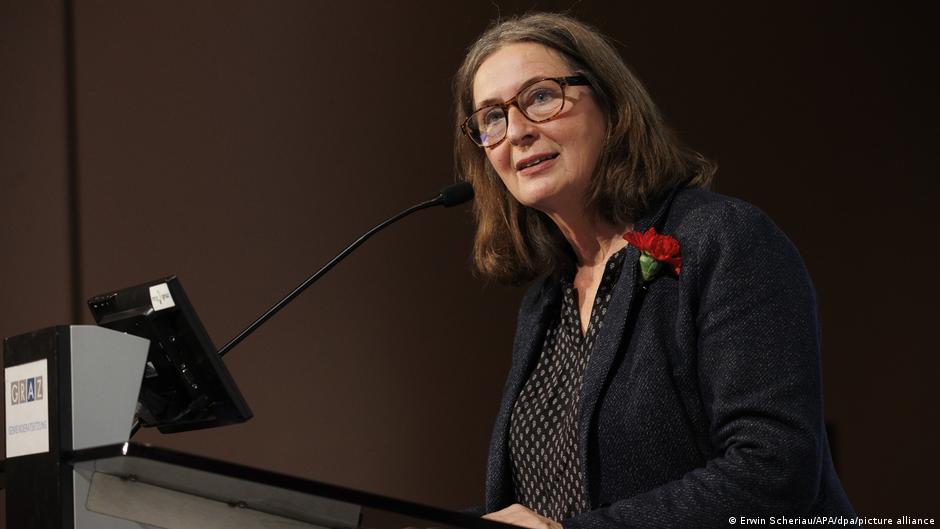
Elke Kahr, the KPÖ member serving as mayor since 2021, has been instrumental in the party's consolidation of power in Graz. Her previous work in housing and urban development helped cement the party’s reputation for addressing core community issues without resorting to populist tactics or aggressive rhetoric. Party documents reaffirm traditional communist values promoting social struggle and capitalism critique, yet Kahr approaches these themes with strategic caution in public forums.
Notably, Kahr has voiced criticism of the European Union's sanctions against Russia linked to the Ukraine conflict, denouncing them as ineffective and burdensome on citizens, although she condemns Russia's military aggression outright. This nuanced stance adds complexity to the party’s local appeal amid broader geopolitical tensions.
Sector Rotation and Political Landscape in Graz
The municipal elections also underscored a competitive multi-party environment. The Austrian People's Party (ÖVP) secured second place with 25.35% of the vote, gaining 13 city council seats, while The Greens took 14.84%, earning seven seats. The right-wing populist Freedom Party of Austria (FPÖ) trailed with 12.2%, translating to six council seats, despite their national prominence following the 2024 parliamentary elections.
At the federal level, the FPÖ leads in parliamentary representation but failed to secure the chancellorship amid coalition negotiations, which resulted in a three-party government led by ÖVP’s Christian Stocker. This divergence between municipal and national voting patterns highlights the distinctive political dynamics and sector rotation occurring in Austria’s urban centers.
The Graz election results illustrate the importance of localized policy focus and moderate communication strategies in maintaining political influence within competitive markets. For investors and market observers, the KPÖ’s dominance reflects broader trends of urban voter prioritization of social infrastructure and pragmatic governance over ideological polarization.