US Military Strikes Iran Following Downing of Apache Helicopter Near Strait of Hormuz
US forces conducted targeted attacks on Iranian air defense and radar sites after Tehran downed an American Apache helicopter in the Strait of Hormuz.
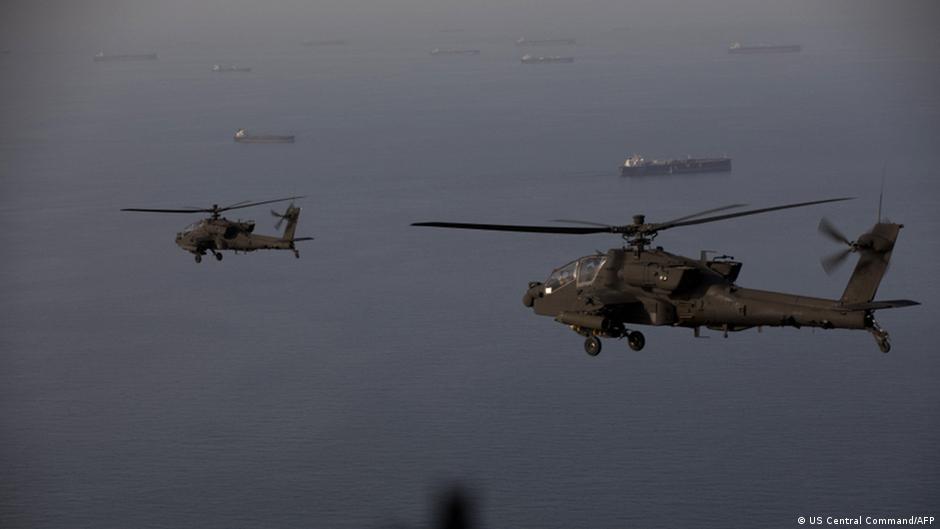
The US military resumed strikes against Iran on Tuesday, June 9, responding to Tehran's downing of an American Apache attack helicopter over the Strait of Hormuz. The Central Command of the US armed forces (CENTCOM) described the operation as a measured response to "unprovoked Iranian aggression."
US President Donald Trump, interviewed by ABC News, emphasized the necessity of the response, stating, "The response had to be very strong, very powerful, and it is exactly that now."
Details of the Military Action and Regional Reactions
According to US media Axios, the strikes targeted multiple Iranian air defense systems and radar stations near the Strait of Hormuz. Iranian media reported explosions along the southern coast, particularly near the cities of Sirik and Minab, and on Qeshm Island. The semi-official Tasnim News Agency confirmed these reports.
Iran's Foreign Minister Abbas Araghchi issued a stern warning to Washington via social media, asserting, "Despite their battlefield defeats, the US has decided to test our resolve. Our powerful armed forces will not leave any attack or threat unanswered. Leave our region if you want to be safe."
"Our powerful armed forces will not leave any attack or threat unanswered." – Abbas Araghchi, Iranian Foreign Minister
Tasnim later relayed a statement from the Islamic Revolutionary Guard Corps (IRGC) claiming that Iran launched missiles and drones against US targets in the region in retaliation.
Several hours after the strikes, CENTCOM announced the conclusion of operations, confirming that US forces targeted Iranian air defense installations, ground command posts, and radar stations near the Strait of Hormuz.
Background and Escalating Tensions
President Trump had previously warned of retaliatory measures on Truth Social, noting that the Apache helicopter was shot down by Iranian forces during a routine patrol over the Strait of Hormuz. Both American pilots survived the incident unharmed.
An anonymous US official told the Associated Press that the helicopter crash resulted from a collision with an Iranian drone, although it remains unclear whether the collision was deliberate. Official statements have not addressed this version.
Hostilities in the region have intensified in recent days despite an ongoing ceasefire between the US-Israel coalition and Iran. On June 7, Iran launched rockets at Israel for the first time since April, citing Israeli airstrikes on Beirut areas controlled by the pro-Iranian Hezbollah group as the reason. Israel responded with renewed strikes on Iranian targets. On June 8, both Israel and Iran announced a temporary ceasefire.
Notably, just hours before the US retaliatory strikes, President Trump expressed optimism about peace negotiations with Tehran, stating, "We are at the final stage of what will be a very, very good deal." He suggested that talks could conclude within the next two to three days, signaling potential diplomatic progress amid escalating military tensions.