US House Bill to Ban Russian Oil Adds New Risk to Energy Markets
A bipartisan push in Congress could challenge Trump’s reported diesel deal with Moscow and inject fresh policy risk into oil trading.
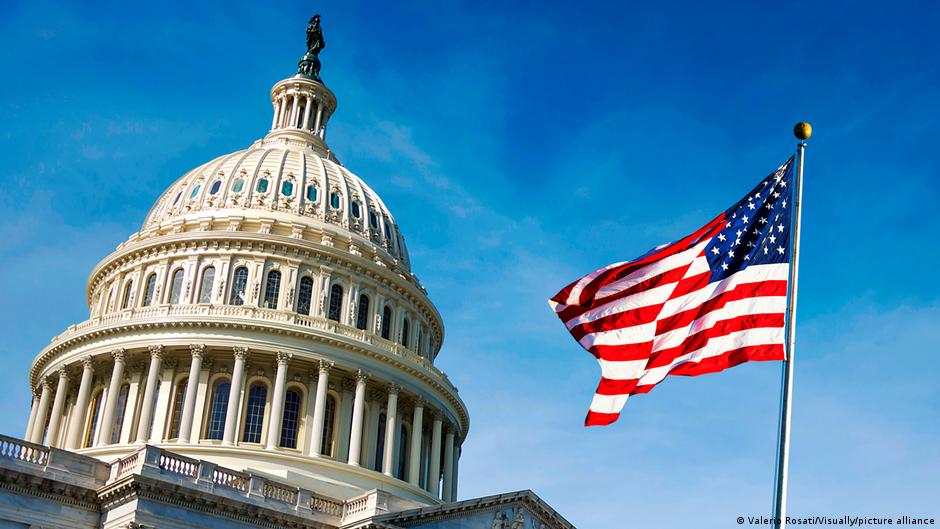
A bipartisan bill expected in the US Congress to ban any purchases of Russian oil is adding a new layer of political risk to global energy markets, just one day after President Donald Trump said he had reached an agreement with Russian President Vladimir Putin on diesel supplies to the United States and the wider market.
Representative Brian Fitzpatrick, a Republican from Pennsylvania, said on Saturday, October 10, that lawmakers would introduce legislation aimed at prohibiting all purchases of Russian oil. In a post on X, Fitzpatrick said the measure would be called the Ronald Reagan Peace Through Strength Act.
The move puts Congress on a potential collision course with the White House over energy trade with Russia, with implications for crude flows, refined-product availability and price expectations in the diesel market. For traders, the development represents a policy headline that could affect sentiment around Russian barrels, US import rules and broader supply assumptions.
Congressional Route Signals Urgency
According to Fitzpatrick, the bill will be brought to the House floor through a discharge petition, a parliamentary mechanism that allows rank-and-file lawmakers to force consideration of legislation by the full House even if a committee or the speaker is blocking it.
To succeed, such a petition must secure signatures from at least 218 lawmakers, an absolute majority of the House. Fitzpatrick expressed confidence that the proposal would pass by a wide margin.
“It will pass overwhelmingly,” Fitzpatrick said, according to the source article.
That procedural route is significant for markets because it suggests supporters are seeking to move around potential leadership bottlenecks rather than waiting for the standard committee process. While the timing and final text of the measure were not detailed in the source article, the stated objective is broad: a ban on any purchases of Russian oil.
Representative Don Bacon, a Republican from Nebraska, has already said he would support the bill. Bacon also criticized Trump’s decision involving the purchase of diesel fuel from Russia, underscoring that the emerging debate is not divided solely along party lines.
Diesel Deal Draws Scrutiny
The legislative push follows Trump’s statement on October 9 that he had held “very successful” talks with Putin. According to the source article, Trump said the discussions produced an agreement on supplies of Russian diesel fuel to the United States and the global market.
Putin officially confirmed the phone call with Trump and the arrangements. In the Russian president’s statement, Moscow said it was ready to supply oil and petroleum products to both US and global markets. Putin said he was confident the move would have a positive impact on the global economy.
For energy markets, the reported arrangement is sensitive because diesel sits at the intersection of transport, agriculture, industry and heating demand. Any shift in Russian diesel flows, whether toward the United States or the broader market, can influence expectations for refined-product balances, especially when traders are already reacting to geopolitical risk and policy uncertainty.
The congressional response could complicate those expectations. If lawmakers advance a prohibition on Russian oil purchases, market participants may need to reprice the likelihood that any White House-backed supply arrangement can proceed. The source article does not specify whether the proposed bill would also cover refined products such as diesel, but Fitzpatrick’s stated aim was to ban any purchases of Russian oil, while the political dispute described in the article centers on diesel fuel from Russia.
The immediate market relevance lies less in a completed legal change and more in headline risk. Energy traders often respond quickly to signals that could reshape supply availability, import channels or sanctions-related compliance exposure. A discharge petition requiring 218 signatures gives investors a clear political threshold to watch.
Sector Rotation Watch
The development may be particularly important for energy equities, refiners, shipping firms and commodity-linked assets. A ban on Russian oil purchases could support alternative suppliers if it tightens access to Russian-origin barrels, while any confirmed increase in Russian diesel availability could ease refined-product tightness if permitted to flow into consuming markets.
At the same time, the dispute creates uncertainty for companies exposed to fuel costs. Transport, logistics, agriculture and industrial names often react to diesel price swings, while refiners can be affected by changes in feedstock costs, product margins and trade routes. The political clash therefore has the potential to influence sector rotation beyond the energy complex.
The article does not provide trading volumes, price moves or market reaction data. However, the sequence of events is clear: Trump announced a diesel-related understanding with Putin on October 9; Putin confirmed the call and Russian readiness to supply oil and oil products; and on October 10 Fitzpatrick said a bipartisan bill would be introduced to block Russian oil purchases, with Bacon signaling support.
For now, investors are likely to monitor whether the discharge petition gains traction, whether the text of the bill explicitly addresses refined products, and whether the White House offers further details on the reported diesel supply agreement. Until those elements are clarified, Russian energy flows into the US market remain a live political and trading risk.