Palestinian Election Delay Extends Political Risk Timeline for Middle East Markets
Mahmoud Abbas moved the first nationwide Palestinian vote in more than two decades to September 2027, drawing Israeli accusations and internal criticism.
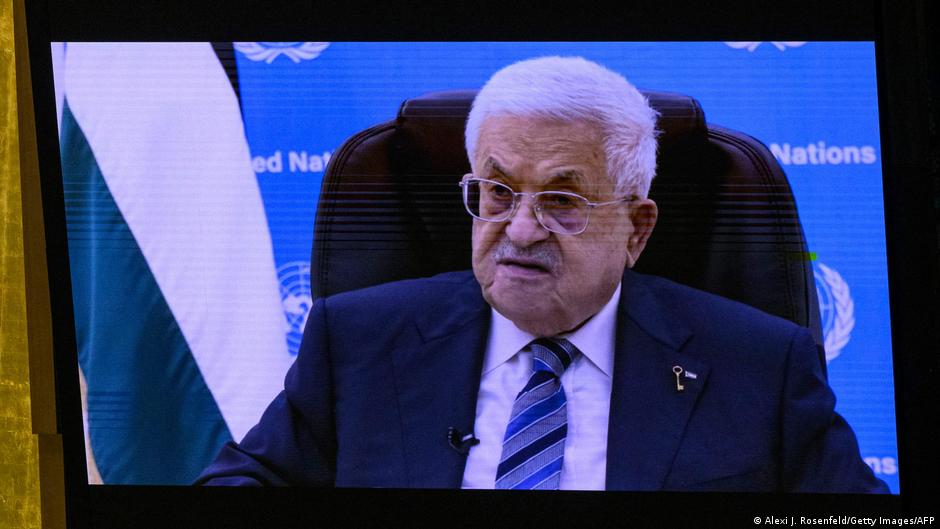
Palestinian Authority President Mahmoud Abbas has postponed elections in the Palestinian territories from late November to September 11, 2027, extending a key political risk marker for investors tracking Middle East stability, regional security arrangements and the postwar governance outlook for Gaza.
The decision, reported by WAFA on Saturday, October 10, cited a decree by Abbas and applies to parliamentary elections in the West Bank, East Jerusalem and the Gaza Strip. The presidential vote is also due to be held on the same day. According to dpa, the ballot would be the first nationwide Palestinian election in more than two decades.
For markets, the delay keeps uncertainty elevated around the future political structure of the Palestinian territories at a time when Gaza’s administration, regional security guarantees and reconstruction pathways remain central to the broader Middle East risk premium. While the announcement does not directly change commodity supply, corporate earnings or central-bank policy, it adds to the calendar of unresolved geopolitical events watched by traders in energy, defense, shipping, emerging-market debt and regional equities.
Political Calendar Pushes Into 2027
WAFA said the postponement reflected conditions including Israeli military restrictions, the expansion of Jewish settlements, attacks by armed settlers and the absence of freedom of movement. In relation to Gaza, the agency also pointed to the unstable situation and the delayed deployment of international security forces.
The revised date pushes the Palestinian electoral timetable deeper into 2027, leaving a longer interval in which investors and policymakers must price political opacity. The territories have not held nationwide elections for more than two decades, making the proposed vote a rare potential reset point for Palestinian governance. The delay now shifts that possible inflection point nearly two years beyond the previously expected late-November window.
Israeli Foreign Minister Gideon Saar sharply rejected the rationale presented by Abbas. Saar accused the 90-year-old Palestinian leader of misleading the international community and making false claims that Israel had created obstacles to voting. He said Abbas was trying to avoid responsibility and accountability.
Israel’s foreign minister accused Abbas of deceiving the international community and of using claims about voting obstacles to avoid accountability.
Criticism also emerged from within the Palestine National Liberation Movement, Fatah, the movement to which Abbas belongs. That internal pushback is significant for political-risk observers because it signals that the delay is not being treated solely as a dispute between Israeli and Palestinian officials. It also reflects tension inside the dominant Palestinian political structure at a sensitive moment for the postwar governance debate.
Gaza Governance Remains a Market Variable
The election delay lands against a broader backdrop of war, ceasefire implementation and planning for the future administration of Gaza. The Middle East situation escalated sharply on October 7, 2023, when Hamas, designated as a terrorist organization by the European Union and the United States, launched a large-scale attack on Israel. Militants fired a massive rocket barrage, entered Israeli territory and carried out the deadliest massacre of civilians in the history of the modern Israeli state, killing about 1,200 people.
The militants also seized about 250 hostages and took them to the Gaza Strip. Some hostages were later exchanged or released, while others died. Israel responded by declaring war on Hamas.
In October 2025, Israeli authorities and Hamas agreed to a ceasefire under a peace plan developed by the administration of U.S. President Donald Trump. The United States, Turkey, Qatar and Egypt acted as guarantors of the arrangements between Israel and Hamas. During the first phase, Hamas militants returned all remaining living Israeli hostages in exchange for the release of Palestinian prisoners from Israeli jails.
In mid-January, the White House said the second stage of Trump’s plan to end hostilities in the Gaza Strip had begun. Under that stage, a National Committee is expected to take over governance of the region until the Palestinian Authority is ready to assume that role.
That sequencing makes the Palestinian election timetable relevant beyond domestic politics. Investors following reconstruction finance, regional development pledges, security-sector spending and diplomatic normalization channels are watching whether Palestinian governance can be consolidated, whether international security forces are deployed, and whether institutions seen as legitimate can take administrative responsibility in Gaza.
The source article also noted that earlier, in April, the first municipal elections in 20 years were held in Deir al-Balah in the Gaza Strip. Candidates on most electoral lists were close to Fatah or were independents. That local vote offered a limited political signal, but the postponed nationwide elections remain the larger event for assessing representation, legitimacy and the direction of Palestinian institutions.
From a trading perspective, the main near-term implication is an extended period of geopolitical ambiguity rather than a discrete market shock. Middle East risk has remained relevant for oil and gas pricing, defense-sector demand expectations, shipping insurance assumptions and emerging-market sentiment. A prolonged governance vacuum or disputed transition in Gaza could influence how quickly reconstruction plans move, how donor commitments are structured and how regional guarantors manage the ceasefire framework.
The election delay also adds another variable to diplomatic risk models. The United States, Turkey, Qatar and Egypt are named guarantors of the ceasefire arrangements, while the Palestinian Authority is expected to play a future governance role in Gaza. Any delay in clarifying Palestinian leadership through elections may complicate the timing and credibility of that handover, especially as Abbas faces accusations from Israel and criticism from inside Fatah.
For investors, the revised September 11, 2027 date becomes a new political milestone to monitor alongside ceasefire implementation, the deployment of international security forces, the work of the National Committee in Gaza and the Palestinian Authority’s readiness to assume control. Until those components become clearer, the region is likely to remain a live source of headline risk for markets exposed to energy flows, regional capital allocation and geopolitical volatility.