Ukraine’s Former Military Chief Rules Out NATO Membership, Advocates New Defense Alliances
Ukraine will not join NATO due to doctrinal mismatches but seeks NATO technologies and aims to integrate with emerging defense coalitions.
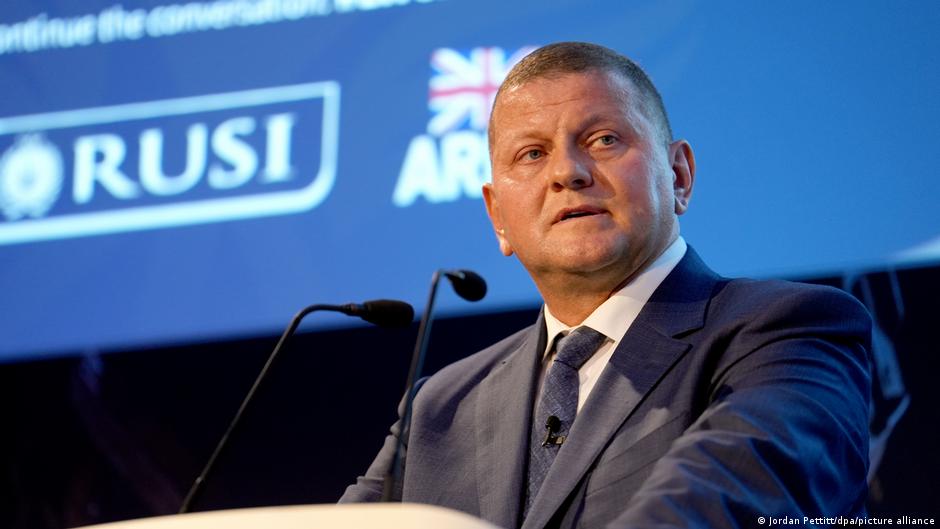
Ukraine will never become a member of NATO because the alliance’s doctrines do not align with the development trajectory of the Ukrainian Armed Forces (UAF), according to Valeriy Zaluzhny, Ukraine’s ambassador to the UK and former commander-in-chief of the UAF. However, Zaluzhny emphasized that Kyiv still requires NATO’s military technologies to enhance its defense capabilities.
Strategic Realignment Toward Emerging Defense Coalitions
Speaking at a general meeting of Ukrainian ambassadors held in Kyiv on August 3, Zaluzhny was asked about Ukraine’s partnership with the Joint Expeditionary Force (JEF), a coalition of ten Northern European countries aimed at regional security. In addressing this, he discussed the prospects for Ukraine’s NATO membership candidly.
“I know NATO very well. For about 12 years, I personally worked on adopting NATO standards. Every year, we hear promises that Ukraine will join NATO soon, but unfortunately, we never will,” Zaluzhny stated.
Zaluzhny identified the primary obstacle to NATO accession as the gap between the current development stage of the UAF and NATO’s existing operational doctrines, which he described as rooted in Cold War-era frameworks. He expressed skepticism that NATO’s internal structure will significantly evolve in the near future to accommodate Ukraine’s integration.
“Most likely, NATO will remain as it is. It will take Ukraine at least 12 years to reach the standards needed to even match half the level of the Russian Federation’s military,” he added.
Despite this, the former military chief acknowledged Ukraine’s urgent need for NATO technologies, particularly in missile defense systems. This is a critical area given the ongoing Russian missile attacks that have persisted for over five years. Zaluzhny’s remarks echo Ukrainian President Volodymyr Zelensky’s calls for advanced American Patriot missile systems to address shortages in Ukraine’s current arsenal.
As an alternative security solution, Zaluzhny advocated for Ukraine’s participation in new and emerging defense alliances such as the JEF. He noted, “Ukraine will align itself with blocs and unions that are likely to be formed, probably centered on a European military-security bloc.”
The Joint Expeditionary Force, established in 2015 under UK leadership, includes Denmark, Finland, Estonia, Iceland, Latvia, Lithuania, the Netherlands, Sweden, and Norway. Its mission focuses on security in Northern Europe, including the Baltic and Arctic regions. Ukraine was granted enhanced partner status in the JEF in December 2025. The coalition collaborates with NATO to deter Russian maritime aggression and has expressed readiness to take strong measures against Russia’s so-called “shadow fleet.”
Zaluzhny expressed regret that Ukraine has not advanced toward full membership in the JEF, suggesting that the coalition’s command structures are currently too weak to meet Ukraine’s needs. The JEF’s organizational framework does not yet include collective defense obligations, limiting its capacity as a security guarantee for Ukraine.