Cyberattacks Disrupt Ukrainian and Russian Public Alert Applications
False radiation and nuclear strike warnings exposed digital infrastructure risks as emergency services worked to restore operations.
Government-linked public warning applications in Ukraine and Russia were hit by cyberattacks that delivered false emergency messages to users, creating a fresh operational-risk event for investors monitoring the region’s digital infrastructure and geopolitical exposure.
In Ukraine, users received fabricated warnings about radiation and chemical hazards, as well as a purported threat of street fighting in Kyiv. In Russia, a compromised emergency-services application distributed false information claiming that nuclear warheads had been launched toward the country.
The incidents occurred at nearly the same time, according to statements from the applications’ developers and authorities in both countries. Although no genuine radiation or nuclear threat was reported, the attacks demonstrated how compromised notification channels can rapidly circulate alarming information during an already sensitive security environment.
Ukrainian Alert App Suspends Push Notifications
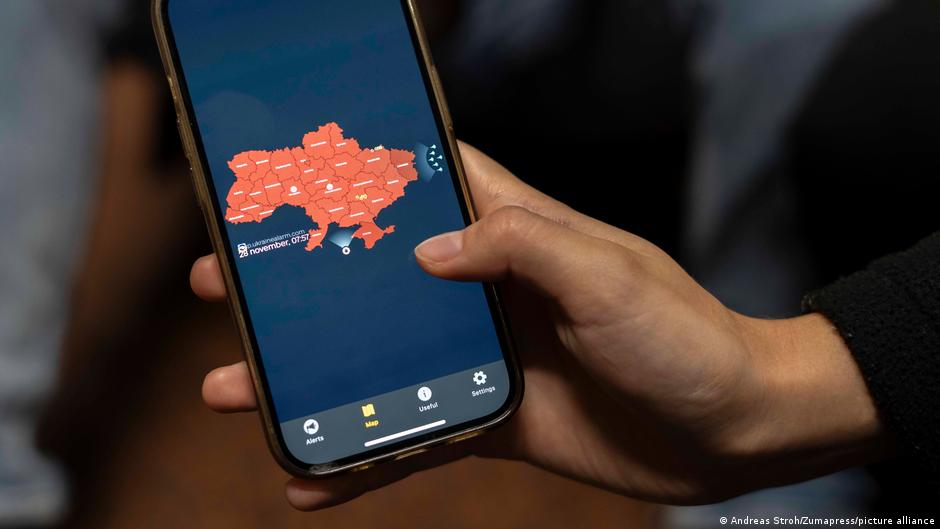
Ukraine’s official Air Alert application, which is used to warn the public about security threats, came under cyberattack on the evening of Sunday, November 1. The false notifications included claims of radiation and chemical danger and notices warning of possible street battles in the capital.
The Ukrainian Air Force was among the first official bodies to respond. The military said the application had probably been subjected to “hostile interference” and stressed that there was no radiation threat.
Ukraine’s State Emergency Service said the nationwide warning system continued to operate normally. It added that all authentic threat signals were still being transmitted to regional administrations and outdoor public-warning systems, indicating that the incident affected the mobile application rather than the country’s entire alert infrastructure.
The application’s developers later confirmed unauthorized access and halted part of the service while the incident was investigated.
“Today, unauthorized persons interfered with the operation of the application. We disabled push notifications and temporarily suspended the application,” the developers said.
They also urged users not to follow links contained in suspicious notifications. The warning highlighted the possibility that deceptive alerts could be used not only to spread panic but also to direct recipients toward potentially malicious online content.
During the night of November 2, the development team said it had begun gradually restoring the service. Users started receiving air-raid notifications again, although some functions remained temporarily unavailable.
The developers said the application does not store users’ personal data and that additional cybersecurity measures were being introduced. That distinction limits the information currently available about potential data exposure, while leaving service continuity and the integrity of emergency communications as the central concerns.
Russian Ministry Reports Mass Cyberattack
Russia’s Emergency Situations Ministry reported a similar attack at around the same time. The ministry said its mobile application had been subjected to a “massive cyberattack,” allowing attackers to distribute false messages alleging that nuclear warheads had been launched toward Russia.
The ministry said specialists were working to eliminate the vulnerability and restore the application’s normal operation. It did not provide figures for the number of users who received the messages, the duration of the disruption or the technical method used by the attackers.
No trading-volume figures, asset-price reactions or sector-specific market moves were disclosed in connection with either incident. For market participants, the immediate significance lies instead in event verification: false notifications involving radiation, chemical danger or nuclear weapons can resemble market-moving geopolitical headlines before authorities issue corrections.
Such episodes can complicate real-time risk assessment across foreign exchange, commodities, sovereign debt, defense and cybersecurity-linked assets. Traders monitoring breaking events typically need to distinguish between a compromise of a single distribution channel and a confirmed change in the underlying security situation. In this case, Ukrainian authorities said the national alert network remained functional, while officials in both countries characterized the alarming messages as products of cyberattacks.
Operational Risk Remains in Focus
The parallel disruptions place attention on the resilience of state-operated mobile services and the security of push-notification systems. Public alert applications occupy a particularly sensitive position because their messages are designed to prompt immediate action and may be treated as authoritative by users, newsrooms and market participants.
Ukraine’s service had begun a phased recovery by early November 2, but not all features were available. Russia’s Emergency Situations Ministry said remediation and restoration work was continuing. Neither side announced a timetable for full normalization.
The key near-term indicators are the completion of service restoration, any disclosure of how the systems were breached, and whether additional official applications report similar interference. Until those questions are resolved, the incidents remain an active digital-infrastructure risk rather than evidence of the physical threats described in the fraudulent alerts.