Trump Says U.S.-Iran Delegations Held Productive Talks at UN
The first such contact in months came after Trump threatened Iran, putting Gulf risk, shipping routes and sanctions back in market focus.
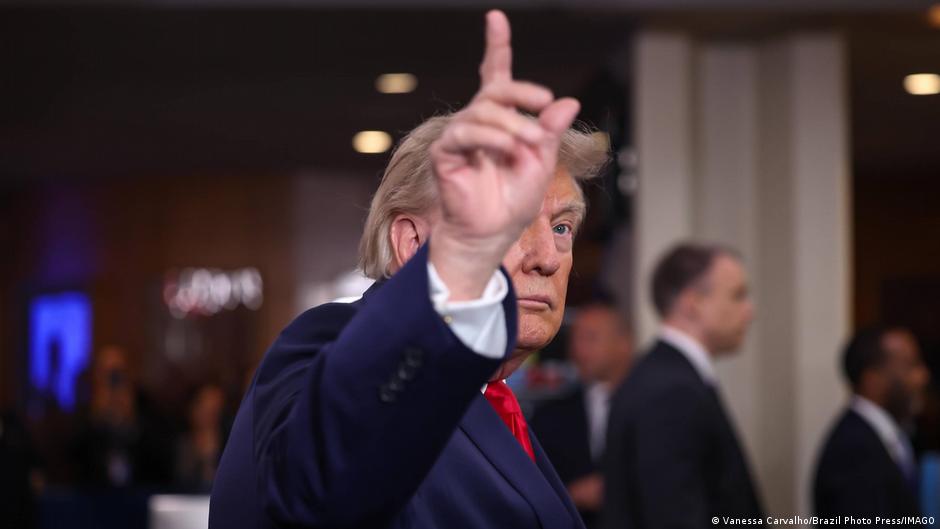
U.S. and Iranian officials met in New York on Tuesday, September 22, on the sidelines of the 81st session of the United Nations General Assembly, in a development likely to draw close attention from energy, shipping and sanctions-sensitive markets. U.S. President Donald Trump said the indirect talks lasted about three hours and were “very productive,” marking the first such meeting between the two sides in several months.
The timing gave the discussions immediate market relevance. Earlier in the same day, Trump had used an address before heads of state and government at the UN to threaten the Islamic Republic with destruction. The sharp contrast between public brinkmanship and later diplomatic contact underscored the headline risk facing traders monitoring the Gulf, Iranian sanctions, and the Strait of Hormuz, a critical route for global seaborne energy flows.
Trump said U.S. and Iranian officials met on the margins of the General Assembly after a long period without direct diplomatic movement. On the U.S. side, the talks involved Trump special envoys Steve Witkoff and Jared Kushner. Iran was represented by Foreign Minister Abbas Araghchi. The New York Times reported that the meeting was held with mediation by Qatar and Pakistan.
For investors, the talks placed several intersecting risk channels back into focus: potential sanctions relief, frozen Iranian assets, U.S. military posture in the Gulf, and the conditions under which Tehran says navigation through the Strait of Hormuz could resume. While the source account did not report any market prices, trading volumes or asset moves, the subject matter is directly tied to sectors that typically respond to shifts in Middle East risk, including crude oil, liquefied natural gas, tanker shipping, defense and broader emerging-market risk sentiment.
Indirect Diplomacy Follows Threats From the UN Podium
Witkoff later described the talks in a post on X, saying representatives had shuttled between the sides throughout the day. His statement emphasized that the discussions had been completed successfully and that mediators would continue working.
“Today on the sidelines of the UN General Assembly, we held lengthy talks with the Iranian delegation through intermediaries who moved between the parties throughout the day. A round of discussions was successfully completed, which we hope will prove constructive and promising. The mediators will continue their work,” Witkoff said.
Trump also told leaders from Gulf countries at the UN General Assembly that there was “great momentum” toward reaching an agreement with Iran, according to AFP. That formulation is likely to be watched closely by market participants because any sustained diplomatic opening could affect expectations for regional military risk, sanctions enforcement and maritime security. At the same time, no agreement was announced, and the source account did not describe any concrete timetable, framework or signed arrangement.
According to Iranian state media, Tehran used the talks to inform Washington of its conditions for resuming navigation through the Strait of Hormuz. Those conditions included an immediate end to the U.S. maritime blockade, the unfreezing of all Iranian assets blocked under sanctions, and the cessation of any military actions. Those demands highlight why the diplomatic channel remains complex: each condition touches areas with direct implications for U.S. policy, regional security and international commerce.
The Strait of Hormuz reference is especially significant for market intelligence desks. Even without reported price action in the source material, any change in the status of shipping through the waterway can become a major driver of intraday positioning across energy futures, tanker equities, insurance exposure and currency pairs linked to energy-importing or energy-exporting economies. The article’s central market signal is therefore not a completed deal, but the reopening of a diplomatic channel around issues that can quickly move risk premia.
Headline Risk Remains Elevated
The talks followed an unusually severe public threat from Trump. In his UN address before the negotiations, he said he faced a major choice over whether to reach an agreement with Iran or to destroy the Islamic Republic quickly so that it would no longer have the chance to kill people and destroy countries.
Trump framed the choice in stark terms, asking whether an agreement would allow Iran to recover and become a much more powerful state, or whether he should “destroy” the Islamic Republic “quickly.” According to AFP, the Iranian delegation left the hall during Trump’s speech.
That sequence is central to the market reading of the event. The same day brought both a threat of military escalation and a reported three-hour diplomatic exchange that Trump characterized as highly productive. For real-time market participants, such mixed signals can keep volatility risk alive even when diplomacy appears to be moving. Traders are likely to focus less on the optimistic language alone and more on whether mediators from Qatar and Pakistan can sustain talks, whether Washington and Tehran clarify their positions, and whether any practical steps emerge on shipping, sanctions or military activity.
The immediate facts remain limited: U.S. and Iranian officials met indirectly in New York; the session lasted roughly three hours; Trump described it as very productive; Witkoff said a round of discussions was successfully completed; Qatar and Pakistan mediated; Tehran reportedly presented conditions linked to the Strait of Hormuz; and the talks came after Trump threatened Iran from the UN stage. No breakthrough, implementation plan or market data was reported in the source account.
For markets, that leaves the event in the category of high-impact diplomacy rather than confirmed policy change. The key watch points now are whether the mediators continue shuttle diplomacy, whether Iran’s conditions receive any public U.S. response, and whether rhetoric from either side moderates after the UN meeting. Until then, the development may reduce immediate uncertainty for some investors while also preserving the possibility of abrupt repricing if threats, military action or shipping disruption return to the foreground.