Macron, Trump Push Ukraine Infrastructure Moratorium as UN Week Opens
The French and U.S. leaders backed efforts to protect Ukraine’s energy and civilian infrastructure while signaling further air-defense support for Kyiv.
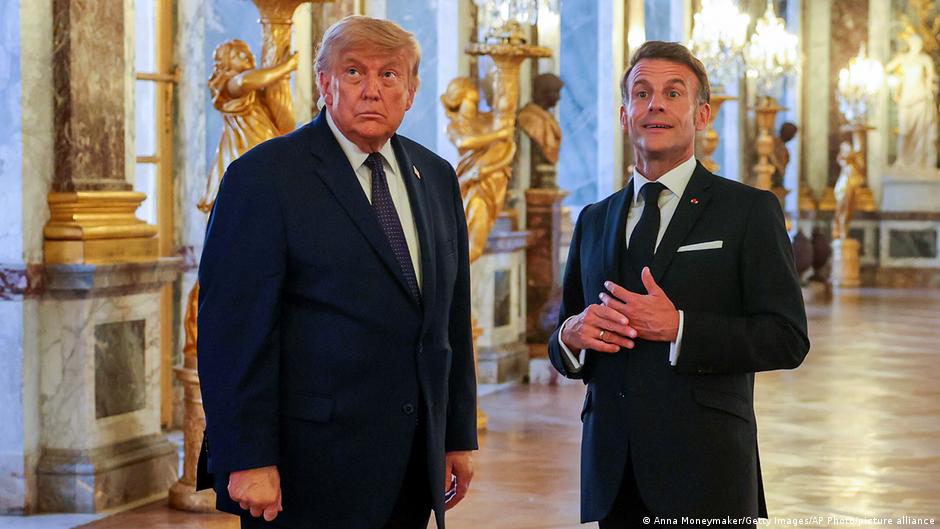
French President Emmanuel Macron said he discussed with U.S. President Donald Trump in New York a joint effort to secure a moratorium on strikes against Ukraine’s energy and civilian infrastructure, a diplomatic initiative with direct relevance for markets tracking geopolitical risk, energy security and defense-sector demand.
The meeting came as world leaders gathered in New York for the 81st session of the United Nations General Assembly, running from September 22 to September 26, with nearly 130 leaders expected to attend. For investors, the week places Ukraine-related security discussions back near the center of the geopolitical tape, particularly as markets continue to monitor risks around European energy infrastructure, supply routes and the pace of Western military support.
Macron wrote on X on Monday, September 21, that France and the United States would work together on initiatives aimed at a moratorium on strikes against energy facilities during Russia’s war against Ukraine. The French leader framed the effort as both a civilian-protection measure and a step toward more serious negotiations on peace terms between Russia and Ukraine.
“We will also combine our efforts to achieve a moratorium on strikes against Ukraine’s energy infrastructure and civilian infrastructure. The civilian population must be protected, and we must begin serious negotiations as soon as possible on the conditions for peace between Russia and Ukraine,” Macron said.
The comments add another policy signal for markets that have repeatedly reacted to escalation risks around Ukraine’s power grid and civilian infrastructure. Attacks on energy assets can affect not only Ukraine’s domestic resilience but also broader sentiment toward European gas, electricity and reconstruction-linked sectors. While the article did not report market prices or trading volumes, the diplomatic message is likely to be watched by traders for signs of whether Western governments are trying to reduce the probability of infrastructure shocks during the coming period.
Air Defense Support Stays in Focus
Speaking to reporters after his meeting with Trump, Macron said the two leaders agreed on the need to help Ukraine strengthen its defense capability. According to Macron, that includes supplying Kyiv with additional interceptor missiles to defend against Russian aerial attacks.
That element is significant for market participants tracking sector rotation into defense and aerospace names, because interceptor missile demand has become one of the most visible pressure points in Ukraine’s air-defense needs. The source article did not specify quantities, manufacturers, delivery schedules or financing terms, but the policy direction described by Macron points to continued demand for systems and munitions used to counter missile and drone attacks.
For European markets, the issue sits at the intersection of security policy and industrial capacity. Any acceleration in deliveries of interceptor missiles, or any future announcement with procurement details, could be relevant for defense contractors, component suppliers and governments balancing support for Ukraine with their own stockpile requirements. Investors are also likely to monitor whether the U.S.-France coordination described by Macron develops into a broader framework involving NATO partners or remains a bilateral diplomatic push around specific Ukrainian needs.
Macron’s comments also underscore the continued importance of Ukraine’s air-defense architecture to the protection of energy assets. A moratorium on strikes would be a diplomatic objective, but the parallel push for additional interceptors suggests Western leaders are still preparing for the possibility that Russian air attacks continue. For markets, that combination keeps both de-escalation hopes and defense demand in view at the same time.
UN Meetings Put Ukraine Back on the Market Radar
According to a DW correspondent cited in the source article, a bilateral meeting between Macron and Ukrainian President Volodymyr Zelensky began in New York on the evening of September 21. The meeting added another layer to a busy diplomatic schedule around Ukraine as leaders arrived for the General Assembly.
Before that, Zelensky met with U.S. lawmakers and thanked them for passing the late Senator Lindsey Graham’s law on “hellish sanctions” against Russia. The Ukrainian leader said he wanted the sanctions to start working.
Sanctions remain a key variable for market intelligence desks because they can affect Russian trade flows, financing conditions, energy-linked transactions and corporate compliance risk. The source article did not specify when the sanctions would be implemented, what sectors they cover or how enforcement would proceed. Still, Zelensky’s remarks indicate that Kyiv is pressing for tangible impact from U.S. legislative action rather than symbolic support alone.
The New York meetings also set up another closely watched diplomatic event: Zelensky is expected to meet Trump on September 22. That meeting may draw attention from traders and policy analysts looking for clarity on U.S. support for Ukraine, the future of sanctions pressure on Russia, and possible steps related to negotiations or battlefield defense.
The market relevance of the Macron-Trump discussion lies less in immediate price action, which was not detailed in the source, and more in the risk signals surrounding critical infrastructure, air defense and sanctions implementation. A credible moratorium on strikes against Ukraine’s energy and civilian infrastructure could reduce one source of geopolitical uncertainty. Conversely, the emphasis on additional interceptor missiles suggests Western governments still see a sustained threat from Russian aerial attacks.
As the UN General Assembly opens, investors are likely to track whether the diplomatic language from New York turns into operational commitments. Any follow-up on interceptor supplies, sanctions enforcement or the proposed infrastructure moratorium could shape sentiment across European energy, defense and broader geopolitical-risk trades during the week.