Trump Says Putin More Interested Than Zelensky in Ukraine Peace Deal
The remarks came as investors monitored renewed pressure on Ukraine’s energy infrastructure and the durability of a proposed sector ceasefire.
U.S. President Donald Trump said Russian President Vladimir Putin is more interested than Ukrainian President Vladimir Zelensky in reaching a peace agreement over Ukraine, comments that landed as markets continue to track geopolitical risks around energy infrastructure, regional security and the potential for renewed volatility tied to the war.
Speaking to reporters late Monday night into Tuesday, October 13, Trump was asked about Russia’s alleged breach of an energy ceasefire in its war against Ukraine. He said the situation first needed to be examined, adding that “there were violations on both sides.” Trump also expressed the view that Putin wants a deal, while suggesting that Zelensky would need to be persuaded to accept one.
The comments are likely to draw attention across markets because any credible shift toward a ceasefire, even a partial one focused on energy facilities, could affect expectations around regional risk premiums, infrastructure damage, reconstruction costs and European energy security. At the same time, disputed compliance with such a ceasefire may limit the extent to which investors price in de-escalation.
Energy ceasefire dispute keeps geopolitical risk in focus
A reporter asked Trump what evidence he saw that Putin was ready to compromise if Russia was continuing to attack Ukraine. Trump replied that he believed the sides would eventually reach an agreement.
“I really think Putin is more interested than Zelensky in making a deal,” Trump said.
Asked about Putin’s alleged violation of the energy truce that Trump himself had announced, the U.S. president said the matter needed to be studied because, in his view, violations had occurred from both sides. When pressed on how he intended to ensure that the Russian president observed the energy ceasefire, Trump said he believed Putin wanted an agreement and that Zelensky needed to be persuaded to move toward one.
For investors, the issue is not only the political signal from Washington but also the condition of Ukraine’s energy system after repeated strikes. Damage to power generation and transmission assets can affect industrial output, public spending needs, humanitarian conditions and the pace at which Ukraine can stabilize its economy. The market relevance rises further when statements from leaders point in different directions: Washington signaling a possible negotiated track, Kyiv reporting continued Russian non-compliance, and Moscow’s actions under scrutiny.
Earlier, Zelensky called on the United States to influence Russia so that it would begin observing a ceasefire regime in the energy sector. In remarks at the Warsaw Security Forum, the Ukrainian president said Kyiv was waiting to see what concrete steps the Americans were prepared to take.
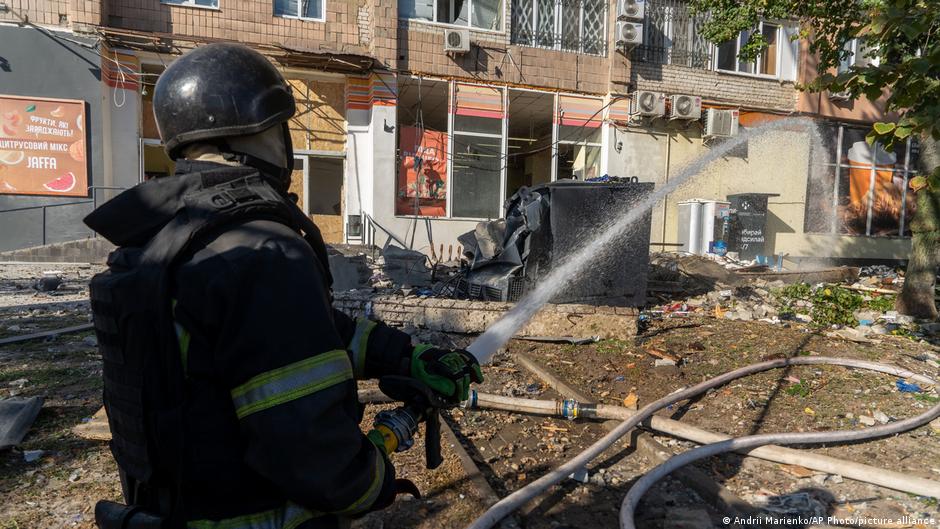
Zelensky said Ukraine had been very surprised on October 11 by social media reports that all attacks on energy facilities in Russia’s war against Ukraine would immediately stop. He noted that shortly after that statement was published, Russia struck a thermal power plant in Kharkiv, causing additional damage to Ukraine’s energy system.
That sequence matters for traders watching real-time headline risk. A ceasefire announcement can initially reduce risk premiums, but a follow-on strike against energy infrastructure can quickly reverse that reaction, particularly in markets sensitive to European power supply, regional logistics, defense exposure and currency sentiment. The article did not provide financial market prices, trading volumes or immediate asset reactions, but the political developments described are the type of event flow that can shape intraday positioning.
Kyiv presses Washington for pressure on Moscow
In a Telegram post on the evening of October 12, Zelensky said Ukraine supported an energy ceasefire and described Kyiv’s position as clear: Ukraine was ready to guarantee the energy ceasefire as announced by the U.S. president, while Russia had to take corresponding steps.
“At the moment, Russia’s implementation of these conditions, which were announced by the U.S. president, is not being recorded,” Zelensky wrote.
Zelensky added that much depended on the position of the United States if de-escalation was to work. He said pressure on Russia was necessary and that Ukraine was continuing negotiations with the American side at all levels.
The exchange underscores a familiar pattern for markets following the war: diplomatic signals generate potential upside for risk appetite, but confirmation depends on verifiable changes on the ground. A limited ceasefire covering energy infrastructure could be an important confidence-building measure, particularly heading into periods when power demand and grid resilience are central economic variables. However, competing claims about violations complicate any immediate reassessment of risk.
Trump’s comments also put the negotiating dynamic itself at the center of market attention. By stating that Putin is more interested in a deal than Zelensky, the U.S. president framed Ukraine’s leadership as the party needing persuasion, even as Kyiv says it has accepted the energy ceasefire and is calling for Washington to press Moscow. That divergence may be watched closely by investors trying to assess the future direction of U.S. involvement, sanctions policy, defense support and diplomatic leverage.
For sectors exposed to Eastern Europe, defense procurement, power infrastructure, commodities and reconstruction themes, the latest remarks add another layer of uncertainty rather than a clean de-escalation signal. The near-term market read-through will likely depend on whether there are further attacks on energy assets, whether the United States announces concrete measures, and whether either side provides verifiable evidence of compliance with the proposed ceasefire.
Until then, the event remains a headline-driven geopolitical catalyst. The central market question is whether the energy ceasefire becomes a functional restraint on the conflict or another contested diplomatic signal with limited operational effect. Trump said he believes a deal will be reached, while Zelensky said Russia has not yet implemented the conditions announced by the U.S. president.