EU to Fund Ukraine Drone and Missile Purchases as Markets Watch War Risk
Brussels said Ukraine will be a central item at this week’s European Council meeting as the bloc prepares fresh defense financing.
The European Union is preparing to allocate additional financing to Kyiv in mid-October for the purchase of drones and missiles, a move that places Ukraine-related security spending back at the center of the market’s geopolitical risk screen.
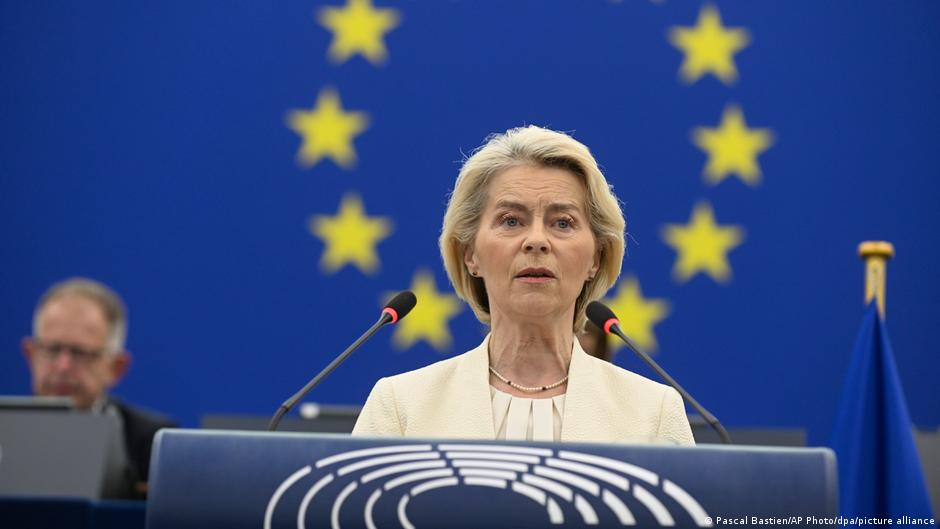
European Commission President Ursula von der Leyen announced the planned financing on Sunday, October 11, in a post on X after a telephone conversation with Ukrainian President Volodymyr Zelensky. She did not specify the amount of the funding or identify its sources, leaving investors without a concrete figure to model but with a clear signal that Brussels intends to keep military support flowing.
“This is necessary to strengthen Ukraine’s defense and protect its airspace,” von der Leyen said.
For markets, the announcement matters less as a single isolated procurement item and more as confirmation that European policymakers continue to treat Ukraine’s air defense capacity as an urgent strategic priority. Drone and missile purchases touch multiple investable themes, including defense manufacturing, aerospace supply chains, energy infrastructure risk, sovereign funding needs and broader European fiscal coordination.
Ukraine Set for Central Role at EU Summit
Officials in Brussels emphasized that the situation in Ukraine will be one of the central topics of discussion at this week’s European Council meeting. According to von der Leyen, EU leaders are expected to discuss financing needs for the coming year and ways to mobilize new international support.
That agenda gives traders a fresh event risk calendar for Europe. Any details on funding scale, source, timing or procurement channels could affect sentiment toward defense names, the euro-area fiscal debate and the market’s assessment of how long Ukraine-related support will remain a recurring budget item for the bloc.
The European Commission president also said two new clusters of topics would be unlocked as part of Ukraine’s negotiations with the EU. While the announcement was framed politically, it also reinforces the long-term integration track that markets have been monitoring since the Ukraine Facility was designed to provide stable support over several years.
Von der Leyen said she fully supported Zelensky’s call for a ceasefire, saying such a move would help protect global food supplies and energy infrastructure in Ukraine and Russia. That formulation is especially relevant for commodity desks and energy traders, because attacks on infrastructure and uncertainty around agricultural supply chains have repeatedly fed into price volatility since the war began.
According to the Commission chief, the war has entered a new and even darker phase. She said Russia is conducting a prolonged war on the battlefield and striking civilians far beyond the front line. The comments underline why Ukraine’s airspace protection remains a central policy objective for Brussels and why markets continue to attach a risk premium to energy, food and regional security developments tied to the conflict.
Funding Pipeline Remains in Focus
The new drone and missile financing follows a separate European Commission decision earlier this month. On October 2, the Commission approved a 2.9 billion euro tranche for Kyiv under the Ukraine Facility, the EU mechanism created to provide long-term financial assistance to Ukraine.
The Ukraine Facility is structured for the period from 2024 through 2027 and is intended to allow the EU to provide Ukraine with up to 50 billion euros in what Brussels has described as stable and predictable financial assistance over that period. That multi-year design is important for investors because it turns Ukraine support from an ad hoc emergency measure into a standing fiscal and policy framework.
Payments under the facility are closely linked to Ukraine’s implementation of a specific recovery and reform plan, as well as support for democratic mechanisms, the rule of law and human rights, according to the European Commission. Disbursements are made quarterly after verification that the conditions for receiving the funds have been met.
That conditional payment structure gives the support program a cadence that markets can track. Quarterly checks and tranche decisions create recurring points at which political risk, reform progress and EU budget commitments may enter the trading conversation.
The latest planned financing for drones and missiles sits alongside that broader support architecture but appears focused directly on defense procurement. Because von der Leyen did not disclose the size or source of the funding, the immediate market read-through is likely to remain qualitative until more details emerge from Brussels or the European Council meeting.
Still, the direction of travel is clear. The EU is moving to reinforce Ukraine’s air defense and battlefield capabilities while simultaneously discussing next year’s financing needs and new international support. For market participants, that means Ukraine remains a live driver for defense sector rotation, commodity risk pricing and European policy expectations.
With the European Council meeting scheduled for this week, investors will be watching for whether leaders attach numbers, timelines or financing mechanisms to the fresh pledge. Until then, the announcement adds another geopolitical signal to a market already sensitive to energy infrastructure security, food supply routes and the durability of European support for Kyiv.