EU Move on Ukraine and Moldova Accession Adds Policy Signal for Markets
EU member states agreed to open two accession negotiation clusters for Ukraine and Moldova, creating a fresh policy marker for regional investors.
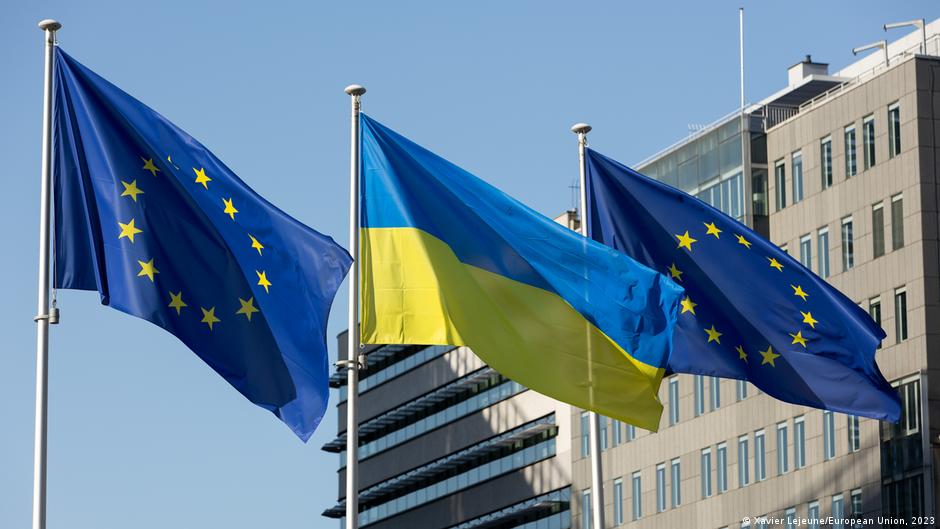
European Union member states have agreed to open negotiation clusters 2 and 3 in accession talks with Ukraine and Moldova, a development that adds a new political signal for markets tracking the region’s institutional alignment, reform path and potential future access to EU-linked funding frameworks.
Irish Minister of State for European Affairs Thomas Byrne said on X on Monday, October 12, that all EU countries had agreed to move forward with the two candidates. The decision concerns the thematic clusters known as “Internal Market” and “Competitiveness and Inclusive Growth,” two areas closely watched by investors because they touch directly on regulatory convergence, business conditions and the long-term framework for cross-border economic activity.
“I can confirm that all EU member states agreed to open clusters 2 and 3 for Ukraine and Moldova,” Byrne wrote, according to the source text.
The announcement came ahead of an expected intergovernmental conference on the sidelines of the EU General Affairs Council in Luxembourg on October 13. Earlier, on October 5, EU Enlargement Commissioner Marta Kos said after a Moldova-EU Association meeting that the bloc could open two negotiation clusters for Ukraine and Moldova during that conference.
For real-time market participants, the signal is political rather than immediately numerical: no trading volumes, index moves or bond yield changes were cited in the source. Still, the opening of clusters tied to the internal market and competitiveness gives investors a concrete date-driven marker in the broader accession process, especially for sectors exposed to EU standards, public procurement, trade regulation, industrial policy and budget support.
Policy Momentum Meets Reform Conditions
The move follows a domestic legislative step in Ukraine that was important for unlocking EU consensus. Earlier on October 12, Ukraine’s Verkhovna Rada approved amendments to the education law in two readings and as a whole. The amendments concern the rights of national minorities and were described in the source as necessary to secure Hungary’s consent for opening the second and third accession negotiation clusters for Ukraine.
On the evening of October 12, Ukrainian lawmaker Yaroslav Zhelezniak said on Telegram that the adopted law had been signed by President Volodymyr Zelensky. That sequencing matters for investors who monitor accession talks as a reform-linked process: EU enlargement negotiations are not only diplomatic milestones but also structured reviews of whether a candidate country can apply EU rules and standards.
The EU accession negotiation framework is organized into six large thematic sections, or clusters, covering different areas of legislation and state policy. During negotiations, the EU evaluates how ready a candidate country is to implement EU rules and standards. The six clusters are “Fundamentals,” “Internal Market,” “Competitiveness and Inclusive Growth,” “Green Agenda and Sustainable Connectivity,” “Resources, Agriculture and Cohesion,” and “External Relations.”
The first of the six clusters on Ukraine’s path toward EU membership, “Fundamentals,” was opened on June 15. The agreement to open clusters 2 and 3 therefore marks a further step in the formal architecture of negotiations, though the source does not state that accession itself has been accelerated or that any membership date has been set.
Regional Read-Through for Investors
Byrne framed the sequence of EU enlargement activity as following what he called “Montenegro Monday” with a “Super Tuesday” for Albania, Moldova and Ukraine. He said EU member states had agreed to open clusters 2 and 3 for Ukraine and Moldova, close chapters 17, 18 and 19 for Albania, and close chapter 20 for Montenegro.
That broader enlargement context may matter for sector rotation across emerging Europe, even without immediate quoted market data in the source. Investors often treat accession milestones as signals for governance reform, legal harmonization and the probability of future EU-linked investment flows. For Moldova and Ukraine, clusters covering the internal market and competitiveness point to areas that could shape expectations for corporate regulation, competition policy, labor standards and growth-related reforms.
Kos also said Ukraine and Moldova are carrying out systemic reforms “in very difficult conditions” and belong to a group of four states that are leaders in accession negotiations. She added that the European Commission will publish a detailed assessment of reform progress across all areas in candidate countries on October 28 in its annual enlargement report.
That October 28 report now becomes the next scheduled catalyst for investors following the accession track. The report may provide a fuller picture of reform implementation across candidate countries, though the source does not provide its contents in advance. Until then, the opening of clusters 2 and 3 is the main confirmed policy event for Ukraine and Moldova in this sequence.
Kos also urged observers not to forget that Ukraine is fighting for survival while simultaneously pursuing EU accession and implementing reforms, including reforms needed to receive additional funds for the budget and the needs of the army. For markets, that underscores the dual nature of Ukraine’s policy environment: the country is advancing institutional alignment with the EU while facing wartime fiscal and security pressures.
The immediate market implication is therefore not a specific price move, but a clearer political timeline. EU consensus on these clusters gives traders, analysts and policy desks a fresh reference point for assessing reform momentum in Ukraine and Moldova, with the next major scheduled checkpoint coming when the European Commission releases its annual enlargement assessment on October 28.