Meloni Challenges EU Unity Ahead of New Russia-Ukraine Peace Talks
Italy’s prime minister is pressing the EU to name a single negotiator as markets monitor diplomatic risks surrounding the war in Ukraine.
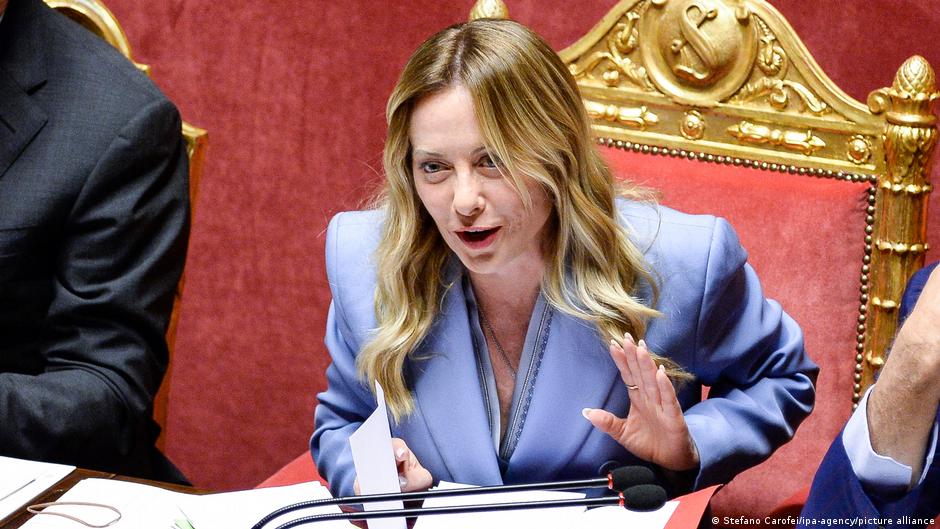
Italian Prime Minister Giorgia Meloni has called on the European Union to decide who will represent the bloc in negotiations aimed at ending the war in Ukraine, criticizing what she described as uncoordinated conduct among EU national leaders.
The intervention comes ahead of a new round of Russia-Ukraine negotiations mediated by the United States, scheduled for November 10-11 in Abu Dhabi. For financial markets, the diplomatic calendar creates a series of potential event risks as investors assess whether talks could produce signs of de-escalation or expose further divisions among Ukraine’s European partners.
In a letter to European Council President António Costa, cited by dpa on Thursday, November 5, Meloni demanded clarity over both the identity and authority of any EU representative participating in future negotiations.
“I continue to insist that it be decided once and for all who exactly will sit at the negotiating table on behalf of the European Union and with what mandate,” Meloni wrote.
Meloni said the EU’s “uncoordinated behavior” would help neither its relations with allies nor its engagement with those who must be persuaded to end what she called a “senseless aggression.” AFP also cited her as warning that the appearance of a Europe acting chaotically serves only the interests of those seeking to prolong the war.
Diplomatic Calendar Adds Event Risk for Markets
Meloni proposed that EU leaders discuss the representation issue at an informal European Council meeting in Dublin on November 13. That discussion could prepare the ground for the European Council to take a formal decision on who will represent the bloc in Ukraine peace negotiations at its Brussels summit on December 17-18, she added.
The sequence places several closely watched diplomatic events on the near-term calendar: the Abu Dhabi negotiations on November 10-11, the informal EU meeting two days later, and the December summit in Brussels. Markets sensitive to the conflict—including European energy, defense and transport sectors, as well as regional currencies and sovereign debt—could respond to any concrete evidence of progress, delay or disagreement. The source article did not report specific price moves or trading volumes linked to Meloni’s remarks.
The Italian leader’s letter highlights a persistent question for investors following the conflict: whether the EU can maintain a unified negotiating position while individual national leaders pursue separate diplomatic initiatives. A clearly defined mandate could reduce uncertainty over Europe’s role in the process, while continued fragmentation could complicate assessments of sanctions, security commitments and the prospects for a durable settlement.
Rome Criticizes Separate European Initiatives
Meloni has previously criticized initiatives by individual European leaders that, in her view, dilute the EU’s common position on Russia’s war in Ukraine. Rome specifically objected to a telephone conversation involving Finnish President Alexander Stubb, Norwegian Prime Minister Jonas Gahr Støre and Russian President Vladimir Putin.
Her latest criticism does not set out a preferred candidate to speak for the EU. Instead, it focuses on establishing a formal process, identifying the representative and defining the mandate under which that person would negotiate. Those details could prove important if US-mediated talks advance to questions involving postwar arrangements and Europe’s longer-term security role.
The next Russia-Ukraine negotiating round in Abu Dhabi will focus on “postwar security, de-escalation, humanitarian initiatives and next steps toward peace,” according to US presidential special envoy Steve Witkoff. The agenda spans issues that could affect the market outlook well beyond immediate ceasefire expectations, particularly if discussions begin to clarify future security guarantees or the pace of de-escalation.
Investors Await Signals From Abu Dhabi
The Abu Dhabi meeting is the most immediate potential catalyst. Traders will be watching for official statements indicating whether the parties have narrowed their differences, agreed on humanitarian measures or established a framework for further negotiations. A lack of progress could keep geopolitical risk elevated, while credible steps toward de-escalation could shift expectations across sectors exposed to European security and energy conditions.
Meloni’s challenge also places EU institutional cohesion in focus before the Dublin and Brussels meetings. Any decision on a single representative would signal an effort to consolidate the bloc’s diplomatic influence. Failure to agree could reinforce concerns that competing national initiatives are weakening Europe’s ability to shape negotiations being mediated by Washington.
With no market data or immediate policy change announced alongside the letter, the near-term significance lies in the political signal and the approaching event calendar. Investors now face a concentrated run of negotiations and EU meetings in which headlines on representation, mandates and de-escalation could quickly alter perceptions of geopolitical risk.