Leipzig Sabotage Probe Adds Cross-Border Security Risk for EU Logistics
Latvia says a Latvian suspect in the Leipzig airport sabotage case had been living in Russia, as Germany widens its response and scrutiny of transport security.
Latvia said a Latvian citizen suspected of involvement in an alleged sabotage attempt at Leipzig airport had been living permanently in Russia for the past several years, adding a new cross-border dimension to an investigation already carrying implications for European transport security, logistics risk and sanctions enforcement.
In a statement cited on Thursday, September 3, by Latvian news agency Leta, Latvia’s State Security Service said the suspect, described as a Russian-born holder of a Latvian passport, had not been living in Latvia in recent years. The agency also confirmed that it is cooperating with German investigators and providing the necessary support, while declining to comment further because of the ongoing inquiry.
Germany’s federal prosecutor has not yet issued official public comment on the investigation. Still, the case has become more consequential for market participants because it touches cargo aviation, border controls and the broader policy response between the European Union and Russia at a time when supply-chain resilience and sanctions compliance remain in focus.
Suspects identified as investigation widens
German investigators had earlier identified two suspects in the attempted sabotage case. According to reports cited from
Die Suddeutsche Zeitung, NDR and WDR, the attempted attack on a Ukrainian transport aircraft involved a Russian-born man with Latvian citizenship and a Belarusian man with Russian citizenship.That profile has sharpened official attention on how individuals with multiple citizenship links and valid travel documents can move across European jurisdictions while avoiding suspicion.
The second suspect reportedly entered the Schengen area on an Italian tourist visa. That visa was issued in late April at the Italian diplomatic mission in Minsk. After those details became public, Rome said it would examine the circumstances under which the visa had been granted. For investors and companies tracking European mobility rules, the development adds to expectations of tighter document checks and a more security-driven approach to entry oversight.
Italian Foreign Minister Antonio Tajani said an investigation would be carried out and argued that the episode underscored attempts by some countries to act against the European Union by using people with no criminal record and who do not arouse suspicion. He said vigilance was necessary because he knew the methods and tools such countries had used in the past and that authorities must remain on guard.
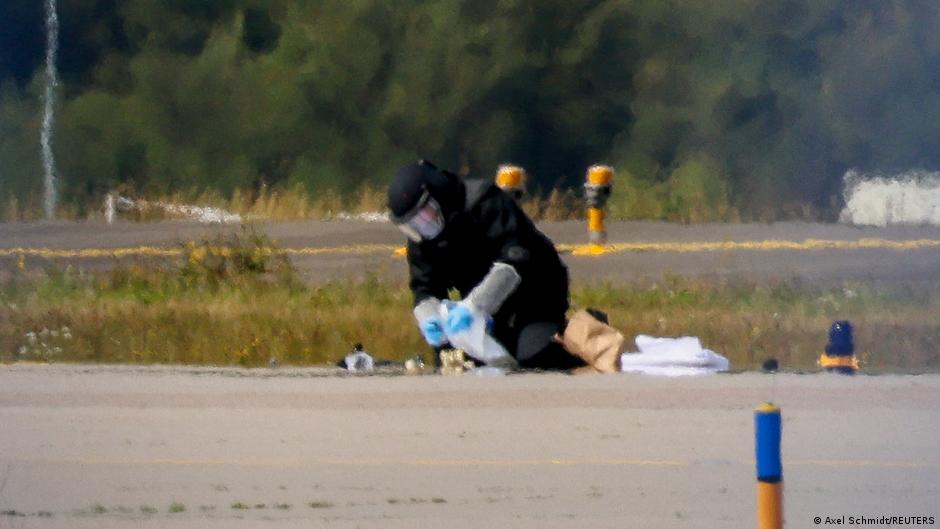
The alleged sabotage attempt against a Ukrainian Antonov An-124 cargo plane took place on August 4. Investigators say at least three drones were involved. One drone equipped with explosives was discovered near several Ukrainian cargo aircraft. A second is believed to have struck a DHL cargo plane only minutes after the first device was found. A third drone was discovered 10 days after the incident, on August 14, in a field west of the airport.
Investigators found about 50 grams of a substance next to that third drone. According to the initial assessment, the substance was hexogen. The details point to a security breach affecting a strategically sensitive part of European cargo infrastructure, an area already closely watched by insurers, transport operators and policymakers because of the war in Ukraine and the vulnerability of freight corridors.
Berlin has placed responsibility for the incident on Russia. That attribution matters beyond diplomacy because Germany’s response extends into areas with direct relevance for trade, logistics and compliance. The German government decided to close Russia’s consulate general in Bonn and terminate the agreement governing the activities of the Russian House in Berlin.
Germany also said it would tighten controls on Russian citizens entering the country and strengthen measures against Russia’s so-called shadow fleet, which Moscow uses to circumvent EU sanctions imposed over Russia’s war against Ukraine. Any intensification of enforcement around entry controls and maritime sanctions is likely to be monitored closely by shipping, freight and risk-management desks for signs of broader operational friction across Europe’s transport system.
For markets, the immediate significance lies less in direct asset-price reaction cited in the case and more in the potential for the investigation to feed into a tougher operating environment for cross-border logistics, aviation security and sanctions-related compliance. Cargo operators, customs-linked service providers and insurers are particularly exposed to the policy spillover that can follow a high-profile security incident involving aircraft, drones and alleged state-backed or state-linked sabotage.
Moscow has rejected the accusations of organizing sabotage in Leipzig. In response to the closure of the Russian House in Berlin, Russian authorities said they would close Goethe-Institut branches in Russia, located in Moscow, St. Petersburg and Novosibirsk. That retaliatory step adds another layer to already strained institutional ties between Russia and Europe.
The investigation remains active, and key official comment from German federal prosecutors is still outstanding. But with Latvia confirming the suspected Latvian citizen had been residing in Russia, and with Germany widening its diplomatic and security response, the episode has moved from an isolated aviation incident to a broader European risk event touching transport security, border management and sanctions enforcement.