Four Soldiers Killed, Dozens Injured in Fire at Canada’s Wainwright Base
A fast-moving prairie fire struck a Canadian Army exercise in Alberta, killing at least four soldiers and critically injuring 19 others.
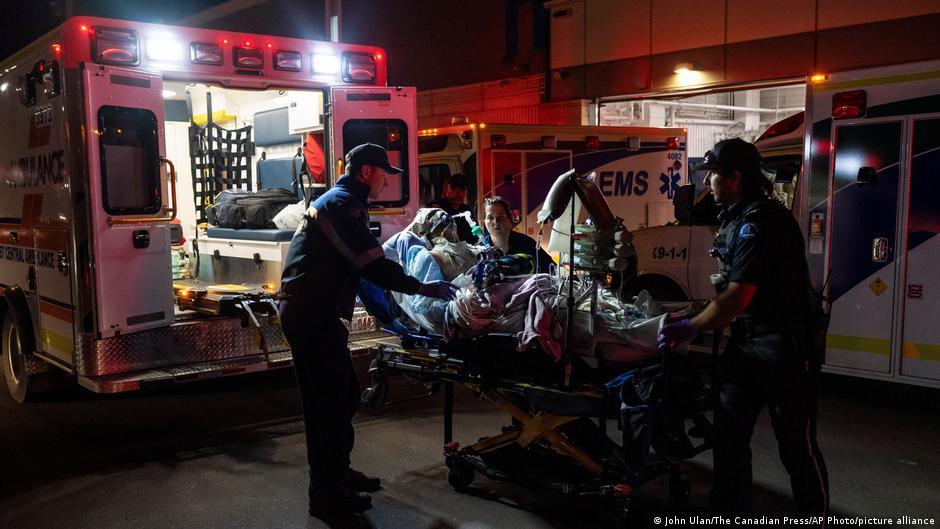
At least four Canadian Army personnel were killed and dozens were injured after a wildfire swept toward soldiers during a military exercise at Canadian Forces Base Wainwright in Alberta, Prime Minister Mark Carney said on Sunday, October 18.
Nineteen people injured in the fire were in critical condition, according to authorities. About 20 others sustained less severe injuries. The casualty figures indicated a major emergency at the military installation and raised the possibility of further updates as officials assessed the condition of those affected.
“It is with profound sorrow that I must confirm that, at this time, four service members have died, and their families have been notified,” Carney said at a news conference in Ottawa.
Carney described the incident as one of the gravest peacetime disasters to confront the Canadian Armed Forces on Canadian territory. He said dozens of other personnel had suffered serious injuries.
Fire accelerated rapidly across Alberta prairie
The wildfire began during the afternoon of October 18 while the military exercise was under way. Military commanders decided not to halt the training after the fire started, according to the information released by authorities.
Conditions then deteriorated sharply as strong winds developed. The wind drove the flames rapidly across the prairie and toward the soldiers participating in the exercise. Generals said the fire covered one kilometre in just 36 seconds, illustrating the extreme speed at which the emergency unfolded.
The reported pace of the fire would have left personnel with very little time to react once its direction shifted. The combination of open prairie, strong wind and an active training operation turned the wildfire into a mass-casualty event, with emergency attention focused on the critically injured and on notifying the families of those killed.
Authorities had confirmed at least four deaths as of Carney’s Sunday statement. His use of “at this time” signalled that the official count reflected the information available during the initial response. No additional fatalities were announced in the details released, while 19 casualties remained in critical condition and roughly 20 had injuries described as less serious.
Breaking event puts Canadian assets in focus
For markets, the fire is primarily a breaking operational and public-safety event rather than a development accompanied by disclosed trading figures or immediate asset-price moves. The available information did not include estimates of damage to the base, disruption to nearby transport or energy infrastructure, or costs associated with the emergency response.
That leaves traders and risk desks watching for official updates that could clarify whether the incident has consequences beyond the military installation. Relevant developments would include any change in the casualty count, the fire’s containment status, damage to facilities, or wider disruption in Alberta. None of those additional effects had been detailed in the initial account.
The event occurred in Alberta, a province closely watched by commodity markets because of its importance to Canadian energy production. However, the information released about the Wainwright fire did not identify any impact on oil or gas output, pipelines, power supplies or commercial transportation. No trading-volume data, sector rotation or direct market reaction was provided.
The immediate focus therefore remained on the human toll and the military response. The number of critically injured personnel made medical updates particularly significant, while the decision to continue the exercise after the fire began was likely to become a central issue as officials reconstruct the sequence of events.
Military faces questions over training decision
The timeline established so far begins with the wildfire starting during the afternoon, followed by the decision from military leadership to keep the exercise running. Strong winds subsequently intensified the danger and pushed the fire toward participating troops at exceptional speed.
Officials had not provided further details about the basis for the decision, the warnings available to commanders, evacuation procedures or the precise interval between the fire’s ignition and its advance on the soldiers. The reported spread of one kilometre in 36 seconds nevertheless underscored how abruptly conditions changed.
Carney’s remarks placed the disaster among the worst experienced by Canada’s armed forces domestically during peacetime. With four service members confirmed dead, dozens seriously injured and 19 of the wounded in critical condition, authorities continued to manage a severe casualty event at one of the country’s military bases.