Kyiv Strike Kills Two as Energy Infrastructure Comes Under Renewed Pressure
Kyiv officials reported fatalities, injuries and damage near medical facilities after a Russian strike wave targeting the Ukrainian capital.
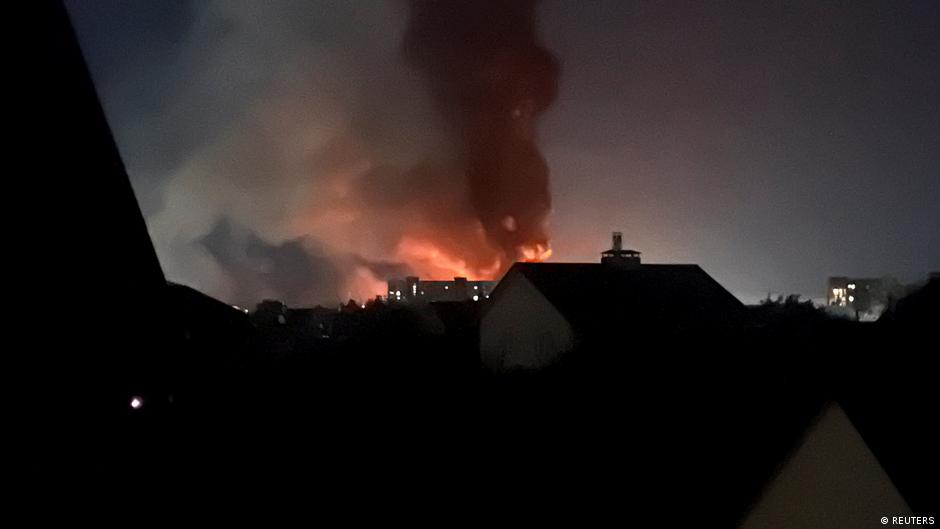
Kyiv came under renewed Russian fire overnight into Thursday, September 24, in an attack that city officials said killed two people, injured six others and caused damage across several districts of the Ukrainian capital, including near a maternity hospital.
For markets tracking the war in real time, the strike adds to a familiar but still consequential risk channel: direct pressure on Ukrainian urban infrastructure and energy assets. Kyiv Mayor Vitali Klitschko said on Telegram that debris from the attack landed in multiple parts of the city, while Ukrainian Telegram channel Insider UA reported that around 20 missiles of different types were launched toward Kyiv over a 35-minute period, with energy infrastructure described as the main target.
The immediate human toll, according to Klitschko, stood at two dead and six injured. Two of the injured were in serious condition. The reported impact zones stretched across Darnytskyi, Solomianskyi, Podilskyi and Dniprovskyi districts, underscoring the wide geographic footprint of the strike within the capital.
Energy Risk Returns to the Foreground
The report that the main target of the attack was electric power infrastructure is likely to be closely watched by traders and analysts monitoring Ukraine-related risk across power, logistics, agriculture and regional security exposures. The source did not provide details on the specific energy facilities targeted or the scale of any operational disruption, but the timing and concentration of missiles over a short window point to a high-intensity attack pattern.
Energy infrastructure has been one of the most market-sensitive categories of wartime damage in Ukraine because of its links to industrial output, heating, transport continuity and the country’s ability to maintain critical public services. Even when confirmed physical damage is localized, reports of strikes on power assets can influence expectations for repair demand, emergency imports, diesel generator usage and broader wartime resilience costs.
In Darnytskyi district, Klitschko said a missile fragment fell on a roadway. In Solomianskyi and Podilskyi districts, debris landed on the grounds of non-residential development. In Dniprovskyi district, fragments were reported in the courtyard of a 16-story residential building and private homes, as well as on an administrative building. Areas of private estates were also affected, with destruction reported in one house.
The most sensitive reported site was in Podilskyi district, where missile debris struck a parking area near a maternity hospital. Vehicles caught fire, and windows and part of the building’s facade were damaged. Klitschko said preliminary information indicated there were no casualties inside the medical facility. A nearby clinical diagnostic center was also damaged, he added.
“All relevant services are on site. Operational headquarters are being deployed to provide assistance to people,” Serhiy Lysak wrote, according to the report.
That message referred to a separate Russian attack on Odesa reported by Serhiy Lysak, head of the Odesa City Military Administration. Lysak said on Telegram that medical and educational institutions, as well as residential buildings, were damaged in the Odesa attack. The source did not provide casualty figures for Odesa or additional details on the extent of damage there.
Broader Market Context
For a market news audience, the Kyiv and Odesa reports matter less as isolated military incidents than as signals of continuing escalation risk around infrastructure, logistics and public services. Odesa remains important to Ukraine’s maritime, transport and export profile, while Kyiv is the country’s administrative and economic center. Damage to medical, educational and residential facilities can also create immediate fiscal pressure through emergency response and reconstruction needs.
The strike details available from officials and Ukrainian media did not include confirmed trading impacts, power outage figures, commodity flow disruptions or insurance losses. Still, the reported emphasis on energy infrastructure is relevant for investors following European power markets, regional fuel demand, construction materials, defense procurement and reconstruction-linked sectors.
In previous phases of the war, attacks on urban infrastructure have often produced rapid shifts in operational priorities rather than immediate headline market repricing. Utilities, grid operators, municipal authorities and emergency services become the first transmission points. From there, effects may spread into demand for backup power, repair equipment, medical response capacity and transportation rerouting. The current report does not establish that such second-order effects have occurred, but it adds another data point to the live risk environment.
The concentration of roughly 20 missiles over 35 minutes, as reported by Insider UA, also matters for defense and security monitoring. A compressed strike window can strain air defense systems and emergency response coordination, particularly when debris falls across residential, administrative and medical-adjacent areas. Klitschko’s account indicates that debris rather than direct impact was responsible for several of the reported damage sites.
City officials’ preliminary assessment that no one was injured at the maternity hospital may limit the immediate public-health fallout from that specific site. But the reported fire in the parking area, facade damage and harm to a nearby diagnostic center reinforce the fragility of civilian infrastructure under repeated attacks. For markets, the key question will be whether subsequent official updates confirm damage to power assets, outage levels or repair timelines.
As of the reports cited, emergency services were responding in affected areas, and operational headquarters were being deployed in Odesa to assist residents. The overnight attacks keep Ukraine’s infrastructure risk firmly in focus for real-time market watchers, particularly those tracking energy security, reconstruction costs and the durability of economic activity under continued Russian strikes.