Iran Conducts Closed Funeral for Ayatollah Ali Khamenei Amid Regional Tensions
Funeral held in Mashhad for late Supreme Leader Ali Khamenei as market watchers note geopolitical risks impacting regional stability.
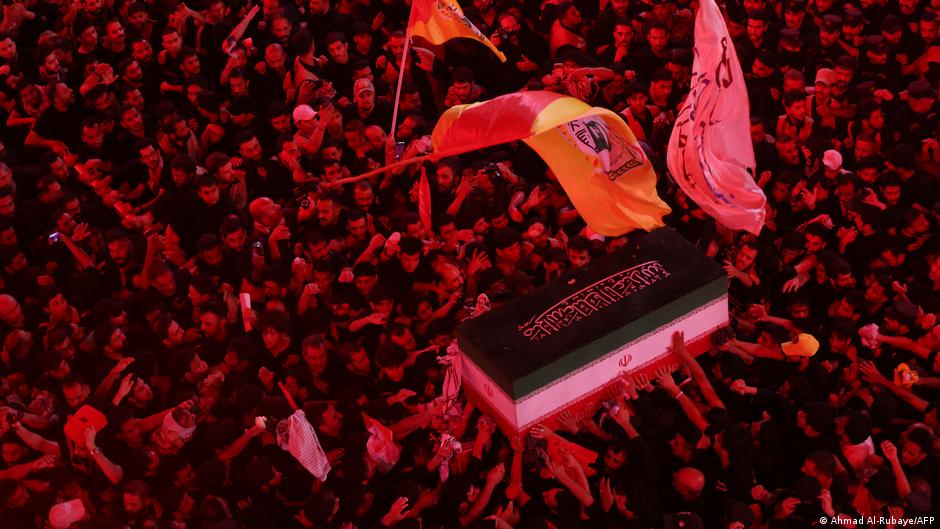
After six days of mourning, Iran held a closed funeral ceremony for the former Supreme Leader Ayatollah Ali Khamenei in the city of Mashhad. The event, conducted away from public view, followed weeks of commemorations across Iran and Iraq amid ongoing regional tensions. Notably, Khamenei's son and successor, Mojtaba Khamenei, did not appear publicly at the funeral.
Geopolitical Implications Amid Market Uncertainty
The funeral took place on the night of July 10 at the Imam Reza Mausoleum, one of the largest Shiite shrines globally, visited annually by up to 20 million pilgrims. The site also serves as the final resting place for several members of Khamenei's family, who perished alongside him in the late February attack by U.S. and Israeli forces on his residence.
Iranian authorities have portrayed Khamenei as a martyr in the struggle against militarily superior adversaries, a narrative underscored by the choice of this prominent and symbolic burial site. The mausoleum complex also houses the grave of Ibrahim Raisi, the Iranian president who died in a helicopter crash earlier in 2024.
The funeral, held more than four months after Khamenei's confirmed death at the onset of the U.S.-Israel offensive against Iran, came amid a fragile ceasefire that was negotiated earlier in June. The Iranian regime announced the funeral date only on June 13, reflecting the sensitive political and security environment.
Mourning events started on July 4, with Khamenei’s coffin displayed first in Tehran, then in the Shiite pilgrimage city of Qom, and subsequently in Najaf and Karbala in Iraq—both key Shiite holy cities. Iranian officials reported that up to 20 million people participated in the Tehran mourning ceremony alone, highlighting the regime’s efforts to rally public support and demonstrate unity.
Despite the mass public displays, Mojtaba Khamenei has remained absent from public view since the February attack. Reports suggest that he was seriously wounded but remains operational, with Iranian authorities likely restricting his public appearances due to security fears of potential Israeli attacks.
"The absence of Mojtaba Khamenei from public mourning events underscores ongoing security concerns amid volatile regional dynamics," analysts note.
According to Iran’s Fars news agency, Mojtaba is expected to appear publicly on July 19 during a final memorial ceremony in Qom, where he is slated to deliver a speech honoring his father. However, previous announcements of his public reemergence have not been confirmed.
Meanwhile, geopolitical tensions have escalated sharply despite the ceasefire. Shortly after the start of the mourning period, Iran attacked tankers in the Strait of Hormuz, claiming the vessels tried to navigate without Tehran’s permission. The U.S. responded by striking coastal positions of Iran’s Revolutionary Guard Corps, which in turn launched attacks on American bases in Bahrain and Kuwait.
Speaking at a NATO summit in Ankara, then-U.S. President Donald Trump declared the ceasefire void and refused further negotiations with Tehran, although U.S. officials later reaffirmed the continuation of diplomatic efforts despite military exchanges.
Market participants are closely monitoring these developments as the volatile geopolitical environment around Iran directly influences energy supply routes and regional risk premiums. The Strait of Hormuz, a critical chokepoint for global oil shipments, remains a flashpoint for conflict escalation, raising concerns about supply disruptions and price volatility.
In summary, the closed funeral of Ayatollah Ali Khamenei marks a significant moment of transition and increased uncertainty in Iranian leadership amid persistent military confrontations. Market observers remain vigilant to potential ripple effects on global commodity markets and regional stability.