Fuel Prices in Crimea Surge Nearly 100% Amid Russia's Domestic Supply Crisis
Fuel prices in annexed Crimea rose by 78.4% in the first week of July, reflecting broader supply issues and export restrictions in Russia's energy market.
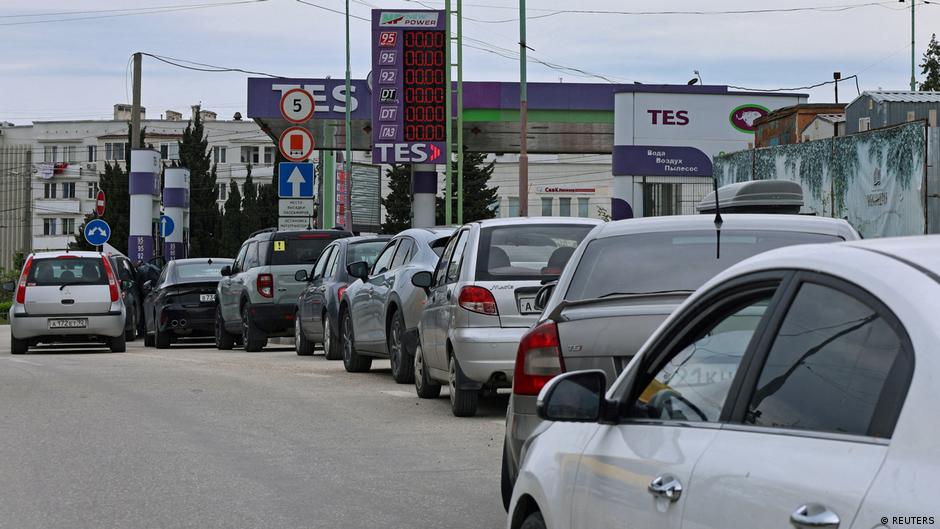
Fuel prices in Crimea, the peninsula annexed by Russia in 2014, have skyrocketed over the first week of July, with the average gasoline price increasing by 78.4%, according to the latest report from Rosstat, Russia's federal statistics agency.
Sharp Price Increase in Crimea and Regional Trends
Most notably, the price of AI-95 gasoline, the most popular fuel grade among motorists, nearly doubled in Crimea. It rose from 88.82 rubles per liter to 170.59 rubles, marking a 92% increase in just one week. This puts Crimea at the forefront of Russia’s regions in terms of fuel price inflation for the period ending July 6.
"Crimea leads Russia's regions with the most significant spike in fuel prices over the first week of July," reports analyzing the Rosstat data have concluded.
Other Russian regions have also seen notable increases, though not as dramatic. For example, fuel prices in Ivanovo Oblast increased by 19%, while regions such as the Republic of Tuva report gasoline prices above 100 rubles per liter across all fuel types. In Kalmykia, Dagestan, Kabardino-Balkaria, Chechnya, and Kamchatka, the average AI-95 price has surpassed 90 rubles per liter. Meanwhile, the price of AI-92 gasoline exceeded 80 rubles per liter in areas including Magadan Oblast, Yakutia, Tyumen Oblast, and parts of the North Caucasus and Vologda and Voronezh Oblasts.
On average, across all reported Russian regions and annexed territories, gasoline prices rose 2.1% for the week ending July 6, while diesel fuel prices increased by 3.4%. This marks the fifth consecutive week of fuel price growth, with the previous week’s increases standing at 1.6% for gasoline and 2.2% for diesel.
Government Measures and Supply Constraints
The surge in domestic fuel prices coincides with unprecedented government interventions to stabilize the Russian fuel market. Beginning July 8 and extending through July 31, Russia imposed a ban on diesel fuel exports, a move aimed at alleviating acute domestic shortages amid sustained disruptions.
Vice Prime Minister Alexander Novak announced the export restrictions during a government meeting chaired by President Vladimir Putin. Previously, export limitations on gasoline, diesel, and other fuel types had been in place since late January 2026 but did not apply to domestic fuel producers. The new rules now include producers to curb domestic shortages.
Since late May, multiple attacks on Russian refineries and energy infrastructure by Ukrainian forces have exacerbated fuel shortages across Russia. Consequently, many gas stations nationwide face severe supply constraints, with consumers often waiting hours in line, and some stations completely out of service. By early July, nearly 60 Russian regions, including occupied Ukrainian territories, had implemented various fuel rationing or sales restriction measures.
In response to the crisis, Russian authorities have temporarily authorized the use and circulation of Euro-3 standard fuels through the end of 2026. These fuels, which have higher sulfur content than the current Euro-5 standard, are considered environmentally outdated. Euro-3 gasoline may contain up to 150 mg/kg of sulfur, and diesel up to 350 mg/kg, compared to the 10 mg/kg limit for Euro-5 fuels.
To supplement domestic supply, Russia has also increased imports of petroleum products. According to Reuters, India has already shipped nearly 60,000 tons of gasoline to Moscow by sea, with ongoing negotiations for additional supplies from Kazakhstan. Furthermore, Russia plans to procure Japanese aviation fuel through trading intermediaries to meet shortfalls in that segment.
These developments highlight the pressures on Russia’s domestic fuel market amid geopolitical tensions and continuing conflict impacts.