German Public Divided on Banning AfD as Party Maintains Lead Over CDU/CSU
Survey reveals 45% oppose banning the far-right AfD, which holds an 8-point lead over the CDU/CSU amid rising political tensions.
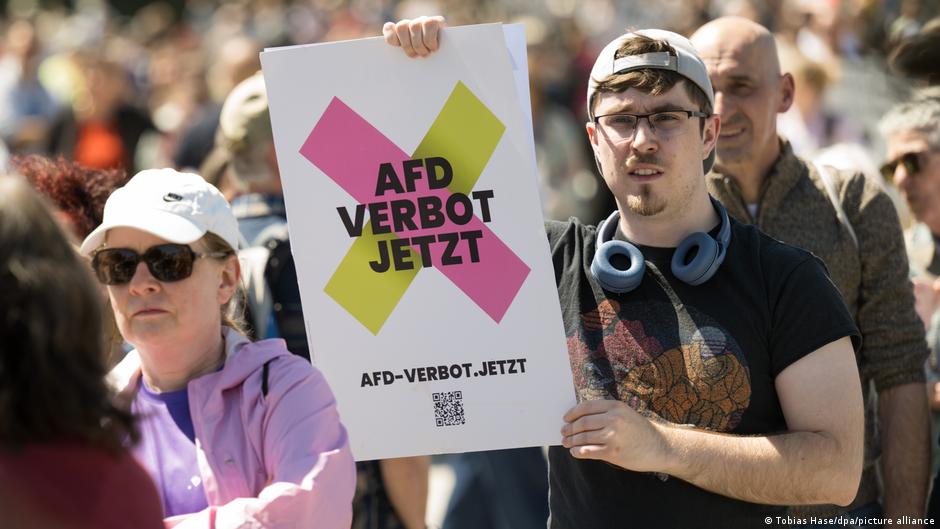
Recent polling from the Insa institute highlights a divided German public opinion regarding the potential ban of the far-right party Alternative for Germany (AfD). According to the survey, 45% of Germans oppose banning the AfD, while only 40% support such a measure, with 15% remaining undecided. This poll was commissioned for Bild am Sonntag and released on the night of July 5.
In addition to the ban debate, the survey examined public attitudes toward the "Brandmauer" strategy — a political firewall designed to isolate the AfD and prevent cooperation with the party at any level. The results show that 42% of respondents back this isolation approach, whereas 39% oppose it, and 19% are uncertain or did not respond.
AfD’s Current Standing and Political Influence
Since February 2021, the Federal Office for the Protection of the Constitution (BfV) has been monitoring the AfD for suspected right-wing extremist activity. Despite this, the party remains the most popular in Germany, currently leading the center-right CDU/CSU bloc by eight percentage points.
According to the same weekly Insa poll, the CDU/CSU's support declined by one percentage point to 21%, while the AfD maintained a steady 29%. This gap between the two parties last measured eight points in early June, indicating a sustained lead for the AfD.
Other parties are seeing minor shifts: the Social Democratic Party (SPD) increased its support by one percentage point to 13%, matching the Greens, who recently overtook the SPD in Insa’s surveys. The Left party holds a 10% support level.
Meanwhile, a separate ARD Deutschlandtrend poll published on July 2 indicates low public approval for Germany’s federal government, with only 13% of citizens approving its performance. Chancellor Friedrich Merz's personal rating dropped three points to a new low of 13%.
"We are the new people's party in Germany," declared Alice Weidel, AfD co-chair, asserting the party's claim to political leadership during its Erfurt congress.
Alice Weidel, the AfD’s co-leader, currently enjoys approximately 25% approval among Germans as of early July 2026. At the recent party congress in Erfurt, she publicly asserted the AfD’s ambitions to become Germany’s leading political force.
The survey results and recent statements underscore the growing political polarization in Germany, with the AfD's popularity challenging established parties amid ongoing debates about the extent and appropriateness of isolating or banning the far-right faction.