France Opens Taliban Talks on Afghan Returns, Raising EU Policy Risk
Technical deportation talks add a new political variable for investors monitoring European migration policy and government stability.
France is holding technical talks with representatives of the Taliban over the possible return of some Afghan migrants who do not have permission to remain in the country, opening a politically sensitive policy front for investors monitoring European government stability, migration disputes and regional coordination.
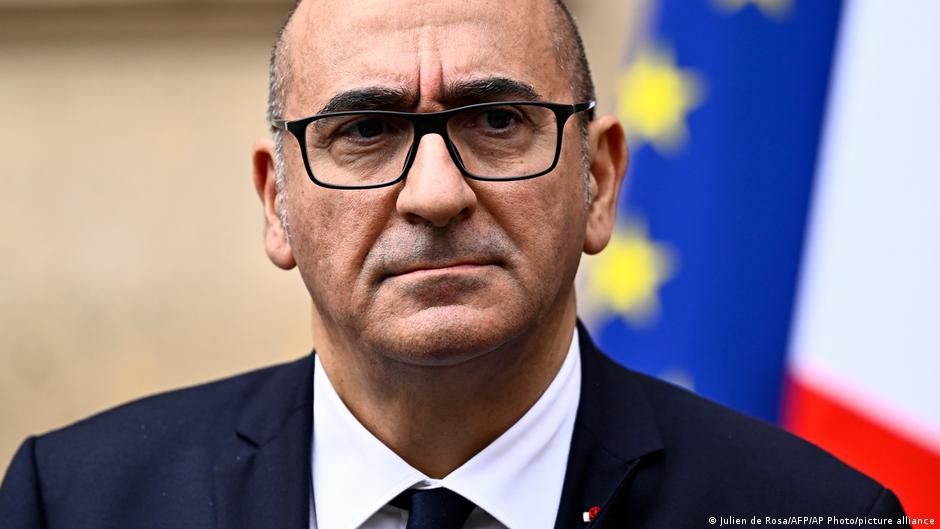
Interior Minister Laurent Nuñez disclosed the discussions during an appearance in parliament on Monday, November 2. France has no diplomatic relations with Kabul and does not formally recognize the government established by the Taliban after the Islamist movement returned to power in Afghanistan in 2021.
“We are trying to secure the possibility of returning a certain number of Afghans who are in the country illegally. These are technical discussions,” Nuñez said, according to AFP.
The minister said other European countries, including Germany, were maintaining similar contacts with the Taliban. France is among a group of approximately 20 European Union states, also including Germany, Belgium and Sweden, seeking to accelerate the return of Afghan nationals, particularly people convicted of crimes.
Political risk enters the European policy outlook
The announcement does not contain figures on planned deportations, a timetable for returns or any related fiscal commitments. It nevertheless introduces another potential source of friction into France’s domestic political agenda. For markets, the immediate relevance lies less in a direct economic effect than in the possibility that migration policy becomes an additional pressure point for the government and parliament.
Nuñez said some Afghans currently in France “may represent a threat to public order,” making their deportation a priority for the authorities. That security argument could strengthen support for a tougher approach, while the absence of diplomatic recognition creates legal, political and operational complications around any arrangement with the Taliban.
Opposition criticism emerged quickly. Léa Balage El Mariky, a lawmaker from the Ecologists party, accused the government of beginning the “normalization of diplomatic relations” with the Taliban regime. She said the movement was committing crimes against humanity through a policy described as “gender apartheid.”
The dispute places the French government between domestic demands concerning migration and public order and international concerns over human rights in Afghanistan. Investors assessing French and wider European political risk will be watching whether the talks remain narrowly technical or develop into a broader confrontation over recognition, foreign policy and asylum rules.
EU coordination faces human-rights constraints
The participation of roughly 20 EU countries indicates that the issue extends beyond France and could become part of a wider European policy debate. Germany, Belgium and Sweden are among the states seeking faster returns, according to AFP, with particular attention directed at Afghan citizens convicted of criminal offenses.
Coordinated action could reduce political differences among participating governments, but forced returns face opposition from international human-rights officials. In September, United Nations High Commissioner for Human Rights Volker Türk called for an end to forcible returns to Afghanistan, citing the continuing humanitarian crisis and the deterioration of human rights in the country.
That warning creates a significant constraint for European governments considering deportations. Any implementation would have to contend with scrutiny over conditions inside Afghanistan as well as criticism that practical negotiations could confer legitimacy on a government that France and other countries do not officially recognize.
Since regaining power, the Taliban has imposed a series of restrictions on women and girls. These include bans preventing most women and girls from accessing secondary and higher education. The International Criminal Court has previously issued arrest warrants for several senior Taliban representatives over accusations of crimes against humanity connected to the persecution of women and girls.
Markets await evidence of a broader policy shift
No market reaction, trading-volume data or sector-specific price movement was reported in connection with Nuñez’s statement. The development is therefore primarily a political-risk signal rather than an immediate trading catalyst. Its significance could increase if the talks lead to a formal return mechanism, provoke parliamentary instability or reshape cooperation among EU governments.
For market participants, the next indicators will include details on the number and category of people France intends to return, whether Kabul agrees to receive them, and whether European governments establish a common framework. The response from opposition parties, courts and international institutions will also determine whether the initiative remains an administrative security measure or expands into a larger dispute.
The distinction between technical engagement and diplomatic normalization is likely to remain central. French officials are presenting the contacts as limited discussions intended to facilitate deportations, while critics argue that dealing directly with Taliban representatives risks weakening Europe’s refusal to recognize the regime.
Until operational details emerge, the talks add to the collection of domestic and regional policy issues being tracked by investors exposed to France and the broader European market. The immediate focus remains on political follow-through rather than asset-price effects, with migration, security and human-rights obligations pulling governments in competing directions.