EU and Mexico Sign Comprehensive Trade Agreement to Boost Bilateral Commerce
The new deal eliminates almost all tariffs on EU imports to Mexico and streamlines trade barriers, aiming to increase exports and investment.
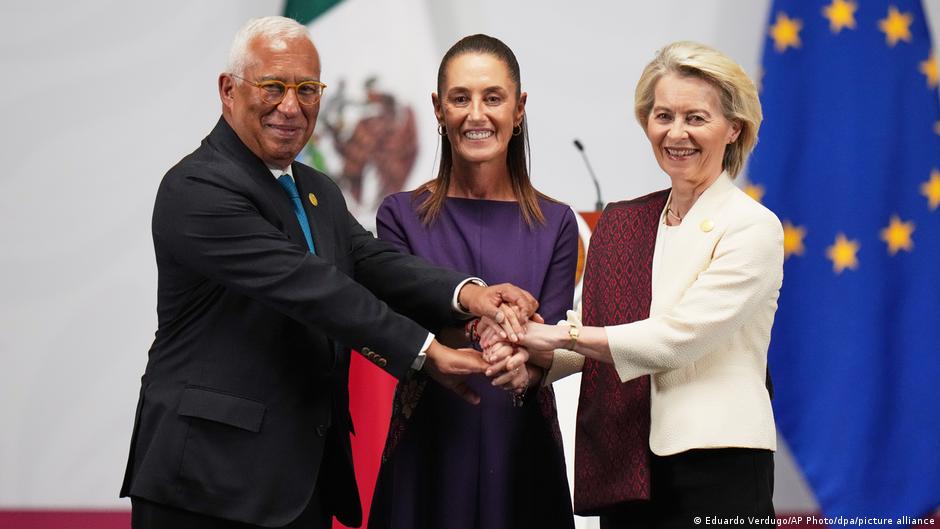
After a decade of negotiations, the European Union and Mexico have finalized an updated trade and cooperation agreement designed to deepen economic ties and enhance market access between the two regions.
Under the agreement, Mexico will abolish nearly all existing tariffs on imports from EU member states. It also commits to removing bureaucratic obstacles in trade and simplifying access to government procurement opportunities.
Implications for Trade Flows and Investment
On May 22 in Mexico City, European Council President António Costa emphasized the significance of the partnership amid current geopolitical challenges, stating, "Given the present geopolitical situation, our partnership is more important than ever." Prior to the signing, Costa and European Commission President Ursula von der Leyen met with Mexico City Mayor Claudia Sheinbaum.
This summit marked the first in ten years between EU leadership and Mexico, the second-largest economy in Latin America. Von der Leyen highlighted Europe's commitment to support the agreement with a €5 billion investment package aimed at Mexican infrastructure projects.
According to Mexico’s Ministry of Economy, the agreement could raise Mexican exports to the EU by approximately 50% by 2030, reaching about €31 billion annually. Currently, the EU exports around €56 billion worth of goods to Mexico each year. Bilateral trade volume has already increased by 75% over the past decade.
The deal provides for tariff-free access for almost all goods, including Mexican poultry and asparagus, as well as European dry milk, cheese, and pork, although certain quotas apply. This preferential treatment is expected to stimulate sector rotation and trade volume growth across key market segments.
"The agreement aims not only to open markets but also to foster sustainable trade practices, including provisions on climate change and human rights," officials noted during the signing ceremony.
Amid shifting global trade policies, particularly under the previous U.S. administration, the EU and Mexico are seeking to diversify their trade relationships and strengthen cooperation. The new agreement includes chapters addressing climate action, human rights, and international collaboration, reflecting a broader strategic partnership beyond mere commercial interests.
Germany Trade & Invest (GTAI) reports that Mexico plans to progressively eliminate tariffs on products such as poultry, pork, cheese, and chocolate. The agreement also protects geographical indications for European products like Parma ham, Bavarian beer, and Tyrolean bacon, ensuring quality and origin authenticity.
From a resource perspective, the EU secures access to critical raw materials from Mexico, an arrangement expected to benefit manufacturing and supply chains across Europe. With a population of 130 million and memberships in agreements like the USMCA with the U.S. and Canada, Mexico represents an important production hub for many European companies, including German firms.
Following ratification procedures within the EU, a comprehensive global agreement with Mexico is expected to be formally adopted, paving the way for increased cross-Atlantic trade flows and investment activities.