Drone Attacks Target Belgorod Near Ukraine Border, Causing Civilian Casualties and Property Damage
Thirteen people injured, including two children, as multiple residential buildings and key infrastructure sustain damage in early morning drone strikes.
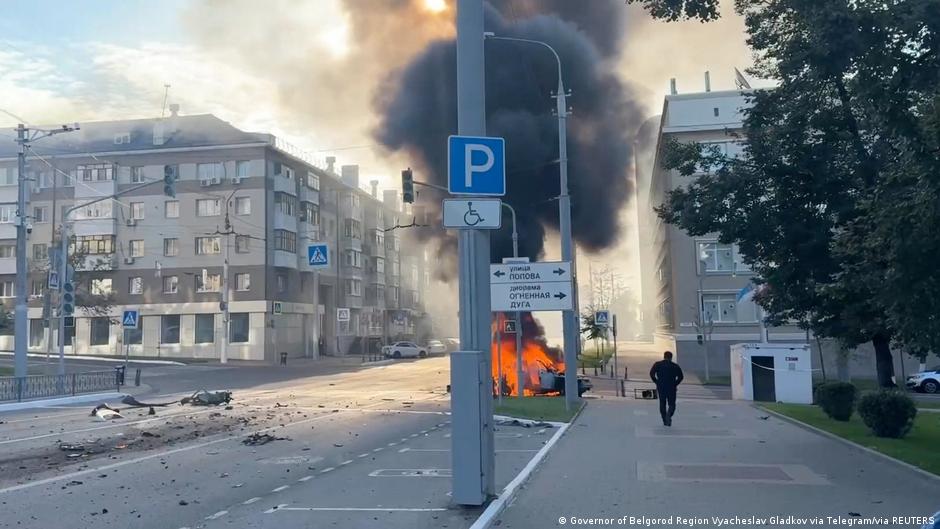
In the early hours of Sunday, August 9, the Russian border city of Belgorod experienced a series of drone attacks attributed to the Armed Forces of Ukraine (AFU), resulting in significant damage and civilian injuries. Acting Governor Alexander Shuvaev reported 13 wounded individuals, among them two children.
Targeted Infrastructure and Residential Damage
The assault involved multiple unmanned aerial vehicles (UAVs), which struck several high-rise residential buildings, an administrative building, social and commercial facilities. Preliminary assessments indicate that more than four multi-story apartment buildings were damaged, alongside other key structures.
Open-source intelligence (OSINT) analyses suggest that among the targets were the local thermal power plant (Belgorod TPP) and the regional office of the Federal Security Service (FSB). The OSINT group Astra, citing eyewitness photos, noted that the FSB regional office is located amidst the three damaged apartment complexes. Additionally, one of the damaged buildings lies approximately 600 meters from the Belgorod TPP, with visible damage to its upper floors.
"Eyewitnesses reported dozens of strike drones over Belgorod, with videos showing fires, explosions, and thick smoke columns rising above the city," said local Telegram channels, highlighting the scale of the attack.
At the time of reporting, official statements from the Ukrainian General Staff and the Russian Ministry of Defense were not yet available.
Market Implications
The attack on Belgorod, an important regional hub near the Russia-Ukraine border, introduces heightened geopolitical risk factors that may influence market sentiment and trading activity, particularly in energy and defense sectors. The reported damage to the thermal power plant raises concerns over regional energy supply stability, which could affect energy market dynamics in the short term.
Investors should monitor potential sector rotations toward energy infrastructure repair and security services, given the increased focus on border stability and protection of critical assets. The incident also underscores the evolving nature of drone warfare and its impact on civilian areas in conflict zones, a factor that could influence defense sector valuations.