Bulgaria Presidential Vote Heads to Runoff Amid Ukraine Policy Divide
Low turnout prevented a first-round victory, setting up a Nov. 1 contest with implications for regional risk and Ukraine policy.
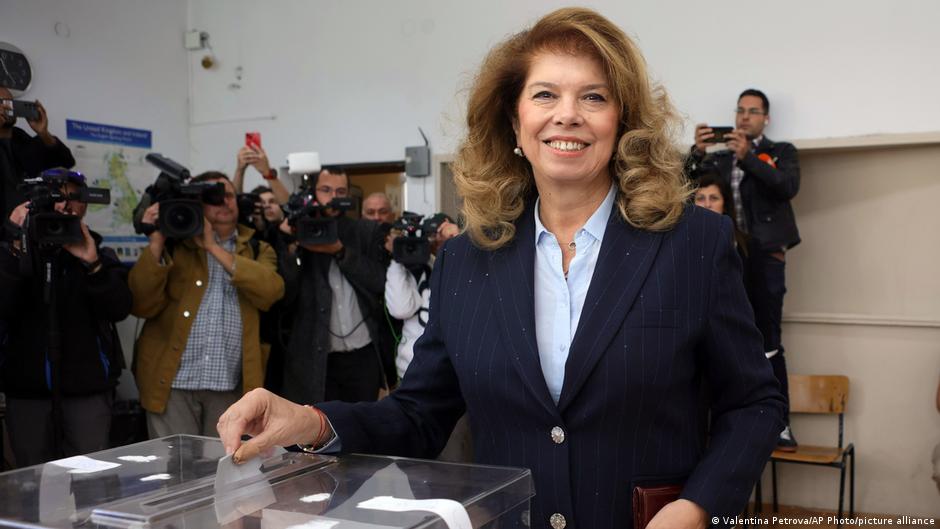
Bulgaria’s presidential election is heading to a second round after neither of the leading candidates secured the absolute majority required for a first-round victory, leaving investors and regional observers focused on the country’s foreign-policy direction and its exposure to Black Sea security risks.
With 95.3% of ballots processed, incumbent President Iliana Yotova had received 34.6% of the vote, according to data from Bulgaria’s Central Election Commission. Pro-Western former Prime Minister Andrey Gyurov followed with 32%, placing the two candidates within a relatively narrow margin ahead of the expected runoff on Nov. 1.
Voter turnout was only 22.2%, far below the required level of more than 50%. The weak participation denied the contest a decisive first-round result and shifts attention to whether either campaign can mobilize additional support before the runoff.
Regional risk moves to the foreground
The second round carries added foreign-policy significance because of Bulgaria’s proximity to the war in Ukraine. That geographical exposure has become increasingly visible after a series of security incidents in October near the country’s Black Sea coast and around the capital.
Four merchant vessels off Bulgaria’s Black Sea coastline were reportedly struck by drones during the month. Separately, a Starlink station near Sofia was damaged in an arson attack. Yotova and Bulgaria’s government, led by Rumen Radev, responded cautiously to the incidents, neither offering an unequivocal assessment nor publicly identifying those responsible.
That restrained reaction influenced the campaign and sharpened scrutiny of the candidates’ approaches to the war. For markets, the key issue is not an immediate policy announcement but the possibility that the runoff could clarify Bulgaria’s stance on regional security, cooperation with Kyiv and the management of geopolitical risks affecting Black Sea trade routes.
The runoff places two contrasting approaches to Ukraine policy at the center of Bulgaria’s presidential contest.
The campaign initially featured few rallies, no televised debates and numerous personal attacks against the two main candidates. In its final weeks, however, differences over support for Ukraine emerged as the principal dividing line between the frontrunners.
Contrasting positions on Ukraine
Yotova has advocated a diplomatic end to the war and sought to reassure voters that Bulgarian troops would not be sent to Ukraine, even though the potential deployment of Bulgarian forces had not been a subject of broad public debate.
Gyurov has previously expressed support for Ukraine. While serving as head of government, he signed a security cooperation agreement with Kyiv, establishing a clearer record of alignment with Ukrainian authorities than his rival.
The divergence may shape how traders and companies assess Bulgaria’s political-risk outlook following the runoff, particularly in sectors sensitive to regional instability. Shipping, transport, energy and communications infrastructure are among the areas most directly exposed to security developments around the Black Sea. The source data, however, provided no immediate figures for market prices, trading volumes or sector performance following the vote.
The close first-round split also leaves the direction of the second round uncertain. With Yotova at 34.6% and Gyurov at 32% after most ballots had been counted, both campaigns will need to compete for voters who backed other candidates or stayed home during the first round. The exceptionally low turnout makes voter mobilization a central variable for the final result.
Presidency retains strategic powers
Although the Bulgarian presidency has formally limited authority, the office carries powers that can matter during periods of political uncertainty. The president represents Bulgaria internationally, subject to certain exceptions, and serves as commander-in-chief of the armed forces.
The officeholder also signs decrees appointing the prosecutor general and the heads of the highest courts. In addition, the president appoints an acting prime minister from a constitutionally defined, closed group of eligible officials and may veto legislation adopted by parliament.
Those responsibilities give the Nov. 1 runoff relevance beyond its ceremonial dimension. The outcome could influence Bulgaria’s international representation, its tone on the Ukraine war and its response to future security incidents, while the president’s appointment and veto powers may affect domestic political stability.
Until the second round produces a winner, the principal market signal is continued political uncertainty rather than a confirmed shift in policy. Attention will remain on final first-round certification, turnout expectations, campaign statements on Ukraine and any further incidents involving Black Sea shipping or strategic communications infrastructure.