Zelensky Says North Korea Plans to Send 10,000 More Troops to Russia
The Ukrainian president cited new intelligence as Seoul and Kyiv remain at odds over the handling of captured North Korean soldiers.
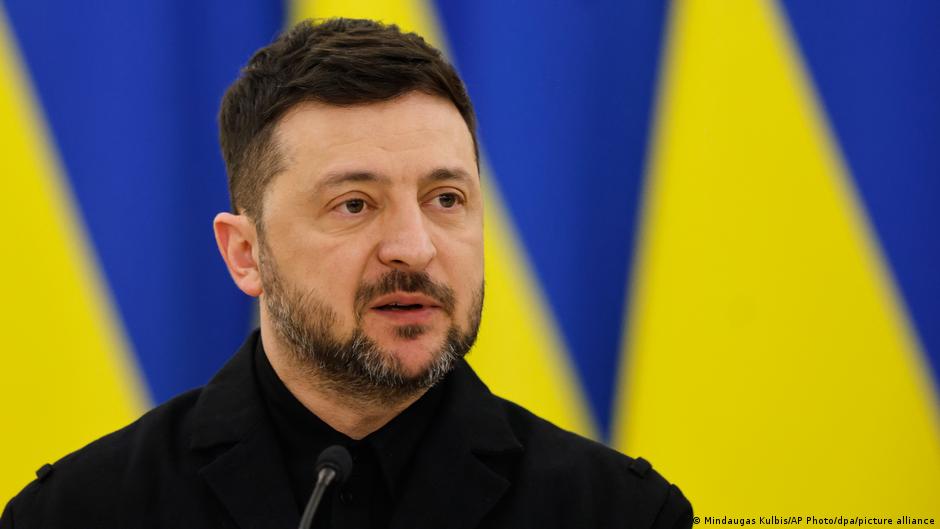
Ukrainian President Volodymyr Zelensky said North Korea is preparing to transfer about 10,000 additional military personnel to Russia, a claim that adds a fresh geopolitical variable for markets tracking war risk, defense-sector demand and regional security tensions in Europe and Asia.
In his evening address on Monday, September 28, Zelensky cited what he described as “new data” from a report by Ukraine’s military intelligence agency, the Main Directorate of Intelligence of the Ministry of Defense. According to the Ukrainian president, more than 8,000 North Korean soldiers are already on Russian territory.
Zelensky said the personnel are currently being selected for training and later deployment to Russia. He argued that Russian authorities plan to increase the recruitment of foreigners for participation in the war against Ukraine.
“It is important that the governments of countries from which Russia draws people into its army counteract this. We will inform every government,” Zelensky said.
The statement comes at a moment when investors are closely watching escalation signals tied to the Russia-Ukraine war, including developments that could affect sanctions policy, defense procurement, energy risk premiums and the broader rotation between risk assets and safe havens. While the comments did not include market data or financial figures, the potential movement of additional foreign troops into Russia is the kind of headline that can sharpen attention on geopolitical exposure across European equities, defense names, energy markets and currencies sensitive to regional security risk.
North Korean Troop Flows Remain a Market-Sensitive Signal
South Korean intelligence has estimated that North Korea has already sent about 15,000 military personnel to support Russia in the war. In exchange, Pyongyang is believed to receive money, military technologies and security guarantees from Moscow. Those claims, if borne out, point to a deepening transaction between two heavily sanctioned states and could influence how policymakers in Washington, Brussels, Seoul and other capitals assess enforcement, export controls and defense coordination.
For markets, the relevance lies less in a single number and more in the direction of travel. Any indication that Russia is expanding manpower through foreign channels may be read as a signal about the durability of the conflict and the likelihood of continued military spending across NATO-aligned states. Defense-sector stocks have often reacted to changes in perceived security risk, while energy traders continue to monitor the war for potential disruptions, sanctions shifts and changes in European supply calculations.
Zelensky’s latest comments also follow his remarks in August that North Korea intended to place between 30,000 and 50,000 fighters on Russian territory. The new statement did not repeat that range as a current deployment figure, but it reinforced Kyiv’s view that North Korean involvement remains an active and expanding component of Russia’s war effort.
The Ukrainian president’s remarks arrive against a diplomatic backdrop that could carry its own market implications for South Korea, a major exporter and a key U.S. ally in Asia. Seoul’s response to intelligence-sharing disputes and its broader stance on support for Ukraine may be watched by investors assessing regional political risk, defense cooperation and the balance between security commitments and economic exposure.
Kyiv-Seoul Dispute Adds Diplomatic Pressure
Zelensky’s statement on Russia’s plans to attract additional North Korean personnel came amid a dispute between Kyiv and Seoul that flared several days earlier. South Korean President Lee Jae Myung sharply criticized Ukrainian authorities after Zelensky publicly reported the transfer to Seoul of two North Korean soldiers captured during fighting by Ukrainian forces in Russia’s Kursk region.
According to the South Korean side, Zelensky violated an agreement on confidentiality by making the information public. The dispute has widened because Kyiv denies that any such non-disclosure agreement existed. Zelensky’s office said there had been no agreement between the countries to keep the information secret.
Officials in Seoul called that denial false. On September 28, South Korea’s Ministry of Foreign Affairs summoned Ukraine’s acting ambassador. South Korea’s deputy foreign minister conveyed what the Yonhap news agency described as Seoul’s firm position on the matter to the Ukrainian diplomat.
The episode underscores the sensitivity around North Korean personnel captured or transferred in connection with the war. It also highlights the complex information environment facing governments and markets alike: intelligence claims, public messaging and diplomatic denials can move quickly, often before independent verification is available.
From a market-intelligence perspective, the key development is the convergence of three live themes: possible additional North Korean troop deployments to Russia, Kyiv’s effort to pressure governments whose nationals or personnel may be drawn into Russia’s military campaign, and a public disagreement between Ukraine and South Korea over confidentiality. Together, they may influence how traders and analysts price geopolitical risk around the war, particularly if the issue triggers further official responses from Seoul, Moscow, Pyongyang, Kyiv or Western governments.
The reported involvement of North Korean troops has already become a recurring signal in assessments of the war’s next phase. Zelensky’s latest statement places renewed focus on whether Russia is moving to expand foreign manpower and whether governments connected to those flows will act to stop them. For investors, the immediate question is not only whether the reported transfer takes place, but whether it changes expectations for the conflict’s duration, the sanctions environment and defense spending trajectories across allied economies.