White House Says U.S. Envoys Discussed Concrete Ukraine Plans in Moscow
The diplomatic push now moves to Kyiv, giving markets a fresh geopolitical catalyst as investors assess risks tied to the war in Ukraine.
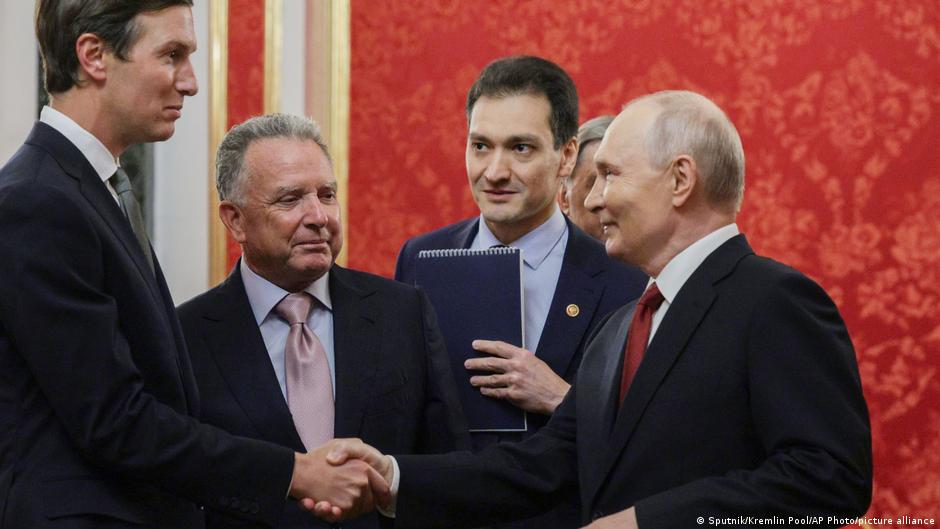
The White House said U.S. representatives Stephen Witkoff and Jared Kushner discussed “concrete plans” with Russian President Vladimir Putin for further steps aimed at ending the war in Ukraine, with those proposals expected to be made public “in the coming weeks.” The comments, reported by AFP in the early hours of Sunday, September 6, signal a new diplomatic sequence that could become a near-term geopolitical driver for global markets.
According to a White House representative cited by AFP, Witkoff, the U.S. president’s special envoy, and Kushner, Donald Trump’s son-in-law, held talks in Moscow focused on practical next steps toward ending the conflict. The official said the U.S. envoys were now looking forward to “no less productive meetings” in Ukraine, where they are expected to hold talks with Ukrainian President Volodymyr Zelensky.
For investors, the development adds a fresh headline risk to trading in energy, defense, currencies and broader European assets. The source article did not report market prices, trading volumes or immediate asset moves, but the diplomatic timeline gives traders a concrete window to monitor: the envoys’ arrival in Kyiv, the content of their discussions with Zelensky and any disclosure of the U.S. plan in the coming weeks.
Diplomatic Timeline Becomes a Market Catalyst
Trump also announced a new diplomatic initiative to end the war and said Witkoff and Kushner had brought with them a plan “to end the war,” AFP reported. The U.S. president did not specify whether the proposal would involve transferring Ukrainian territories to Russia. He said only: “We have an idea for peace.”
That ambiguity matters for markets because any plan touching territorial concessions, ceasefire terms or the sequencing of negotiations could quickly affect investor expectations around sanctions, reconstruction, energy flows and regional security spending. At this stage, however, the available information remains limited to the existence of a U.S. proposal and statements from officials in Washington, Moscow and Kyiv.
After the Moscow visit, Kushner and Witkoff are due to arrive in Kyiv for their first negotiations with Zelensky. Flightradar24 data cited in the source showed that a Boeing C-32A carrying the U.S. special envoys landed at 01:30 local time at the airport in Rzeszow, Poland. Their aircraft departed Moscow’s Vnukovo airport and headed west while bypassing Belarus, then crossed the airspace of Latvia, Lithuania and Poland. From Poland, they are expected to travel to the Ukrainian capital by train.
“The U.S. envoys look forward to no less productive meetings that will take place in Ukraine,” AFP quoted a Washington source as saying.
Moscow described the Putin meeting as “extremely frank.” Russian presidential aide Yuri Ushakov told Russian journalists that the American delegation had presented “several ideas” on how the war in Ukraine might be brought to an end.
“The American representatives carefully prepared for this trip. They not only expressed interest in ending hostilities as soon as possible, but also presented several ideas about possible paths to a solution,” Ushakov said, according to the Russian account cited in the source.
Ushakov also said the talks were timely and useful for both sides. Interfax quoted him as saying that Putin confirmed his intention to continue working with the Americans to search for political and diplomatic outcomes.
Moscow and Kyiv Position Ahead of Talks
The Russian side also gave the U.S. representatives its assessments of the course of military operations in Ukraine, according to RBC as cited in the source. Those assessments noted successes by the Russian army and expressed “confidence in achieving the stated objectives.” Trump’s envoys, according to RBC, “promised to use this information during negotiations in Kyiv.”
That sequencing is important for real-time market intelligence because it shows the U.S. delegation moving from Moscow’s military and diplomatic framing directly into talks with Kyiv. Investors tracking geopolitical exposure will likely focus on whether the Kyiv meetings produce confirmation of the U.S. plan’s core terms, a timetable for further talks, or a public response from Zelensky’s administration.
Zelensky held a phone call on the previous day with the U.S. presidential envoys after their arrival in Russia. He also announced readiness to halt strikes on Moscow for the next three days. The Ukrainian president said the diplomatic plan for the following day in Kyiv with the participation of the American team had been approved.
“We are waiting for Steve Witkoff and Jared Kushner and are ready for a substantive conversation,” Zelensky said on social media, according to the source.
The immediate market relevance lies less in any confirmed settlement and more in the emergence of a diplomatic process with named participants, stated next steps and an indicated publication window. The war in Ukraine has repeatedly affected risk pricing across Europe, energy markets, agricultural trade routes and defense-linked equities. The source does not provide evidence of a ceasefire agreement, territorial framework or sanctions roadmap, so investors are left to trade on event risk rather than finalized policy.
For now, the key known facts are that Washington says specific plans were discussed with Putin, Moscow says the talks were frank and useful, Trump says the envoys carried an idea for peace, and the same U.S. representatives are heading into talks with Zelensky in Kyiv. Until the proposals are published or formally endorsed, the situation remains a developing geopolitical event rather than a resolved market story.