US sanctions stance hardens at G20, signaling prolonged pressure on Russia
Treasury Secretary Scott Bessent told Russia's Anton Siluanov that Moscow should expect no easing of U.S. economic pressure before the war in Ukraine ends.
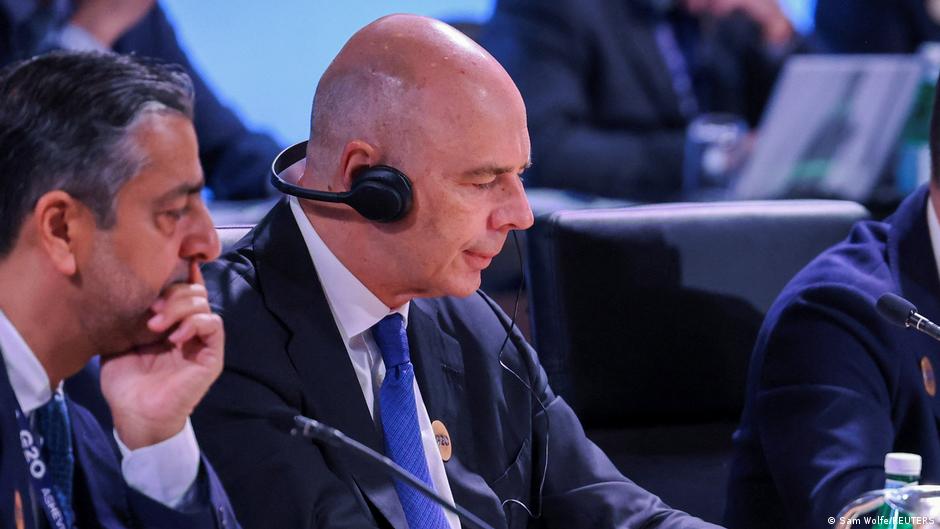
U.S. Treasury Secretary Scott Bessent told Russian Finance Minister Anton Siluanov at a G20 gathering in Asheville, North Carolina, that Moscow should not expect any easing of U.S. sanctions or progress on other bilateral issues until the war in Ukraine is over, according to a report published overnight on Tuesday, September 1.
For markets, the message points to a continued hard line from Washington on Russia-related financial restrictions, reinforcing expectations that sanctions risk will remain a live factor for cross-border capital flows, commodities exposure and policy coordination among Western economies.
The conversation took place on the sidelines of a meeting of G20 finance ministers and central bank governors. The report said Bessent made clear to Siluanov that Russia should not count on relief from economic pressure before the end of the war in Ukraine, and should not expect agreements on other matters ahead of that point either.
The remarks matter because they reduce scope for any near-term repricing tied to speculation about a softer U.S. sanctions posture. Investors tracking energy, industrials, defense-linked names and emerging-market risk have been watching for signs that diplomatic contacts could translate into a shift in the sanctions framework. This account suggests the opposite: economic pressure remains tied directly to the course of the war.
European friction adds to policy signal
Siluanov's presence at the meeting also triggered visible unease among European governments, which are currently working on tighter sanctions against Russia because of the war, the report said. That reaction underscores that the Western policy mix remains not only restrictive, but politically sensitive.
German Finance Minister and Vice Chancellor Lars Klingbeil described Siluanov's participation in the event as a "troubling signal." He also told colleagues from other European countries that he was prepared to boycott the traditional group photograph if the Russian minister appeared in it.
"One can find space for clear criticism, discuss things with one another, and choose clear words about this war, but a group photo would be a step too far for me at this stage," Klingbeil said.
According to Klingbeil, representatives of other European countries backed that position, and the photograph was ultimately taken without the Russian minister. He also told reporters that, during the participants' morning meeting, he had personally told Siluanov that the war in Ukraine must end and reaffirmed Berlin's support for Kyiv.
That sequence adds another layer for traders and policy watchers: even where diplomatic contact occurs, Europe appears intent on avoiding any imagery or messaging that could be read as normalization. In practical terms, that lowers expectations for a market-friendly thaw in the sanctions environment and keeps the focus on escalation risk rather than relief.
The Russian Finance Ministry had earlier published a statement on the evening of August 31 saying that Siluanov and Bessent held a meeting on the sidelines of the G20 session of finance chiefs and central bank governors. The ministry said the two discussed issues of Russia-U.S. interaction on the financial track, as well as cooperation within the Group of 20.
That official wording was limited and did not refer to sanctions relief. Instead, the subsequent report about the content of the exchange framed the meeting as a venue for a direct U.S. warning that economic pressure would stay in place until the conflict ends.
Also on August 31, CNBC reported on its website, citing the U.S. Treasury, that Bessent discussed U.S. President Donald Trump's Ukraine peace plan with Siluanov in Asheville. Taken together, the two accounts suggest the meeting combined discussion of a diplomatic path with a firm statement that Washington's economic stance would not soften before the war's conclusion.
For financial markets, that combination is significant. It indicates that even if political channels remain open, sanctions policy is still being used as leverage rather than offered up early as an incentive. That dynamic can influence expectations across sectors exposed to Russia-related supply chains, energy pricing and sovereign risk sentiment.
It also keeps attention on the gap between diplomatic engagement and commercial normalization. A ministerial conversation at a G20 event may have raised questions about whether back-channel progress could feed into a broader reset. Instead, the reported U.S. message suggests that any such reset remains conditional and distant.
With European officials simultaneously pressing for stronger sanctions and signaling discomfort over high-visibility engagement with Russian representatives, the broader picture for investors is one of continued policy alignment around pressure rather than accommodation. In that environment, headlines from official meetings may still move markets, but the underlying direction described here remains restrictive.
The immediate takeaway is that Washington's stance, as reported from the G20 sidelines, offers little support for expectations of a near-term sanctions unwind. For traders parsing geopolitical signals, that keeps the Russia sanctions framework squarely in the category of ongoing market risk rather than imminent policy relief.