EU Leaders Delay Seven-Year Budget Deal as Spending Divisions Persist
Talks will resume in December after member states split over cuts, new EU-wide levies and funding for strategic priorities.
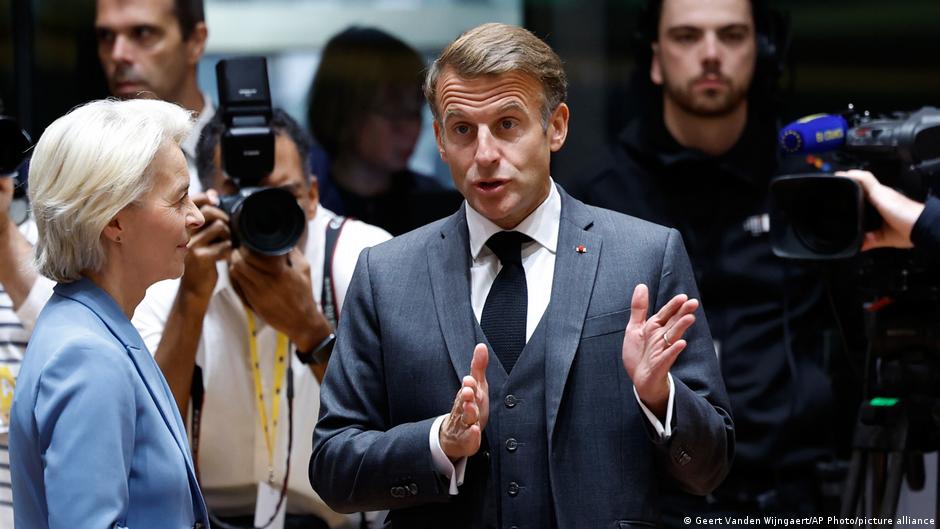
European Union leaders ended the first day of their Brussels summit without an agreement on the bloc’s next seven-year budget, leaving investors and businesses waiting for clarity on future funding for research, defence, competitiveness and regional development.
Negotiations failed to produce a breakthrough and are due to continue in December, AFP reported early on Friday, October 16, citing sources in Germany’s federal government. The unresolved talks expose a divide between governments seeking tighter spending controls and those advocating a larger common budget.
For markets, the delay postpones decisions that could influence the allocation of capital across several strategically important European sectors. The eventual size and composition of the budget will determine the level of EU support available for innovation, defence programmes and measures intended to strengthen the bloc’s competitiveness.
Member states split over spending
Germany, Austria, Sweden, Denmark, the Netherlands and Finland are among the countries calling for greater budget discipline. France, Spain and Poland are part of a group supporting an increase in EU spending.
Sources described the summit exchanges as “contradictory debates,” although the competing national positions were known before leaders arrived in Brussels. The disagreement centres not only on the total size of the budget but also on which policy areas should absorb any reductions.
Germany and several northern European countries are pressing for savings, while France, Spain and Poland support a larger EU budget.
The European Commission presented a draft long-term budget of almost €2 trillion during the summer. Ireland, which holds the rotating presidency of the Council of the European Union, proposed reducing that amount by €140 billion, or approximately 8%.
Under the Irish proposal, spending would be lowered in areas including competitiveness, scientific research, defence and foreign policy. Those categories are closely watched because they are linked to Europe’s efforts to improve productivity, expand its technological capabilities and strengthen its security position.
The prospect of cuts across these programmes creates uncertainty for companies, universities and contractors that rely on EU financing or participate in projects backed by the bloc. No specific market-price movements or trading-volume figures were provided following the first day of negotiations, but the policy divide leaves sector funding expectations subject to further political developments.
France proposes new EU-wide revenue
France used the summit to promote new common European levies that could increase the budget without requiring higher direct contributions from member states. The proposed revenue sources include charges on digital services, cryptoassets and online gambling.
Those measures could become relevant for the affected industries if they advance beyond the negotiating stage. Digital platforms, crypto-related businesses and online betting operators would face potential changes to their cost structures, while governments could secure an additional source of financing for shared programmes. The source article did not specify proposed tax rates, expected revenue or an implementation timetable.
Before the talks began, German Chancellor Friedrich Merz called for the Commission’s proposal to be reduced “substantially.” He also categorically rejected providing additional money for two of the EU’s largest traditional spending categories: agriculture and cohesion policy.
That position adds another layer to the negotiations. Agricultural support and cohesion funding have historically attracted strong interest from governments whose economies or regions benefit heavily from those programmes. Resistance to higher allocations could therefore intensify the contest between established spending commitments and newer priorities such as defence and research.
December summit becomes the next deadline
The next EU summit is scheduled for December. Many of the bloc’s 27 member states want to approve the long-term budget before the end of the year, partly because elections in several countries in 2027 could bring eurosceptic and populist forces to power.
In France, far-right politician Marine Le Pen could win the presidential election. AFP reported that President Emmanuel Macron has already warned that reaching an EU budget agreement would be “difficult” in that event.
The approaching political calendar raises the stakes around the December meeting. A deal would give governments, companies and financial markets greater visibility on the EU’s spending priorities, while another delay could extend uncertainty over the scale and timing of funding across multiple sectors.
Austrian Chancellor Christian Stocker did not rule out negotiations continuing into next year. His remarks underline the risk that the timetable could slip despite the preference among many governments for approval by year-end.
Until leaders reconcile demands for fiscal restraint with calls for more collective spending, the proposed near-€2 trillion framework remains unsettled. The December summit will now be the next major event for assessing whether member states can narrow their differences over budget size, programme cuts and new sources of EU revenue.