US Reports New Caribbean Strike as Drug-Boat Campaign Draws Scrutiny
The latest reported strike killed four people and adds to a campaign closely watched for its legal, geopolitical and market-risk implications.
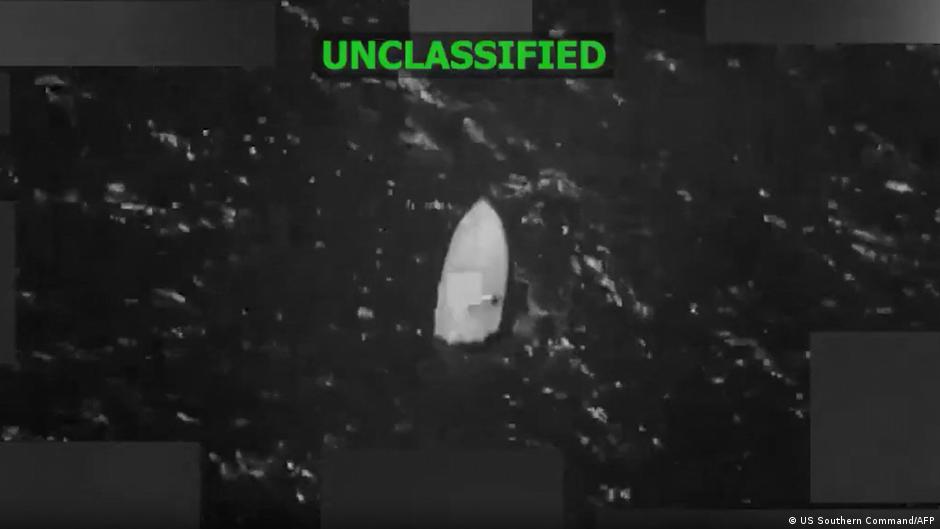
The US military said it carried out a new strike on a vessel in the Caribbean Sea that it said was transporting drugs, an operation that killed four people and added to a broader campaign against alleged narcotics trafficking routes in the region.
US Southern Command said on Saturday, September 19, that American forces had conducted what it described as a “lethal strike” on a speedboat that was “traveling along routes used for illegal drug trafficking in the Caribbean Sea.” The command said intelligence supported the assessment that the vessel was involved in drug trafficking.
“Credible intelligence confirmed this vessel’s involvement in drug trafficking. During the operation, four narcoterrorists were eliminated,” the military said.
Video published on X showed a moving vessel before it disappeared in a bright flash. The US side did not present evidence publicly demonstrating that the boat was connected to drug trafficking.
For market participants, the announcement adds another point of tension in a strategically important maritime region where security developments can quickly feed into geopolitical risk pricing. While the strike itself was military in nature, the Caribbean sits near critical shipping, energy and trade corridors, and the campaign has been monitored by traders for potential spillovers into regional risk sentiment, transport insurance assumptions and Latin America-linked assets.
Campaign Extends Regional Risk Watch
The Associated Press reported that, including this case, the total number of people killed in US military strikes on vessels of alleged drug traffickers in the Caribbean Sea has reached at least 231. According to the agency’s count, 69 such strikes have been carried out as part of a campaign that has continued for more than a year.
The figures underscore the scale of the operation and the durability of Washington’s military posture in the area. For investors tracking emerging-market risk, the sustained nature of the campaign matters as much as any single strike. A prolonged pattern of armed action can affect assessments of regional stability, especially when it intersects with US policy toward Venezuela and wider debates over international law.
The Caribbean and northern South America are also watched through the lens of energy exposure. Venezuela remains a central reference point in regional geopolitics, and any escalation in US-Venezuela tensions can influence how traders think about supply risk, sanctions pathways and broader political volatility. The source material does not indicate any immediate market move following the latest strike, but the event fits into a sequence of developments that keeps geopolitical risk elevated on trading desks.
On October 23, 2025, at a White House press conference, US President Donald Trump said that American forces would “kill people” bringing drugs into the country from Venezuela. That statement placed the campaign in the center of a more confrontational policy narrative, with Venezuela explicitly named as part of the administration’s anti-drug enforcement focus.
The language used by US officials has also drawn attention from legal observers and international institutions. Volker Türk, the United Nations High Commissioner for Human Rights, said on October 31, 2025, that US attacks on vessels “allegedly linked to drug trafficking” violate international law. Türk called for immediate, independent and transparent investigations into the attacks.
The absence of publicly presented evidence in the latest incident may keep scrutiny high. Markets tend to respond less to isolated statements than to the perceived trajectory of state action, and the campaign’s combination of military force, disputed legal footing and regional political sensitivity makes it a recurring source of headline risk.
Trading Lens: Headline Risk Over Immediate Price Action
There were no trading volumes, price moves or sector rotations cited in the source report. Still, the event is relevant for real-time market intelligence because it touches several channels that investors routinely monitor: geopolitical escalation, maritime security, US-Latin America relations and potential legal constraints on military operations.
In equity markets, such developments are typically watched by investors with exposure to defense contractors, shipping companies, energy producers and Latin America-focused funds. In fixed income and foreign exchange, the key question is whether security incidents begin to affect regional risk premiums. For commodities, traders often look for signs that tensions could alter expectations for energy flows, sanctions enforcement or shipping costs.
The present report does not establish any direct impact on those markets. It does, however, add to the information set around a campaign that has already involved dozens of strikes and hundreds of deaths, according to the Associated Press count cited in the source. That scale makes each new operation more than a standalone enforcement action; it becomes part of a broader policy trend that can shape risk models and event-driven trading strategies.
Legal and diplomatic responses remain a crucial variable. If calls for investigation gain traction, or if affected states respond with diplomatic or operational measures, market attention could shift from the individual strike record to the possibility of a wider policy confrontation. Conversely, if the campaign continues without material international consequences, investors may treat future reports as part of a persistent but contained risk backdrop.
The latest strike therefore lands in a market environment where geopolitical headlines are evaluated for both immediate liquidity effects and longer-term positioning signals. With no public evidence released by the US side regarding the vessel’s alleged drug-trafficking role, and with international-law objections already raised by the UN human rights chief, the campaign remains a live source of uncertainty for regional and global investors.