U.S. Army Secretary Driscoll Resigns After Clash With Pentagon Chief
Reported departure adds to leadership turnover at the Pentagon as investors track defense policy, procurement priorities and command stability.
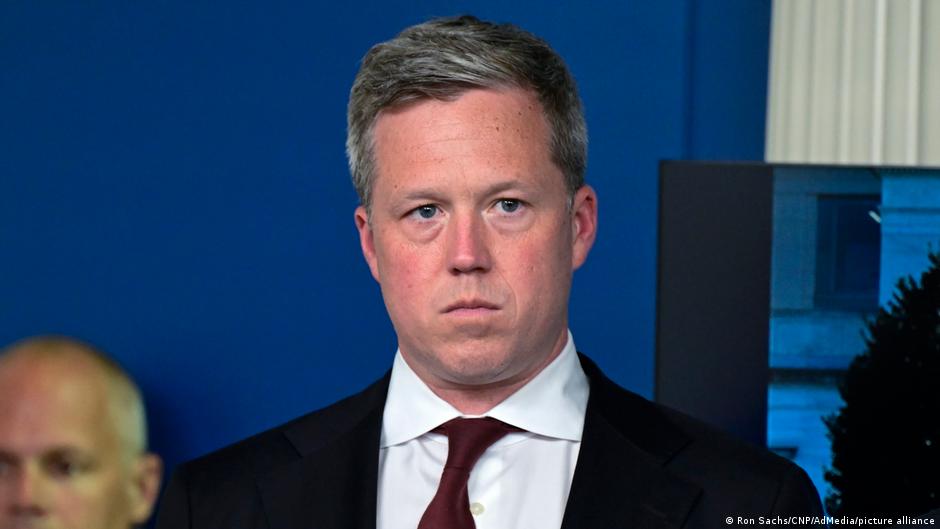
U.S. Army Secretary Daniel Driscoll has asked President Donald Trump to accept his resignation after months of disagreements with Defense Secretary Pete Hegseth over the direction of the U.S. military and the dismissal of several officers, according to reports published late Monday and early Tuesday.
The resignation was first reported by The Wall Street Journal and was later carried by Reuters and AP. NBC News, citing sources, reported that the White House has accepted Driscoll’s resignation. According to the reports, Driscoll is expected to leave the Pentagon within the coming days.
For markets, the reported exit is significant less as an isolated personnel change than as another signal of policy friction inside the Pentagon during Trump’s second term. Defense investors closely watch shifts in military leadership because they can affect procurement priorities, budget execution, weapons programs and the balance between incumbent contractors and lower-cost suppliers.
Driscoll had been identified with a more flexible approach to Army modernization. Reuters noted that in the role he had argued for the military to buy cheaper weapons and had criticized major manufacturers. That stance made him a closely watched figure for the defense sector, where even incremental changes in purchasing philosophy can alter expectations for contract flows, margin outlooks and competitive positioning across prime contractors and smaller suppliers.
“Secretary Driscoll effectively advanced President Trump’s ‘Make America Strong Again’ agenda in the Department of the Army,” White House deputy press secretary Anna Kelly said in a statement cited by multiple reports.
The same statement credited Driscoll with leadership during what it described as historic military operations, with restoring priority to combat readiness and weapons lethality, and with assisting negotiations between Russia and Ukraine, among other areas.
Leadership turnover and procurement focus
The reported resignation comes after earlier indications that Driscoll was planning to step down at the end of the year because of the conflict with Hegseth. That possibility had already been reported on August 21. At the time, Reuters said Driscoll’s departure would leave the Army without a Senate-confirmed leader while the United States was seeking to end the war against Iran that it had begun together with Israel nearly six months earlier.
Journalists have framed the move as part of a broader reshaping of Pentagon leadership during Trump’s second presidential term. Reuters pointed in that context to the dismissal in April of Army Chief of Staff Randy George, along with some other senior military officials. Taken together, those changes suggest that leadership turnover is occurring not just at the political level but across multiple command layers, raising the stakes for investors trying to assess continuity in defense decision-making.
That continuity matters because the Pentagon’s internal debates are not merely administrative. They reach into force design, weapons spending and the pace at which new systems move from concept to deployment. A secretary favoring lower-cost procurement and a more adaptable model can influence sentiment around companies exposed to traditional big-ticket programs versus firms positioned around cheaper, scalable systems. Even absent immediate contract announcements, markets often treat such shifts as forward indicators for sector rotation within defense names.
Driscoll has served as Army secretary since February 2025. His tenure therefore spanned a period in which Army priorities, readiness debates and questions around weapons lethality became central to broader U.S. defense policy. Reports now suggest that his disagreements with Hegseth ultimately became unsustainable, culminating in the resignation request submitted to Trump.
The personal and political dimensions of Driscoll’s role also drew attention in Washington. He is a friend and former classmate of Vice President J.D. Vance. In November 2025, he was appointed as Trump’s new special envoy for Ukraine, replacing Keith Kellogg. That background added to his profile inside the administration and made his standing within the national security hierarchy especially relevant for observers assessing the internal balance of influence on military and geopolitical issues.
For financial markets, the immediate relevance is likely to center on whether Driscoll’s exit reinforces Hegseth’s hand in shaping procurement and officer corps decisions, and whether that translates into a harder preference for certain categories of spending. Investors will also be watching for the next appointment signal: whether the administration chooses a successor aligned with Driscoll’s more flexible, cost-focused approach or instead backs a figure more closely identified with a different procurement doctrine.
There is also the question of timing. A departure within days, if confirmed and completed on that schedule, would inject uncertainty into the Army’s leadership just as broader U.S. military strategy remains under active strain. Markets tend to discount isolated resignations quickly, but repeated turnover at senior levels can have a larger effect when it intersects with budget cycles, conflict exposure and contractor expectations.
At this stage, the reports establish the central fact pattern: Driscoll has sought to resign, the White House has reportedly accepted the move, and his departure is expected shortly. For traders and sector analysts, the next step is not only to monitor personnel headlines but to determine whether this reshuffle produces measurable changes in Army buying behavior, Pentagon chain-of-command stability and the competitive outlook for defense suppliers.