United Russia Leads Duma Vote as Investors Track Policy Continuity
Early CEC results show United Russia ahead with 57.76% after 82.19% of protocols counted, pointing to continued control of Russia’s legislature.
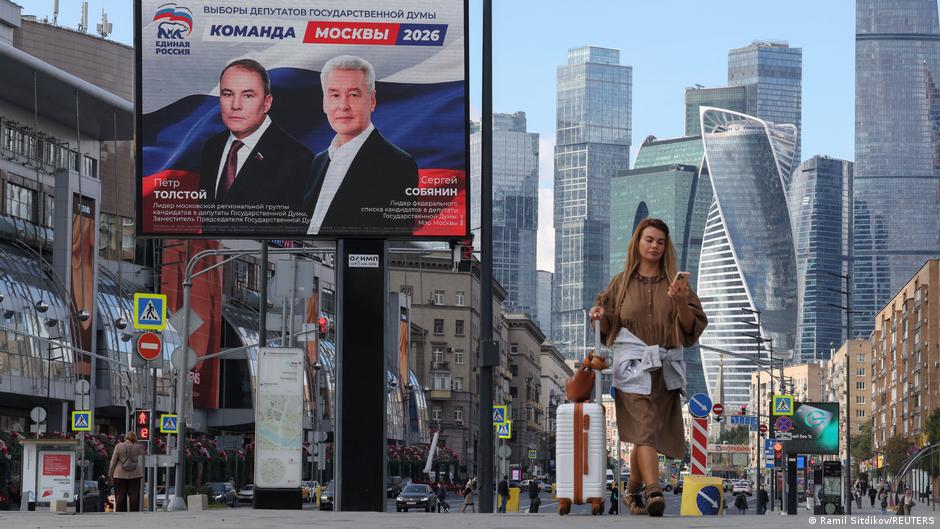
Russia’s ruling United Russia party was leading elections to the State Duma, according to figures released overnight on Monday, September 21, by the Central Election Commission after 82.19% of protocols had been processed. The result, if confirmed, would reinforce expectations of policy continuity in Moscow at a time when political risk, sanctions exposure and state-directed economic policy remain central variables for investors assessing Russian-linked assets.
The CEC data showed United Russia with 57.76% of the vote in elections to the ninth convocation of the State Duma. The Communist Party of the Russian Federation was in second place with 13.89%, followed by the Liberal Democratic Party of Russia with 8.77%. The New People party had 7.97%, while A Just Russia stood at 4.99%.
With 82.19% of protocols counted, United Russia was reported at 57.76%, according to the Central Election Commission figures cited by TASS.
The numbers put the ruling party well ahead of its 2021 State Duma result, when it received 49.82% of the vote. For market participants, the immediate read-through is less about a change in political direction and more about the scale of governing control implied by the preliminary count. A strong United Russia result would be consistent with continued legislative backing for the Kremlin’s domestic, fiscal and wartime policy framework.
Constitutional Majority in Focus
United Russia candidates were also leading in 208 of 225 single-mandate districts, according to the reported CEC data. On that basis, the party of power would receive more than the 301 seats required for a constitutional majority in parliament.
That threshold matters for investors because it signals the government’s capacity to pass legislation quickly and with limited institutional friction. In Russia’s current environment, where budget priorities, defense spending, capital controls, corporate regulation and responses to Western sanctions all intersect, parliamentary arithmetic can shape the speed and predictability of policy execution.
The potential constitutional majority also reinforces a central market theme: continuity rather than rotation. Sector positioning around Russia is already heavily influenced by state priorities, export restrictions, energy policy, banking controls and sanctions risk. The preliminary election outcome suggests that the legislative backdrop is unlikely to introduce a material check on those existing policy paths.
At the same time, the count left A Just Russia close to the 5% parliamentary threshold. The party’s 4.99% reading, based on the CEC figures after 82.19% of protocols, indicated that it risked failing to clear the barrier. The final treatment of parties around that level could affect the composition of proportional representation in the chamber, though the broader balance of power was dominated by United Russia’s reported national vote share and single-mandate leads.
Political Risk Remains Elevated
This election cycle also extended to Russian-occupied territories of Ukraine. That element is central to the international response and to the political-risk premium surrounding Russia. Germany and the European Union criticized the parliamentary elections, pointing to their “staged character” and to repression against the opposition.
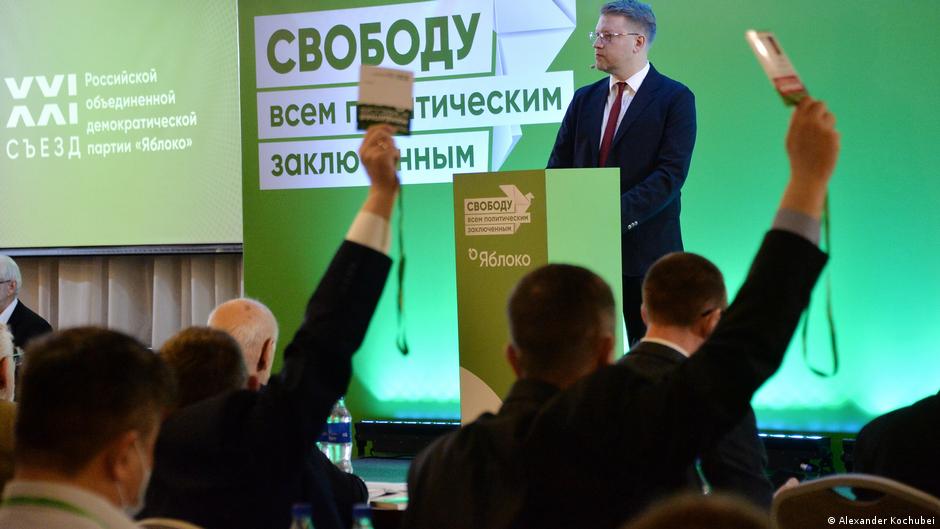
The only major party described as opposing the war, Yabloko, was removed from the election. That removal, alongside the criticism from Germany and the EU, underscores why external investors and multinational companies continue to treat Russian political developments through the lens of legal, reputational and sanctions-related exposure.
For markets, the vote does not occur in isolation. Russia’s political system is already viewed by Western governments as operating under severe constraints on opposition activity, while the country remains subject to extensive sanctions and restrictions tied to the war in Ukraine. The reported election result therefore reinforces an existing framework rather than creating a new one: concentrated domestic authority, limited opposition participation and continued confrontation with European institutions.
Trading implications are likely to be clearest in sentiment toward Russia-linked risk rather than in immediate sector rotation through open global markets, given the constraints on access to Russian securities and the effect of sanctions on cross-border flows. Still, policy continuity can matter for commodities, energy-linked companies, defense-related spending, domestic banks and firms dependent on state procurement or regulation.
The CEC’s preliminary data, transmitted by TASS, showed a decisive lead for United Russia with more than four-fifths of protocols counted. As the remaining protocols are processed, investors will be watching whether the final results confirm the scale of the ruling party’s advantage, whether A Just Russia crosses the 5% threshold, and whether the seat distribution secures the constitutional majority implied by the early single-mandate district count.