Ukraine Delegation to Meet Trump Envoys as War Plan Enters Market Focus
Kyiv says talks in the United States on October 9-10 will examine a new proposal to end the war with Russia, with sanctions and Starlink access in focus.

Ukraine is sending a delegation to the United States for talks with special representatives of U.S. President Donald Trump on a new plan aimed at ending the war with Russia, a development that places geopolitical risk back at the center of market attention.
The meetings are scheduled for October 9 and 10 with Jared Kushner and Steve Witkoff, according to Ukrainian President Volodymyr Zelensky, who spoke to journalists on Thursday, October 8, as reported by UNIAN. For investors tracking defense, energy, technology infrastructure and regional risk premiums, the talks add another live variable to a conflict that has repeatedly moved markets through sanctions, supply disruptions and shifts in military procurement.
The Ukrainian side will be represented by Kyrylo Budanov, head of the Presidential Office; Serhiy Kyslytsia, deputy head of the Presidential Office of Ukraine; Davyd Arakhamia, head of the Servant of the People faction in parliament; and Rustem Umerov, head of Ukraine's Foreign Intelligence Service. Zelensky also said that a European side could join the negotiations.
The Ukrainian service of Voice of America, citing a senior U.S. official, reported that the meeting will address a new proposal that covers all aspects of the conflict and is intended to bring the war to an end.
Geopolitical Risk Remains a Market Driver
For markets, the immediate issue is not only whether the plan produces a diplomatic opening, but how it may affect sector positioning in the near term. Any framework that touches sanctions, military support, communications infrastructure or Russian economic activity could influence trading in defense-linked equities, satellite and communications names, energy markets and Eastern Europe exposure.
The timing is also relevant for traders because the talks come alongside a sharpened public exchange over whether diplomacy has reached an impasse. Zelensky responded on October 8 to comments by U.S. Secretary of State Marco Rubio, who said the war in Ukraine had reached a deadlock and that, in his view, there were no prospects for resolving the conflict through negotiations. Rubio made the remarks in an interview with the Greek newspaper Kathimerini.
Zelensky criticized Rubio's position, arguing that talk of a diplomatic deadlock is inconsistent with future economic engagement with Russia. His comments focused on the economic pressure that Kyiv wants applied to Moscow, a theme with direct relevance for sanctions-sensitive assets and companies exposed to Russian trade or procurement networks.
"We are not in a diplomatic deadlock," Zelensky said, calling for Russia's economy to be closed off and for sanctions on its weapons.
The Ukrainian president said it was not possible, in his view, to negotiate with Russia about future economic projects on one side while describing the political and diplomatic situation as a stalemate on the other. He urged partners not to support Russia through sales and called for sanctions targeting Russian weapons.
That message keeps sanctions policy at the center of the market narrative. The introduction, expansion or tightening of measures against Russian weapons-related activity could have implications for defense supply chains, dual-use technology controls and companies operating in jurisdictions exposed to enforcement risk. Conversely, any signs of a diplomatic process gaining traction could affect risk appetite in regional assets and in commodities tied to war-related uncertainty.
Starlink, Air Dominance and Technology Exposure
Zelensky also called on the United States to allow Ukraine to use Starlink over Russian territory. He said such permission would help Ukraine dominate the skies and ultimately force Russian President Vladimir Putin to sit down at the negotiating table.
That appeal highlights the continued role of satellite communications and battlefield connectivity in the conflict. For market participants, it reinforces why communications infrastructure, space-linked services and defense technology remain closely watched areas whenever the war enters a new phase. The source article does not provide additional detail on any U.S. response to Zelensky's request, and the timing or scope of any potential permission was not specified.
The reference to Starlink also places private-sector technology platforms in the frame of state-level conflict strategy. In trading terms, that can elevate sensitivity around companies connected to satellite networks, secure communications, unmanned systems and related infrastructure, even when direct financial exposure is difficult to quantify from public statements alone.
Data Centers Enter the Conflict Narrative
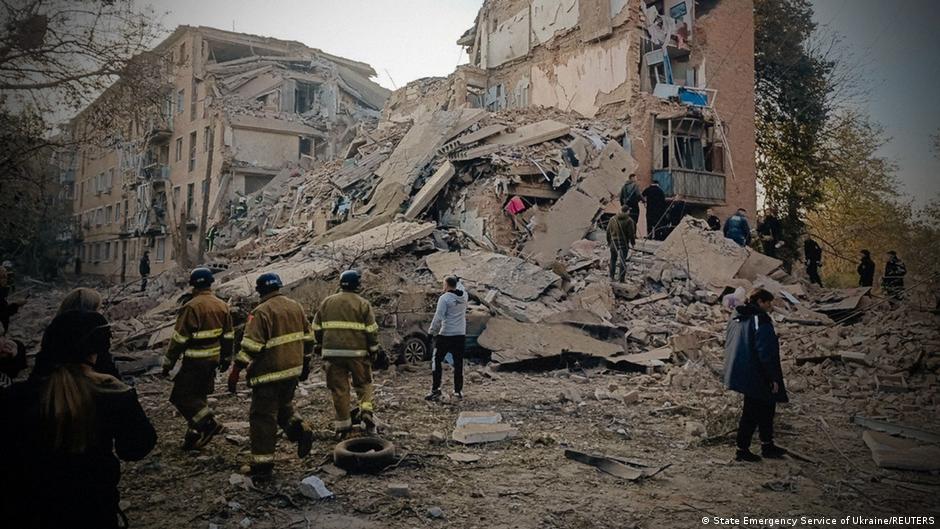
Zelensky said Ukraine is responding in kind to Russian strikes, including strikes on data centers. He stated that Russia had struck and continues to strike Ukrainian data centers, and that Ukraine had responded, adding that he could not disclose all the details.
According to the source, Ukraine's Armed Forces struck a Yandex data center with drones in the city of Sasovo in Russia's Ryazan region during the night of October 8. A fire broke out, the data center completely stopped operations, and no one was injured.
The reported strike adds a technology infrastructure angle to the broader war risk. Data centers are critical assets for cloud services, search, enterprise software, artificial intelligence workloads and digital platforms. While the article identifies the target as a Yandex data center and says operations were fully halted, it does not provide details on the duration of the outage, the scale of service disruption, financial impact or recovery timeline.
For investors, the incident is another reminder that the conflict can extend beyond traditional military targets into digital and logistics infrastructure. Such developments may affect how markets price operational risk for technology companies, critical infrastructure operators and insurers with exposure to the region.
The upcoming October 9-10 talks therefore arrive against a mixed backdrop: a proposed end-of-war framework, public disagreement over whether diplomacy is stalled, calls for stronger sanctions, a request to expand Starlink use, and reported Ukrainian retaliation against Russian data infrastructure. Each element has a potential market channel, even before any formal agreement or policy change is announced.
Until more details emerge from the U.S. meetings, traders are likely to monitor official statements for signs of sector-specific consequences: sanctions language, weapons restrictions, technology permissions, European participation and any shift in the negotiating posture of Washington or Kyiv. The source material does not indicate that a final settlement is imminent, but it does point to a new diplomatic proposal entering the discussion at a moment when military, economic and digital infrastructure pressures remain active.