Trump Says U.S. Will Drop Tariff on Irish Whiskey Imports
The announcement points to a potential shift in U.S.-EU spirits trade and drew an immediate welcome from Ireland’s whiskey industry.
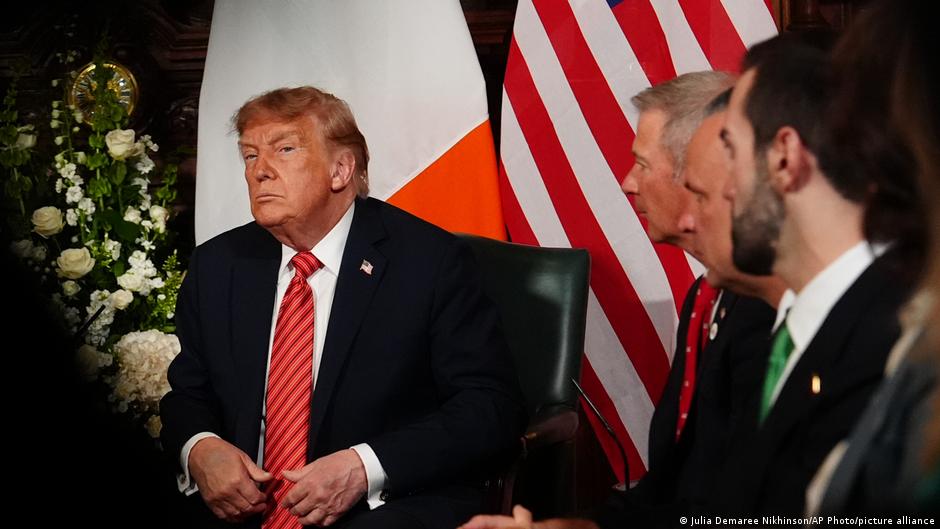
U.S. President Donald Trump said the United States will remove a 10% tariff on Irish whiskey imports, announcing the decision at the end of a visit to Ireland and setting up a potential market-moving development for drinks producers, distributors and investors watching transatlantic trade policy.
Trump made the statement on Sunday, September 13, in Ireland before a cheering crowd of Irish golf fans during a tournament held at a golf club owned by his family. According to his remarks, he agreed to repeated requests to lift the duty on Irish whiskey entering the U.S. market.
The tariff is currently collected as part of broader U.S. duties applied to wine and spirits exports from the European Union. That framework has made the issue relevant not only for Irish distillers but also for wider EU beverage exporters exposed to U.S. import costs.
For market participants, the announcement puts attention on implementation. A presidential statement signals policy direction, but companies and traders will be watching for the administrative steps needed to remove the levy in practice. Until those steps are completed, importers and exporters may remain cautious about adjusting pricing, shipment timing or contract assumptions.
Whiskey Sector Welcomes U.S. Tariff Signal
Trump said the requests to cancel the U.S. tariff had come from several figures, including Irish Prime Minister Micheal Martin and leading Irish golfer Shane Lowry. His comments framed the decision as a response to pressure from Irish officials and prominent national figures during his visit.
The Irish Whiskey Association welcomed the announcement. In a statement cited by Reuters, IWA director Eoin O Cathain described Irish whiskey as a defining part of the trade relationship between Ireland and the United States.
“Nothing characterizes the trade relationship between the U.S. and Ireland better than Irish whiskey,” O Cathain said.
The association said it hoped the decision would be fully implemented. That caveat matters for markets: removal of a tariff becomes commercially meaningful only when it is reflected in customs treatment and the cost structure facing exporters and importers.
Irish whiskey is one of the most recognizable consumer exports linked to Ireland, and U.S. tariff policy can affect margins along the supply chain. Producers may benefit from lower costs into the American market, while importers, wholesalers and retailers could reassess pricing if the duty is formally removed.
The announcement also lands in a wider context of U.S.-EU trade frictions. The current duty applies under measures covering EU wine and spirits exports to the United States, meaning the Irish whiskey decision could be read by investors as a targeted adjustment rather than a wholesale change to the broader tariff regime. The source report did not indicate whether other categories of European wine and spirits would receive similar treatment.
Trading Focus Turns to Policy Follow-Through
For real-time market intelligence desks, the key near-term question is whether the statement is followed by official U.S. action. Traders in beverage, retail and logistics-linked names typically react not only to political announcements but also to confirmation that policy changes have entered force.
If implemented, the cancellation would remove a specific cost on Irish whiskey shipped into the United States. That could support sentiment toward Irish whiskey producers and related distributors, especially those with meaningful U.S. exposure. It could also influence purchasing behavior if importers decide to delay or accelerate shipments around the timing of the tariff change.
The impact on trading volumes and sector rotation would depend on how quickly the policy is confirmed and how directly listed companies are exposed to Irish whiskey flows. The source article did not provide market prices, company names, shipment volumes or revenue exposure figures, so any immediate valuation effect would need to be assessed against live market data and company disclosures.
Still, the announcement represents a clear trade-policy headline for the alcoholic beverages sector. Tariffs can affect landed costs, pricing power and promotional budgets, and even a narrow exemption may draw attention from investors tracking consumer staples, import-heavy retail channels and EU-U.S. trade-sensitive assets.
The Irish Whiskey Association’s response suggests the industry sees the announcement as positive, while its call for full implementation underlines that the commercial effect remains contingent on follow-through. For now, the market signal is political rather than operational: the U.S. president has said the 10% duty on Irish whiskey will be removed, and the industry is waiting for that decision to take effect.