Support for Germany's CDU/CSU Drops to 2021 Levels Amid Rising AfD Polls
Conservative bloc CDU/CSU slumps to 20% support, while far-right AfD leads at 28% ahead of key state elections in September.
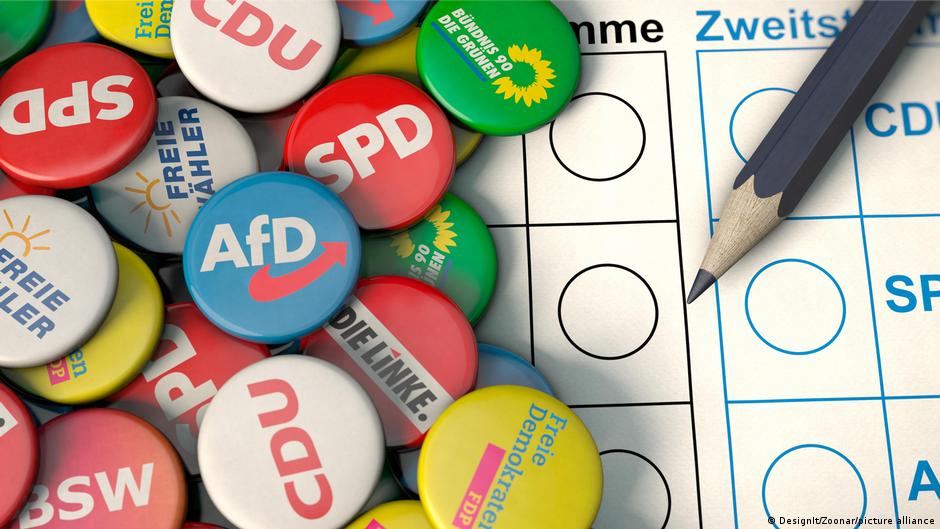
Support for Germany's conservative bloc, the Christian Democratic Union and Christian Social Union (CDU/CSU), has fallen to its lowest level in five years, polling at just 20%, according to the latest survey by the INSA institute. This marks a significant decline for the ruling coalition ahead of crucial regional elections scheduled for September.
Shifts in Voter Sentiment Ahead of State Elections
The INSA Sonntagstrend poll reveals that the far-right party Alternative for Germany (AfD) currently leads with 28% support nationwide, maintaining its position as the most popular party in the survey. Meanwhile, the Green Party holds steady at 13%, while the Social Democratic Party (SPD) and the Left Party each draw 12%.
The FDP, Germany's liberal Free Democratic Party, is polling at the 5% threshold required to enter parliament, whereas the left-populist "Sahra Wagenknecht Union" remains below the 5% barrier at 3%, indicating it would not secure seats in the Bundestag if elections were held now.
These figures come as Germany prepares for elections in three federal states this September: Saxony-Anhalt, Mecklenburg-Western Pomerania, and Berlin. Notably, the AfD is positioned to potentially form a state government in Saxony-Anhalt for the first time.
"Polling data reflects sentiments only at the moment of research and should not be viewed as definitive predictions for state election outcomes," explained analysts, noting increased volatility in voter behavior.
The German Press Agency (dpa) highlights the growing difficulty polling firms face in accurately gauging voter intentions due to weakened traditional party loyalties and voters making decisions closer to election dates. This volatility means opinion polls capture current moods rather than forecast final results.
As the September elections approach, these shifts in voter dynamics and sector rotations in political support signal a changing landscape in Germany’s political market, with potential implications for governance and policy direction.